
This post contains affiliate links. I may earn a commission if you purchase through them at no extra cost to you.
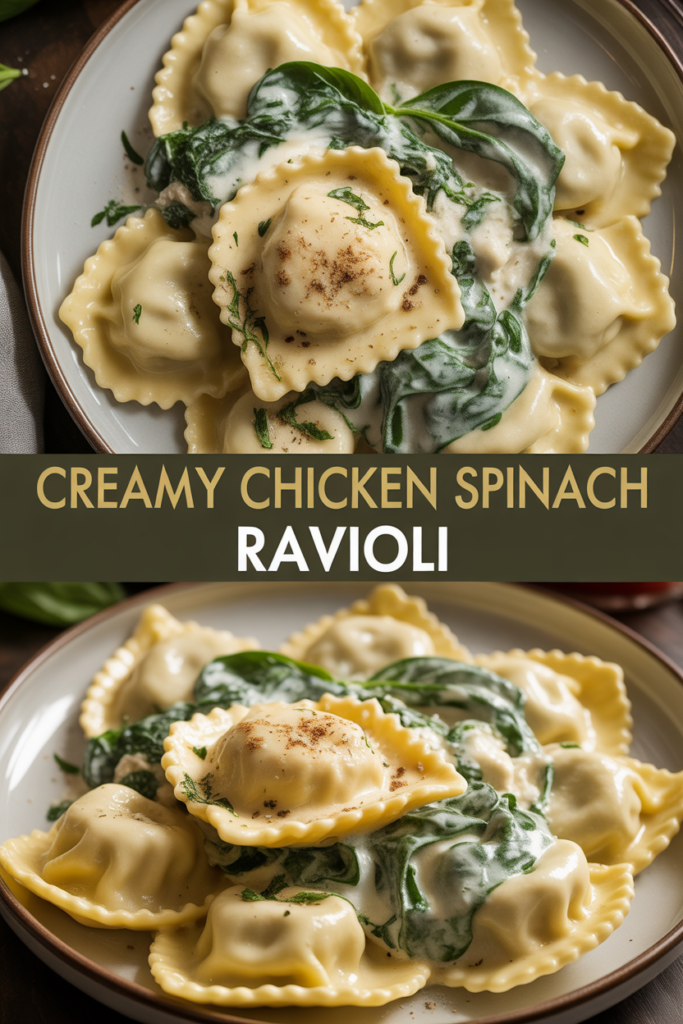
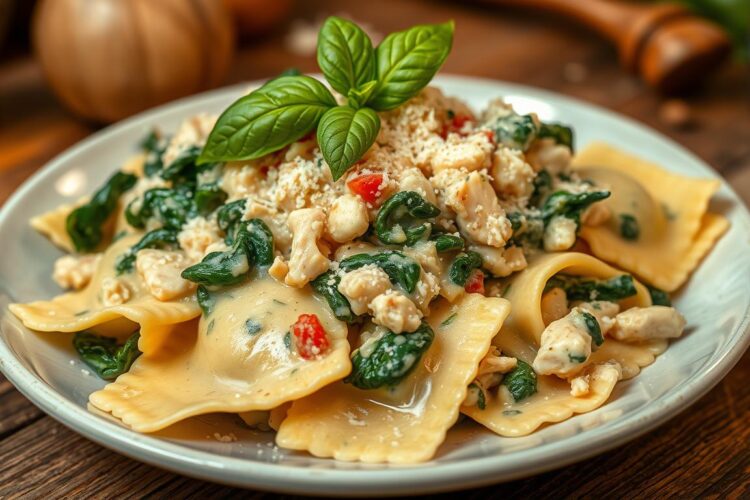
I love this dish for weeknight dinner when I want restaurant-level comfort without the fuss. It is a simple pasta dish that tastes rich but comes together fast.
In this recipe I use ready-made ravioli and shortcut chicken like rotisserie meat to save time. I boil the pasta al dente, sauté spinach and garlic in butter and olive oil, then finish everything in a silky heavy cream and Parmesan sauce.
The method is skillet-friendly so cleanup stays easy. I’ll show how I keep the ravioli from breaking, build the sauce, and time each step so the meal is on the table in about 20–30 minutes.
This one is for family dinners, a cozy date night at home, or anyone craving big flavor with minimal prep. Leftovers reheat well when handled gently.
Why I Love This Creamy, Comforting Ravioli Dinner
When I need a fast, comforting dinner that still feels special, I reach for stuffed pasta and a simple pan sauce. It gives that restaurant vibe without long prep or fuss.
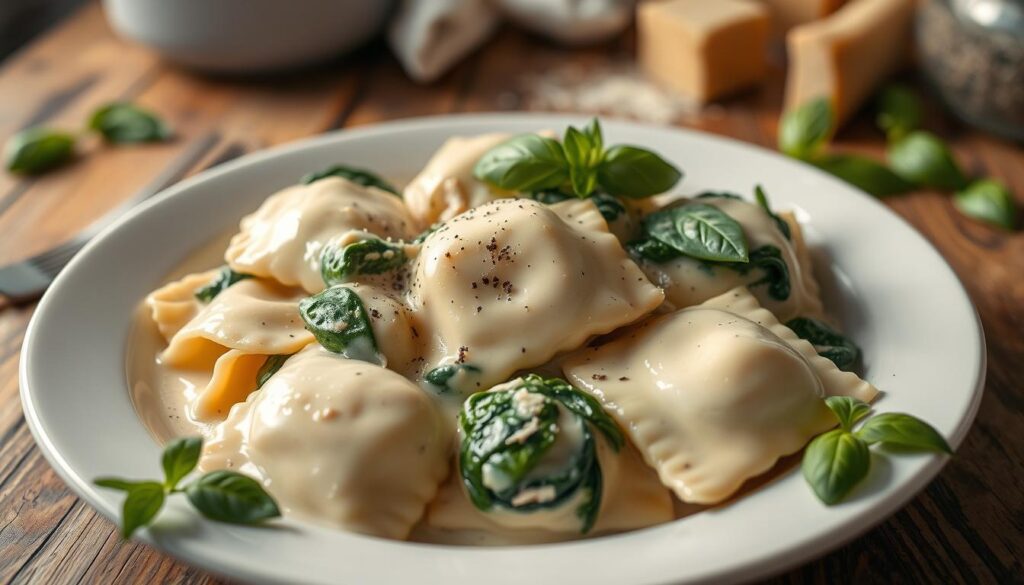
An Italian-inspired pasta dish that fits busy weeknights
This meal works when time is short. Some versions finish in under 15 minutes. I use already-cooked rotisserie chicken to speed things up. That trick makes dinner realistic on hectic nights.
Fresh vs. frozen and what I choose in real life
Fresh brands like Rana cook fast and taste delicate. Frozen ravioli is budget-friendly and easy to stash. Both turn out great if you follow one rule: pull the pasta about one minute before the package time so it finishes in the sauce and doesn’t get mushy.
| Option | Speed (minutes) | Texture | When I use it |
|---|---|---|---|
| Fresh (Rana) | 6–8 | Delicate, tender | Date night or quick treat |
| Frozen ravioli | 8–10 | Hearty, reliable | Busy weeknights, pantry staple |
| Cheese or chicken ravioli | 7–9 | Varies by filling | Use what the store has |
Creamy Chicken Spinach Ravioli Ingredients and Exact Measurements
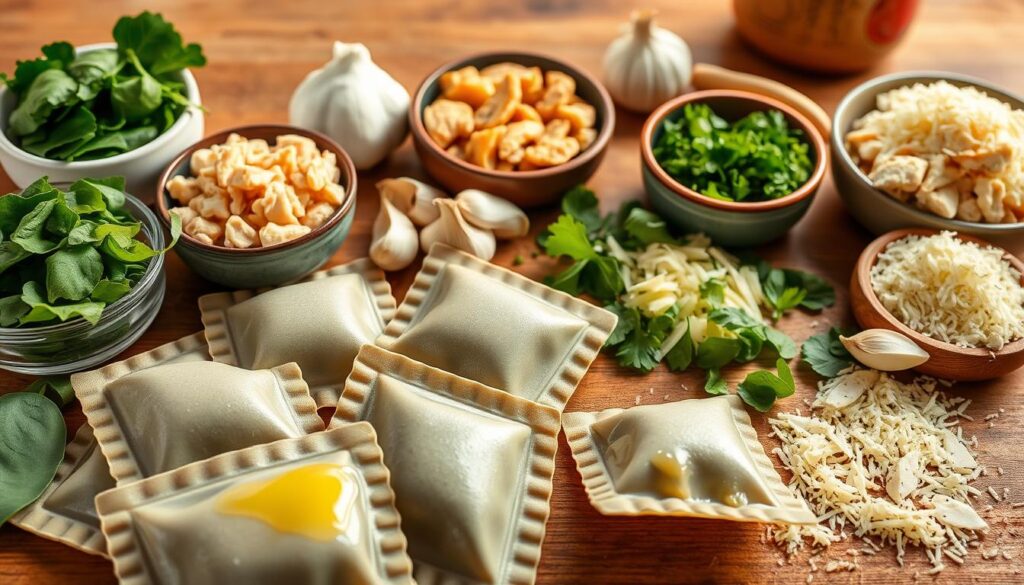
Here’s a clear ingredient list with measured amounts so you can cook with confidence.
Ravioli, greens, and herbs
- 1 pound fresh or frozen chicken-and-ricotta ravioli (fresh brands like Rana cook faster)
- 4 cups fresh spinach leaves, packed
- 8 fresh basil leaves, thinly sliced (about 1/4 cup)
Creamy Parmesan sauce essentials
- 1 cup heavy cream
- 1 cup grated Parmesan cheese (about 3 ounces) — Parmesan helps thicken the sauce
- 2 tablespoons unsalted butter
- 1 tablespoon olive oil (prevents butter from burning)
Seasonings that make the flavor pop
- 2 cloves garlic, minced — aim for fragrant, not brown
- 1 teaspoon kosher salt
- 1/2 teaspoon freshly cracked black pepper
- Optional: 1/4 teaspoon red pepper flakes for a touch of heat
The Parmesan doubles as flavor and thickener; save 1/4 cup of pasta water when you drain the pasta to loosen the sauce if needed. If you can find cheese ravioli or chicken ravioli, both work—adjust cook time by the package directions. I list ounces and cups so you can shop and measure without guessing.
| Option | Cook Time | Texture |
|---|---|---|
| Fresh (Rana) | 6–8 minutes | Delicate, tender |
| Frozen | 8–10 minutes | Heartier, reliable |
| Cheese or chicken-filled | 7–9 minutes | Varies by filling |
How I Make Creamy Chicken Spinach Ravioli in a Skillet
This skillet approach keeps the pasta intact and the sauce silky every time. I work in stages so each element finishes perfectly and cleanup stays easy.
Boil the pasta just shy of done
Bring a large pot of salted water to a gentle boil. Add the ravioli and stir once or twice so they don’t stick. I usually pull them about one minute before the package time so they finish in the pan.
Sauté garlic and greens
Heat a large skillet over medium-high heat. Melt butter with a tablespoon of olive oil, add garlic for about 30 seconds, then toss in the greens until bright and wilted.
Warm the chicken and build the sauce
In the same large skillet, warm shredded or pre-cooked chicken over medium-high heat until hot. Reduce heat before adding cream so it does not scorch.
Pour in heavy cream, then whisk in grated parmesan cheese until it forms a silky sauce. Taste and season with salt and freshly cracked pepper.
Finish and toss
Add the cooked ravioli to the skillet and toss gently so every piece is coated. If the sauce is too thick, add reserved pasta water a splash at a time (about half a cup max) until glossy and clingy.
| Step | Heat | Time (minutes) |
|---|---|---|
| Boil ravioli | Gentle boil | 6–9 minutes (pull 1 minute early) |
| Sauté garlic & greens | Medium-high heat | 1–2 minutes |
| Warm chicken & build sauce | Medium-high, then reduce heat | 3–4 minutes |
| Final toss & serve | Reduce heat | 1–2 minutes |
Tips, Swaps, and Serving Ideas for the Best Cream Sauce Ravioli
I keep this sauce reliable by using three simple levers: a splash of pasta water, careful control of heat, and gradual addition of parmesan. These moves save the texture and boost flavor without extra fuss.
How I adjust thickness with pasta water, heat, and Parmesan
I add a tablespoon or two of warm pasta water to loosen a tight sauce. The starch in the water smooths the texture without watering down the flavor.
Lowering the heat is key once cream or cream sauce goes in. Gentle heat keeps the sauce from breaking and keeps cheese melting silky rather than gritty.
I add parmesan cheese a little at a time and whisk. That keeps the sauce creamy and prevents clumping.
Easy add-ins and time-saving shortcuts I use
If I’m short on time I use rotisserie chicken or frozen ravioli and pre-grated cheese. They save minutes and keep dinner on schedule.
Extra garlic or a handful of basil lifts the dish without changing the method. More spinach gives a fresher, lighter finish.
What I serve with this pasta for a full family meal
I pair the pasta with a crisp salad, garlic bread, or roasted vegetables. For a restaurant touch, I briefly broil an oven-safe skillet to brown the top.
| Problem | Quick Fix | Why it works |
|---|---|---|
| Sauce too thick | Splash warm pasta water (1–2 tablespoons) | Starch thins and binds without adding fat |
| Sauce grainy after cheese | Lower heat and whisk in more parmesan slowly | Prevents protein from seizing and keeps texture smooth |
| Need faster prep | Use rotisserie chicken and frozen ravioli | Saves time and keeps flavor close to scratch |
Nutrition note: this is a richer dish and will raise calories and fat per serving. I balance portions with a light side and enjoy it as an occasional comfort dinner. Taste and tweak at the table—more pepper, a final sprinkle of cheese, or a squeeze of lemon can sharpen the flavor quickly.
Storing, Reheating, and Enjoying Every Last Bite
I cool the pasta to room temperature, then transfer the leftovers to an airtight container and refrigerate for up to 3 days. That keeps the sauce and filling as stable as possible.
To reheat, I warm the skillet over low heat and stir often. Add a few tablespoons of water or a splash of cream if the sauce feels tight; give it a few minutes so it loosens without splitting.
In the microwave I reheat in short 30‑second bursts, stirring between rounds and adding liquid if needed. Frozen portions are possible, but the sauce can separate when thawed, so I prefer eating from the fridge within a couple of minutes to retain the best texture.
Finish leftovers with extra Parmesan, fresh basil, or a quick broil in the oven for a minute if you want a golden top. Reheating time varies by portion, but the goal is the same: hot throughout and silky again so every last bite tastes fresh.