
This post contains affiliate links. I may earn a commission if you purchase through them at no extra cost to you.
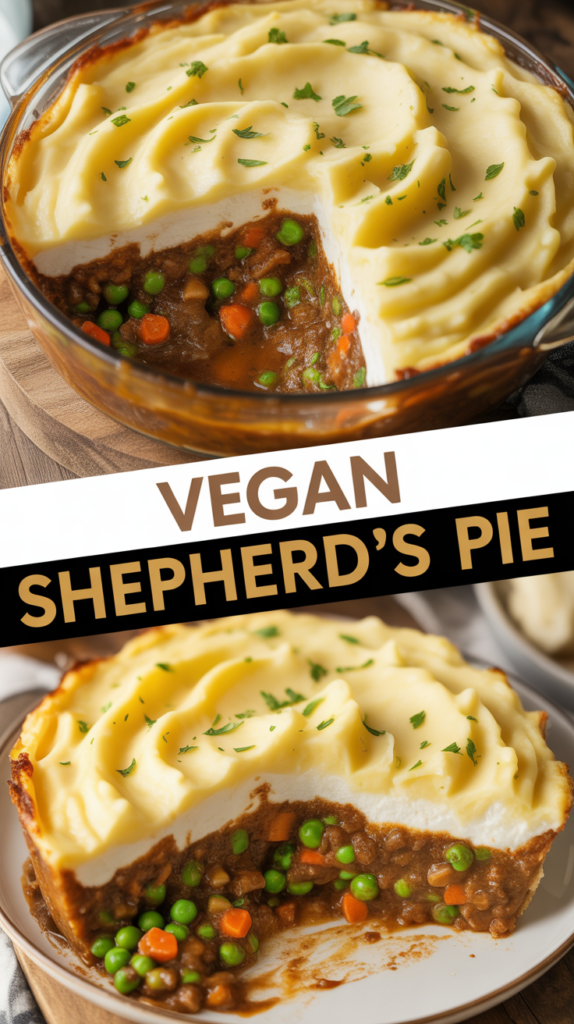
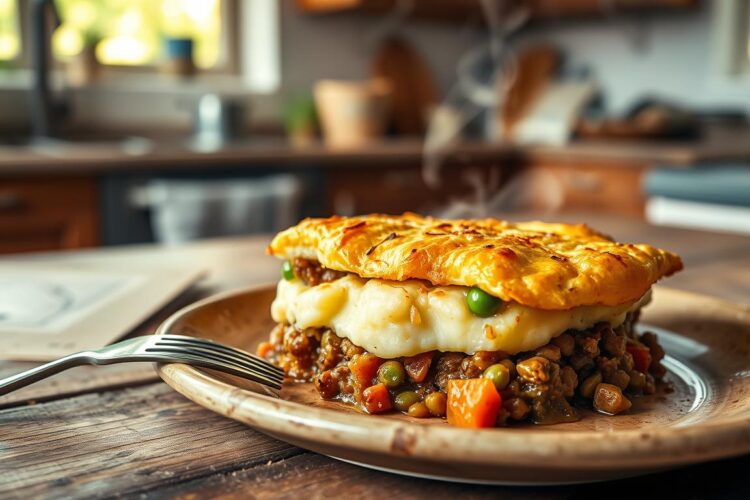
I’m sharing my cozy, satisfying answer to the classic: vegan shepherd pie that feels like a warm hug. This version keeps the same comfort and layers, but it’s fully plant-based and built for weeknight cooking.
Here, shepherd pie means a rich lentil stew topped with creamy mashed potatoes, baked until bubbly and golden. I use a dark, savory gravy made from tomato paste, broth, and herbs so each bite tastes homey and deep.
For protein, I give two easy options: brown lentils as my go-to, or plant-based ground when I’m short on time. The full recipe includes exact ingredient measurements and clear step-by-step instructions for the lentil gravy filling and the mashed potato topping.
This dish works great for a U.S. weeknight dinner and for meal prep. It uses pantry staples, cooks on a predictable schedule, and tastes even better the next day. The method is simple: make the filling, whip the mash, layer, then bake.
Why I Make This Cozy Vegan Shepherd Pie on Repeat
When I crave something warm and familiar, I make this hearty, plant-based casserole again and again. It checks the classic boxes: a savory gravy filling, fluffy mashed potatoes, and that baked casserole comfort that feels like home.
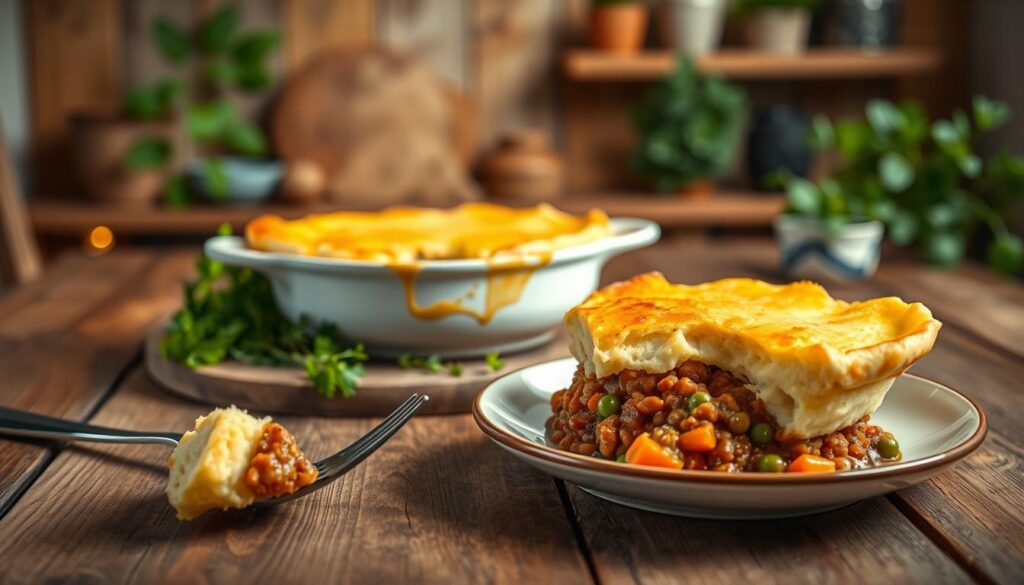
A hearty, plant-based comfort food that still feels classic
Lentils and beans give this dish real bite and a solid protein and fiber boost. The texture is satisfying, and the deep, tomato-forward gravy makes it taste timeless.
Weeknight-friendly and great for meal prep and leftovers
Most of the cook time is hands-off simmering and boiling, so I can multitask. I often cook the filling ahead, mash potatoes later, then assemble when I have time.
Protein and fiber from lentils (or plant-based ground)
Lentils make the meal lower in fat than meat versions and still fill you up. If I need a quicker, meatier texture, I swap in plant-based ground without changing the method.
- Feeds a crowd and suits mixed tables.
- Reheats well—leftovers taste like a second cozy dinner.
Ingredients for Vegan Shepherd’s Pie
Here are the exact ingredients I use to build the filling and the potato topping. I split the list so shopping and prep stay fast on a weeknight.
Lentil and vegetable filling
- 1 tbsp olive oil
- 1 medium yellow onion, diced
- 3 cloves garlic, minced
- 2 medium carrots, diced small
- 1 cup dry brown lentils (or 12–14 oz plant-based ground)
- 3 cups vegetable broth
- 3 tbsp tomato paste
- 1 tbsp vegan Worcestershire sauce
- 1 tsp dried thyme
- 1/2 tsp dried rosemary
- 1 cup frozen green peas
- 1 tsp salt (plus more to taste)
- 1/2 tsp black pepper (plus more to taste)
Creamy mashed potato topping
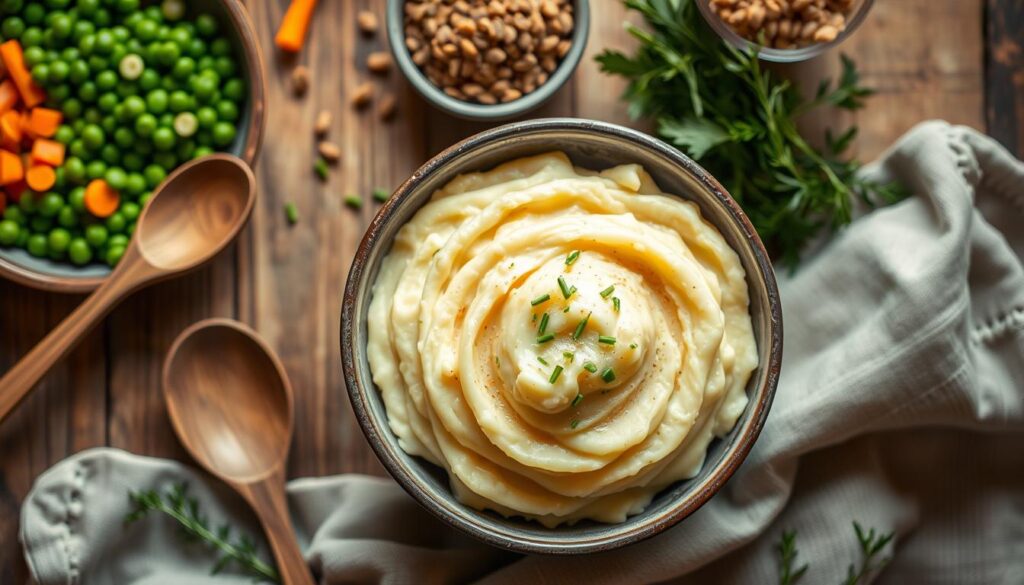
- 2 lb russet or Yukon gold potatoes, peeled and cut into 1-inch pieces
- 1/4 cup plant-based butter
- 1/2 cup unsweetened plant milk (plus 2–4 tbsp as needed)
- 1 tsp salt (plus more to taste)
- Black pepper to taste
Optional garnish and easy add-ins
- 1 tbsp chopped parsley for serving
- 8 oz chopped mushrooms — sauté with the onion for extra umami
- Extra splash of broth or 1/4 cup water if the filling thickens too much
Tomato paste deepens color and richness, Worcestershire adds savory tang, and thyme/rosemary bring the classic aroma. Yukon gold gives creamier mashed potatoes, while russet makes a lighter, fluffier top.
Kitchen Tools I Use for the Best Texture
Good tools make the difference between a dense mash and a light, airy topping. I keep the list small so prep stays fast and results stay consistent.
My must-have gear and why they matter
- I use a large pot for boiling potatoes; it holds heat and cooks evenly.
- A wide pan or Dutch oven is best for the filling because browning builds flavor.
- A 9×13 baking dish or an oven-safe skillet works for assembly and broiling the top.
- The single biggest upgrade is a potato ricer (or food mill) for fluffy, lump-free mash.
- A fork helps rake the top so it crisps under the broiler.
- A rubber spatula spreads the mash without digging into the filling below.
| Tool | Purpose | When to Use | Tip |
|---|---|---|---|
| Large pot | Boil potatoes evenly | Start with cold, salted water | Don’t overfill; simmer until tender |
| Wide pan / Dutch oven | Sauté vegetables and build gravy | Use at the start to brown aromatics | High heat for browning, then lower to simmer |
| 9×13 dish or oven-safe skillet | Assemble and brown the mash top | Layer filling, spread mash, then bake | Skillet gives rustic edges; dish serves a crowd |
How I Cook the Lentils and Build a Rich, Dark Gravy
I follow a clear routine so the lentils become tender and the gravy turns deep and glossy. I warm olive oil in a wide pan over medium heat and sauté onion and carrots until soft and lightly golden, about 8–10 minutes.
I add garlic at the end of the sauté and stir for 30–60 seconds so it becomes fragrant without burning.
Preparing the lentils (or browning plant-based ground)
- Stir in tomato paste and let it cook in the heat for a minute so the paste caramelizes and deepens the sauce.
- Pour in vegetable broth (about 2 cups) and add vegan Worcestershire, thyme, and rosemary to build a savory base.
- Add brown lentils, bring to a gentle boil, then lower the heat, cover, and simmer for 30–35 minutes until tender. Stir every few minutes so the mixture doesn’t stick.
- If the pan gets dry, add a splash of water or extra broth a little at a time to keep the mixture spoonable.
- Simmer uncovered a few minutes at the end until the sauce looks glossy and holds its shape.
- Stir in frozen peas just until warmed, then taste and season with salt and pepper before assembling.
| Ingredient | Cook time | Texture |
|---|---|---|
| Brown lentils | 30–35 minutes | Tender, hearty |
| Plant-based ground | 8–10 minutes to brown | Crumbly, meat-like |
| Mushrooms (optional) | 6–8 minutes to brown | Deep umami, chewy |
How I Make Creamy Mashed Potatoes for the Perfect Topping
A great mashed potato top starts with the right tuber and simple technique. I choose Yukon gold when I want a naturally creamy finish and russet when I want extra fluffy mashed potatoes.
I cube the potatoes and add them to a pot, cover with cold water, and salt the water so the flavor penetrates. Bring to a boil, then lower the heat and simmer until fork-tender, about 15–20 minutes depending on size.
Drain very well and let steam escape for a minute. I mash while the potatoes are hot—ideally through a ricer—so I get a smooth texture without long mixing.
Stir in plant-based butter first so it melts evenly, then add unsweetened plant milk a few tablespoons at a time until creamy. I stop mixing as soon as the texture is right to avoid gluey results.
| Step | Why it matters | Timing |
|---|---|---|
| Salted cold water | Season potatoes through | Start to boil |
| Simmer | Cook to fork-tender | 15–20 minutes |
| Mash hot + butter | Smooth, melts butter | Immediate |
| Add milk gradually | Controls creaminess | A few tbsp at a time |
Finish by tasting and seasoning with salt and pepper now so the potato top is flavorful on its own.
Assembling and Baking Until Golden Brown
I layer everything carefully so each slice has a balanced filling and potato top. Work with the filling while it’s hot so the sauce stays saucy and the bake heats through evenly.
Layering the filling for an even bake
Transfer the filling to a 9×13 baking dish or oven-safe pan and spread it so the base is level. Use the back of a spoon to smooth the surface so every cut has an even amount of mixture and sauce.
Spreading the mashed potatoes and creating texture
Spoon mashed potatoes in big dollops across the filling, then gently spread. Don’t drag too hard or you’ll pull the filling up through the top.
Run a fork across the surface to make ridges. Those peaks crisp and brown into the classic rustic top.
- Bake in a preheated oven until the edges are bubbling and the center is hot.
- Optional: dot small bits of plant-based butter over the potatoes to boost browning and comfort.
- Broil briefly—usually 1–5 minutes—watching closely so the peaks turn golden, not burned.
| Step | Temp / Time | Note |
|---|---|---|
| Bake | 375°F, until bubbly (about 20–30 minutes) | Check center for heat |
| Broil | High, 1–5 minutes | Watch closely for golden peaks |
| Rest & Serve | 5–10 minutes | Garnish with chopped parsley and season with pepper or extra salt |
Let the dish rest briefly so the sauce settles and slices hold together. Garnish with chopped parsley and serve hot for the best comfort and flavor.
Serving Ideas for a Complete Dinner
When I plate this hot, savory dish, I like to keep sides simple so the dinner feels relaxed and homey.
Light salads
A lemony green salad brightens the plate and balances the rich mashed top. I often use a store-bought kit to save time and add crunchy greens for texture.
Roasted vegetables and shortcuts
Roasted brussels, green beans, or carrots match the flavors and add a fresh vegetable element. Frozen roasted-vegetable blends work well when I’m short on time.
Bread, mushrooms, and finishing touches
Crusty bread is perfect for swiping up bubbling sauce and makes the meal feel more generous. For mushroom lovers, I sauté button or cremini mushrooms with a touch of garlic and serve them on the side or folded into the filling.
- I usually serve the dish on its own first—protein, vegetables, and carbs are already inside.
- For guests, pair with a simple salad and warm bread so the plate looks finished with little fuss.
| Side | Prep time | Flavor profile | Best when |
|---|---|---|---|
| Green salad | 5–10 min | Bright, acidic | Want a lighter meal |
| Roasted vegetables | 20–30 min | Sweet, caramelized | Need extra vegetable variety |
| Crusty bread | 2–5 min (warm) | Toasty, soft inside | Love dipping up sauce |
| Sautéed mushrooms | 8–10 min | Umami, garlicky | Serve mushroom lovers |
Meal Prep, Storage, and Reheating Tips I Rely On
I keep this dish weeknight-friendly by thinking ahead about storage and reheating. Good handling makes the flavors last and the mashed potatoes behave better when reheated.
Fridge life and best container
I store leftovers in an airtight container in the fridge and plan to eat them within 3–5 days. That range keeps the sauce bright and the potatoes stable without drying out.
Make-ahead filling strategy
My fastest hack: cook the filling a day or two ahead. The filling reheats quickly, so I mash fresh potatoes and assemble right before baking for the best texture.
Reheating: oven vs. microwave
I use the oven when I can—375°F for about 15–20 minutes—to revive the fork-raked top and warm through. When I’m short on time, a 1–2 minute microwave zap works, but the potato top softens.
Freezer notes and what changes
Freezing cooked mashed potatoes can alter their texture after thawing, so I usually freeze only the filling. Thaw overnight in the fridge for best results and add a splash of broth if the filling seems dry before reheating.
| Storage | Timing | Reheat method |
|---|---|---|
| Fridge (airtight) | 3–5 days | Oven 15–20 minutes |
| Microwave (single portion) | Minutes: 1–2 | Quick, softer mashed potatoes |
| Freezer (filling only) | 2–3 months; thaw overnight | Thaw, add broth, top with fresh mashed potatoes, then bake |
My Favorite Way to Enjoy This Comforting Pie Again Tomorrow
A quick oven refresh turns leftovers into a meal that tastes freshly baked. I reheat a slice until the edges bubble and the potato top browns again—about 10–15 minutes depending on heat and how cold it starts.
If I’m in a rush, I warm a slice in a pan on medium-low for a few minutes, then finish under the broiler for a minute to crisp the peaks. The herb-y gravy and tomato notes deepen overnight, so leftovers often taste richer.
Add a simple salad or steamed veggies and dinner is done. A pinch of salt and pepper after reheating brings the whole plate back to life, and one slice still fills me up thanks to the potatoes and lentil protein. This recipe stays on repeat because it’s cozy, practical, and reliably satisfying.