
This post contains affiliate links. I may earn a commission if you purchase through them at no extra cost to you.
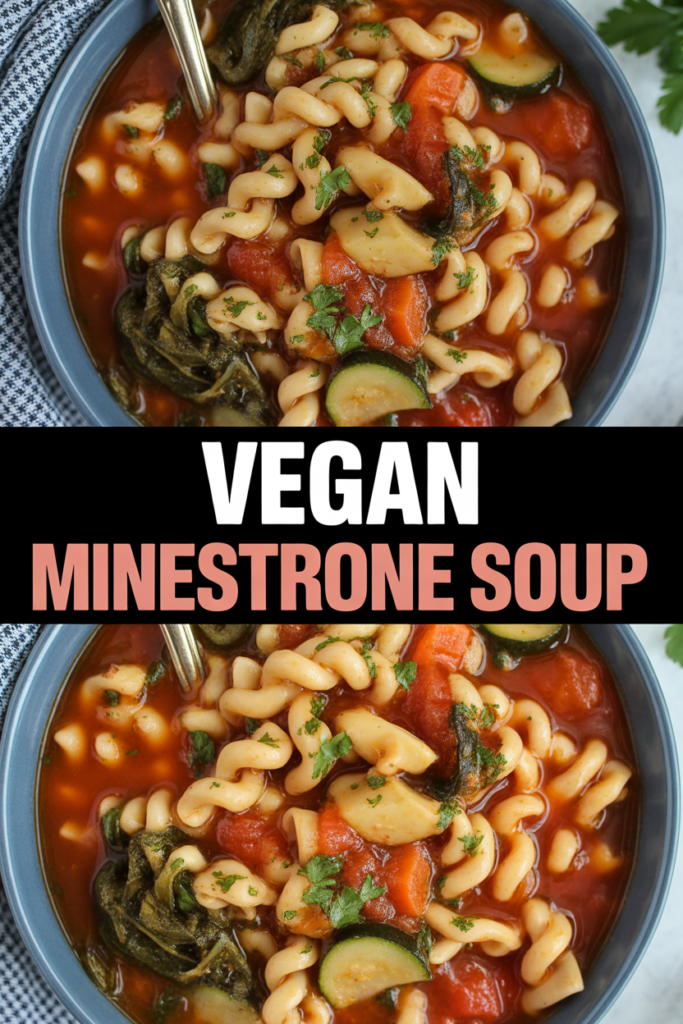
I love a one-pot, weeknight meal that feels like a hug. This vegan minestrone soup brings a rich tomato broth, tender zucchini, carrots, spinach, beans, and small pasta into one satisfying bowl.
The base starts with onion, carrots, and celery sautéed until sweet and fragrant. Then tomatoes and broth build a bright, savory flavor and the pasta adds comforting thickness as it soaks up the liquid.
This recipe is 100% plant-based and perfect for meal prep or a cozy lunch. I keep the core version simple, but you can swap greens, beans, or pasta shapes to suit what’s in your pantry.
Read on and I’ll show why I love it, what you’ll need, exact measurements, step-by-step cooking, texture tips, serving ideas, and storage instructions.
Why I Love This Hearty, Cozy One-Pot Soup
This bowl is the kind of dinner that warms you from the inside out. It starts with a rich tomato broth that tastes bright and savory. Small twisted pasta swells in the liquid and releases starch, so the broth turns a little thicker and more comforting as it cooks.
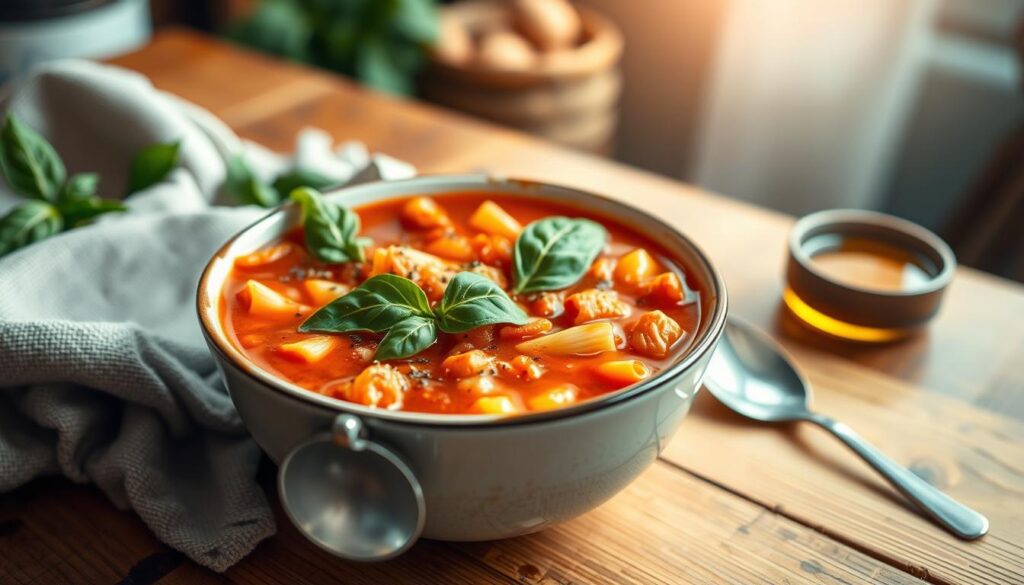
Rich broth, pasta, and colorful vegetables
Tender zucchini and sweet carrots add texture and color. I stir in spinach at the end so it stays vivid and tender. A sprinkle of fresh parsley lifts the whole bowl with brightness.
Weeknight-friendly and meal-prep ready
It’s truly a one-pot method: sauté, simmer, and cook the pasta in the same pot. Hands-on time is short and total cook time is about 25–30 minutes, depending on how fast you chop. I make a big batch; leftovers reheat well and the minestrone gains deeper flavor after resting.
| Element | Why I like it | Quick tip |
|---|---|---|
| Tomato broth | Cozy, savory base | Simmer gently to meld flavors |
| Small twisted pasta | Clings to veggies and broth | Add near the end for perfect bite |
| Greens & parsley | Fresh brightness | Stir in last minute |
What You’ll Need for Vegan Minestrone Soup
A handful of fresh produce and canned goods turn into a filling weeknight meal. Below I break the shopping list into easy categories so you can scan and shop fast.
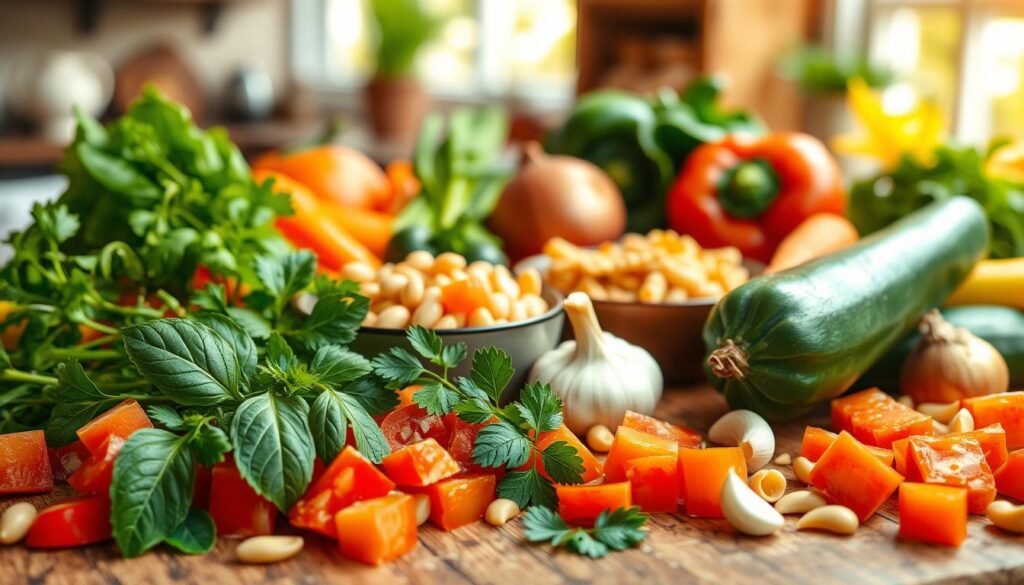
Vegetables that build classic flavor
I start with a classic mirepoix: onion, carrots, and celery plus garlic for depth. Then I add zucchini and green beans because they cook quickly and stay tender.
Beans, pasta, and the tomato-based broth
- Beans: kidney, chickpeas, or white beans—each adds protein and fiber.
- Pasta: small shapes (shells, elbows, mini penne) so the pasta disperses evenly.
- Broth: canned diced tomatoes plus vegetable broth create a rich, tomato-forward broth that stays bright.
Herbs and seasonings that finish the pot
I use oregano, basil, and thyme for that Italian-seasoning vibe. Add bay leaves and a pinch of red pepper flakes if you like heat. Finish with salt and pepper to taste.
| Item | Why | Tip |
|---|---|---|
| Kidney beans | Robust color and body | Rinse canned beans well |
| Chickpeas | Nutty, firm texture | Great for leftovers |
| White beans | Creamy and mild | Mashes slightly for thicker broth |
Tip: You can water-sauté the vegetables instead of oil to keep things low-fat and still get great flavor.
Ingredient List With Exact Measurements
I list the exact measurements here so you can shop and cook without guessing.
Olive oil (or water-sauté) and aromatics
1 tablespoon olive oil or 1/4 cup water for water-sauté. 1 medium onion, diced; 2 carrots, diced; 2 celery ribs, diced; 3–4 garlic cloves, minced.
Tender vegetables
1 medium zucchini, cut into 1/4-inch half-moons. About 1 1/2 cups green beans, trimmed and cut into 1-inch pieces.
Beans, tomatoes, broth, and pasta
1 (14-ounce) can kidney beans, drained and rinsed; 1 (14-ounce) can chickpeas, drained and rinsed. 1 (28-ounce) can diced tomatoes with juices for a rich tomato-based broth.
4 cups vegetable broth plus 2 cups water (add up to 4 cups more for looser texture). 1 cup small pasta (shells, elbows, mini penne, or rotini).
Greens, garnish, and seasonings
2 handfuls spinach stirred in at the end. Fresh parsley for garnish and a squeeze of lemon to finish.
2 teaspoons Italian seasoning (basil, oregano, thyme), 2–3 bay leaves, pinch red pepper flakes or pepper flakes to taste, salt and black pepper to taste.
| Ingredient | Amount | Prep note |
|---|---|---|
| Olive oil (or water) | 1 tbsp or 1/4 cup | Use water to sauté for oil-free option |
| Kidney beans | 14 oz (1 can) | Drain and rinse |
| Chickpeas | 14 oz (1 can) | Drain and rinse |
| Diced tomatoes | 28 oz (1 can) | With juices for rich broth |
| Small pasta (shells) | 1 cup | Add during simmer so pasta cooks in broth |
How I Make Vegan Minestrone Soup in a Large Pot
This method keeps everything in one large pot so cleanup stays easy. I prep first so the cooking moves quickly and nothing overcooks on the heat.
Prep and build flavor
Step 1: I chop the onion, celery, carrots, zucchini, and green beans, mince the garlic, and drain the beans. Having ingredients ready cuts active time to minutes.
Sauté and simmer
Step 2: In the pot over medium heat I sauté the onion, carrots, and celery about 5–8 minutes until softened and sweet.
Step 3: I add garlic and cook 1 minute, then stir in diced tomatoes, beans, green beans, vegetable broth, bay leaves, oregano, basil, and thyme.
Step 4: Bring to a boil, reduce the heat, and simmer gently for about 20 minutes so the flavors meld.
Pasta, greens, and seasoning
Step 5: I add the small pasta and cook 8–10 minutes in the broth until al dente. Cooking pasta in the pot thickens the broth and keeps pasta and veggies distributed evenly.
Step 6: In the last 5 minutes I stir in the spinach so it stays bright and tender. Step 7: Finish with salt, black pepper, and a pinch of red pepper flakes if I want heat.
Quick shortcut
If I’m rushed, I skip the sauté: add everything except spinach to the pot, bring to a boil, then simmer until the pasta is done and stir in greens at the end.
| Step | Time (minutes) | Main action |
|---|---|---|
| Prep | 5–10 | Chop veggies, rinse beans |
| Sauté mirepoix | 5–8 | Softens onion, carrots, celery |
| Simmer base | 20 | Tomatoes, broth, herbs meld |
| Pasta cook | 8–10 | Pasta cooks in broth for thickness |
| Greens finish | 5 | Spinach stirred in last |
Tips for the Best Texture and Flavor
Small choices—pasta shape, timing, and a few seasonings—decide whether a bowl stays hearty or goes mushy.
I prefer small pasta because it cooks quickly and fits with beans and vegetables on a spoon. Shells and ditalini catch broth; rotini adds texture; elbows feel classic and cozy.
To avoid mushy pasta, I keep the pot at a gentle simmer and add the pasta near the end. Stir occasionally so pieces move freely and do not clump at the bottom.
For even distribution, use enough liquid so the pasta can circulate. If I’m making this for later, I cook pasta separately and add it to each bowl before serving for perfect texture.
Boost flavor with extra garlic, a pinch more oregano, basil, and thyme, or a small sprinkle of Italian seasoning. For heat, I reach for red pepper flakes or a touch of red pepper for a gentle kick.
When I want more protein and heft, I add smoked tofu, sliced vegan sausage, or an extra can of beans. For seasonal swaps use kale instead of spinach, or toss in extra zucchini and green beans when they’re fresh.
| Focus | Quick tip | Why it works | When to use |
|---|---|---|---|
| Small pasta (shells, elbows) | Add last 8–10 min | Cooks fast and thickens broth | Weeknight meals |
| Even distribution | Gentle simmer + stir | Prevents clumping and mush | Large batches |
| Flavor boosters | Extra garlic, oregano, basil | Deepens tomato base | When broth tastes mild |
| Hearty add-ins | Smoked tofu, extra beans | More protein and texture | Meal prep or colder nights |
Serving Ideas and Garnishes I Use Every Time
Small finishing touches bring brightness and balance to a hearty tomato base. I finish each bowl with a generous sprinkle of freshly chopped parsley and a quick squeeze of lemon. That combo wakes up the broth and lifts every savory note.
Fresh parsley and a squeeze of lemon for brightness
I always add parsley right before serving so it stays vibrant. The lemon adds a clean acid that brightens the flavor and pairs beautifully with tomato and beans.
What I serve on the side for a full dinner
- Crusty bread for dunking—my favorite way to soak up the broth.
- A simple green salad with lemon vinaigrette for contrast.
- A sandwich or grilled cheese if I want something extra filling.
Optional extras I use: fresh cracked pepper, a pinch of basil, or red pepper flakes for warmth. For a cheesy finish, I reach for a dairy-free Parmesan or an almond-Parmesan alternative. A spoonful of pesto also adds an herby hit that tastes great with these soup recipes.
| Finish | Why I use it | When to add |
|---|---|---|
| Chopped parsley + lemon | Freshness and bright acid | Right before serving |
| Cracked pepper or red pepper flakes | Peppery warmth and depth | To taste, after plating |
| Dairy-free Parmesan / pesto | Umami or herb boost | Optional, as a topping |
Storing, Reheating, and Freezing for Meal Prep
I rely on smart storage so a weekday meal stays fresh and fast to reheat. After cooking, the pasta keeps absorbing liquid and the broth thickens in the fridge — that is totally normal and easy to fix.
How long it lasts and why it thickens
Store leftovers in an airtight container in the fridge for up to 5 days; some kitchens prefer 3 days for peak texture. Pasta and beans continue to soak up broth over time, which makes the bowl thicker after refrigeration.
Freezer instructions
Cool completely, portion into freezer-safe containers, and leave about 1/2 inch headspace. Freeze for 2–3 months for best flavor and quality; thaw overnight in the fridge before reheating.
Reheating tips
Reheat on the stovetop over low heat until steaming, which usually takes a few minutes. Or microwave in 30-second intervals, stirring between, and add a splash of broth or water — from a few tablespoons up to 1 cup — to loosen the texture.
Meal-prep tip: If I’m planning far ahead, I pack cooked pasta separately and add it at serving time for perfectly al dente bowls.
| Method | Max time | Thaw/reheat | Liquid to add |
|---|---|---|---|
| Fridge storage | Up to 5 days | Reheat stovetop or microwave | A few tbsp to 1 cup broth/water |
| Freezer portions | 2–3 months | Thaw overnight in fridge | Add 1/2 to 1 cup if thick |
| Pasta stored separately | 3–4 days in fridge | Warm briefly and combine | Minimal liquid needed |
More Ways to Make This Minestrone Recipe Your Own Next Time
Think of this recipe as a flexible template that adapts to whatever’s in your pantry. Swap kidney beans for chickpeas or use white beans for a creamier base. Use spinach for quick wilting or kale if you want a firmer green that holds up longer.
Change the pasta shape — shells, elbows, or mini penne — and cook it in the pot for a thicker broth, or cook separately if you plan leftovers. Add smoked tofu or vegan sausage for extra protein, or water-sauté the vegetables to keep it low-fat and still full of flavor.
Keep the same method, the same large pot, and tweak one or two ingredients each time. In about 30 minutes you’ll have a hearty, tomato-rich bowl that fits your mood and your ingredients.