
This post contains affiliate links. I may earn a commission if you purchase through them at no extra cost to you.
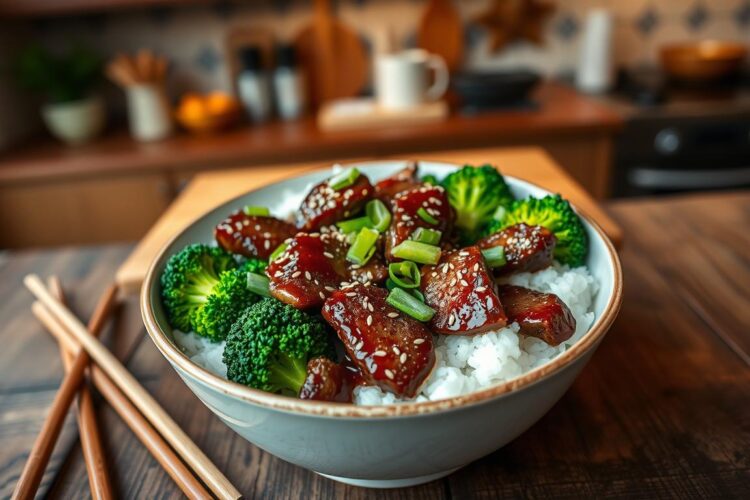
I love a quick weeknight fix, and my Teriyaki Beef & Broccoli Rice Bowl fits the bill. In about 30 minutes I build fluffy steamed rice, stack tender, thinly sliced beef, and pile on bright green broccoli for a satisfying contrast of textures.
This is my go-to when I need a balanced dinner that tastes like takeout but uses better ingredients. I sear the beef hot and fast so it stays juicy, steam the florets until crisp-tender, and simmer a glossy glaze until it clings to every bite.
The method is simple, uses one pan, and takes minimal hands-on time. Leftovers keep well for a few days, so making this dish saves time and delivers a craveable meal any night of the week.
Why I Love This Teriyaki Beef & Broccoli Rice Bowl for Busy Weeknights
When weeknights get busy, I turn to a fast, flavorful skillet meal that feels like takeout. It gives my family a balanced dinner without a long time at the stove.
Healthy, balanced, and full of protein
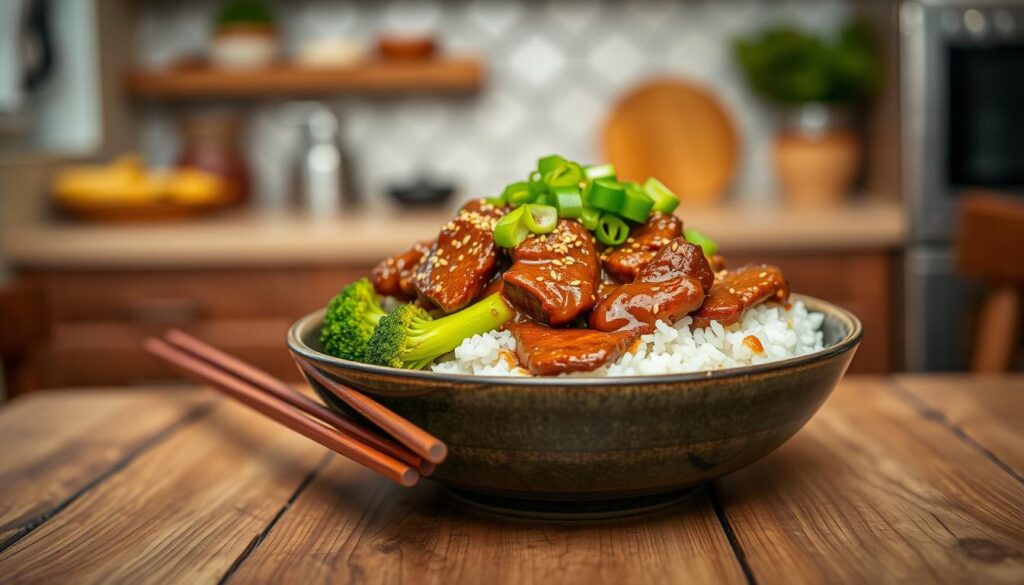
I use lean flank steak for protein so the fat stays low and the slices stay tender. Plenty of broccoli adds fiber and vitamins while steamed rice provides filling carbs.
Ready in about 30 minutes with minimal prep
This one-pan method comes together in roughly 30 minutes and keeps cleanup light. The sauce blends low sodium soy, honey (or brown sugar), garlic, and ginger for a glossy finish that clings to every bite.
- Fast: table-ready in about thirty minutes — perfect for tight evenings.
- Simple ingredients: no specialty shopping, easy swaps for meal prep.
- Family-friendly: adjust sweetness, salt, or heat to suit tastes.
- Leftovers: fridge-friendly for 3–4 days and reheats well.
What You’ll Need: Simple, Approachable Ingredients
To keep dinner fast and reliable, I gather a few core ingredients that come together in minutes. These staples make the sauce glossy, the protein tender, and the vegetables bright.
Beef and veggies
I usually pick flank steak, thinly sliced against the grain, or lean diced beef for a quicker sear. I pair it with fresh or frozen broccoli florets so I can save time without losing texture.
Teriyaki sauce essentials
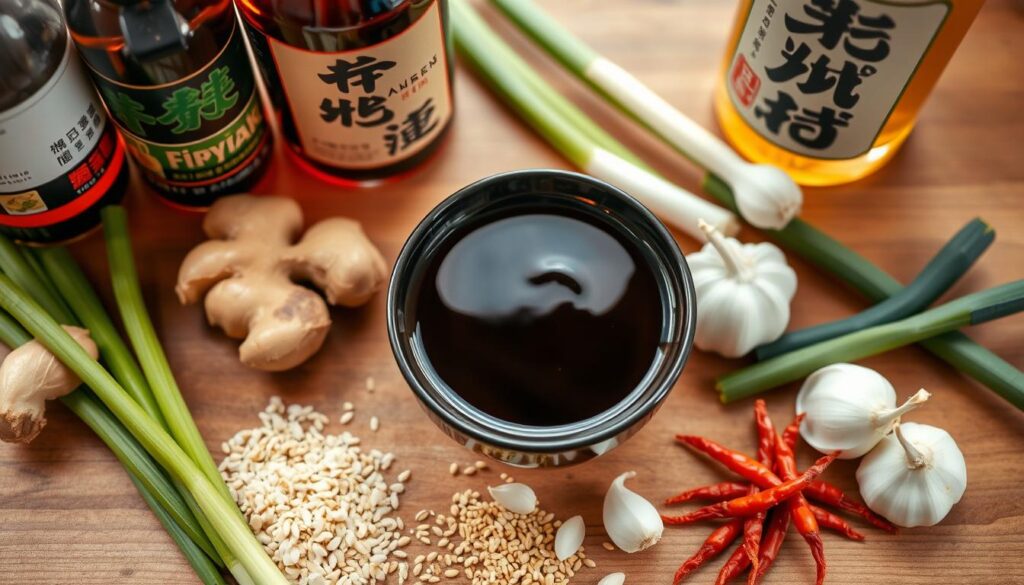
The sauce base is low sodium soy sauce with honey or brown sugar, plus garlic and fresh ginger for aroma. I mix a cornstarch slurry to make a light-brown, glossy sauce that clings to every piece when I make teriyaki at home.
Rice and garnish
Jasmine or basmati rice steams up fluffy and catches the sauce well. I finish bowls with sesame seeds and chopped green onions for crunch and color.
- Olive oil for a clean sear
- Cornstarch to thicken the glossy sauce
- Frozen broccoli and microwave rice as fast swaps
- Adjust honey or soy to control sweetness and sodium
Exact Ingredient List for My Teriyaki Beef & Broccoli Rice Bowl
Here’s a precise shopping list so you can walk into the kitchen and cook without guessing. These amounts make about four servings and let you finish in roughly 30 minutes with tidy prep and clean-up.
Core ingredients
- 1 lb flank steak (or 1 lb lean diced beef), sliced about 1/4-inch against the grain
- 1 lb broccoli florets (fresh or frozen)
- Steamed white rice (jasmine or basmati) for 4 generous servings
Sauce and thickener
- 1/4 cup low sodium soy sauce
- 2 tablespoons honey or brown sugar
- 2 cloves minced garlic and 1 teaspoon grated fresh ginger
- Slurry: 1 tablespoon cornstarch dissolved in 1/2 cup cold water
Finish and cook
- 2 tablespoons olive oil for searing
- Sesame seeds and freshly chopped green onions to garnish
- Serves ~4; leftovers keep 3–4 days refrigerated
| Quantity | Ingredient | Note |
|---|---|---|
| 1 lb | Flank steak / lean diced beef | Slice thin for fast cooking |
| 1 lb | Broccoli florets | Fresh or frozen works |
| 1/4 cup | Low sodium soy sauce | Keeps sodium in check |
Step-by-Step: How I Cook It Fast in One Pan
Fast, coordinated steps let me serve a hot, saucy skillet meal in under thirty minutes. Follow these clear instructions so each part finishes at the same time and stays vibrant.
I start the rice so it stays covered and steaming while I work. That way it’s hot and fluffy when I build the plate.
Whisk the sauce
I mix 1/4 cup low sodium soy, 2 tablespoons honey or brown sugar, 2 cloves minced garlic, and 1 teaspoon grated ginger. Then I dissolve 1 tablespoon cornstarch in 1/2 cup cold water and stir it in so the sauce is lump-free.
Prep and sear
I slice the steak thin against the grain and cut florets to even pieces. I heat a large skillet until very hot, add 1–2 teaspoons oil, and sear the beef in a single layer. If liquid pools, I drain it so the meat browns instead of steams.
Finish the veg and sauce
I cook the broccoli with a splash of water under a lid until just tender, then uncover to keep it crisp-tender and bright green. I lower the heat, pour in the sauce, and let it bubble until glossy—about a couple of minutes.
I return the meat and veggies to the skillet, toss to coat, and serve straight away. Garnish with green onions and sesame seeds for a simple finish.
| Step | Time | Pan Temp | Quick Tip |
|---|---|---|---|
| Steam rice | 12–15 minutes | Low (covered) | Keep covered to stay warm |
| Sear steak | 3–4 minutes per batch | Very high | Do not crowd the pan |
| Cook broccoli | 3–4 minutes | Medium-high (lid then open) | Splash water, cover briefly |
| Simmer sauce & toss | 2–3 minutes | Medium-low | Let sauce bubble until glossy |
Pro Tips for Tender Beef, Crisp Broccoli, and Saucy Perfection
I keep a few chef tricks up my sleeve to make the meat ultra-tender and the veg perfectly crisp. These steps focus on fast searing, balanced seasoning, and sauce control so every bite is consistent.
Slice thin and sear on high heat
I slice the steak thin and against the grain so the fibers shorten. That makes slices tender after a quick, hot sear.
Preheat the skillet until very hot; high heat gives a quick brown crust and seals juices in minutes.
Balance salt with low sodium soy
I use low sodium soy so I can adjust salt without overdoing it. Taste and add a touch more if needed.
Control sauce thickness with cornstarch
Mix a cornstarch slurry and add it slowly. If the sauce is too thick, thin with 1–2 tablespoons water. If it’s too thin, stir in a little more dissolved cornstarch.
Prevent boiling the meat
If meat releases liquid, I drain it so the pieces sear instead of simmer. That keeps the texture spot-on.
- Steam broccoli briefly with a splash of water, then remove the lid to keep it crisp-tender.
- Lower heat before adding the sauce so starches don’t scorch; let it bubble to glossy in a minute or two.
- Finish with a light drizzle of honey, fresh garlic and ginger, and a sprinkle of sesame for crunch.
| Common Issue | Quick Fix | Result | Timing |
|---|---|---|---|
| Tough slices | Slice thin against the grain | More tender meat | Prep step (before sear) |
| Soggy florets | Steam brief, uncover to finish | Bright, crisp-tender veg | 3–4 minutes |
| Runny sauce | Add dissolved cornstarch | Glossy, clingy sauce | 1–2 minutes |
| Steamed instead of seared meat | Drain excess liquid, use high heat | Good browning and texture | Sear 3–4 minutes per batch |
Teriyaki Beef & Broccoli Rice Bowl
I plate a warm bed of steamed white rice, then stack juicy, quick-seared slices of steak and bright florets for a contrast-packed dinner. Every forkful should mix soft grains, tender meat, and crisp-tender green pieces.
Texture contrast that makes every bite satisfying
The rice soaks up the savory-sweet sauce without turning soggy. Tender slices of beef add richness while the broccoli keeps each bite lively with a snap of freshness.
I like to spoon extra sauce on top so the glaze reaches every layer and the plate stays glossy. A light scatter of sesame seeds adds a delicate crunch that plays against the soft rice and juicy meat.
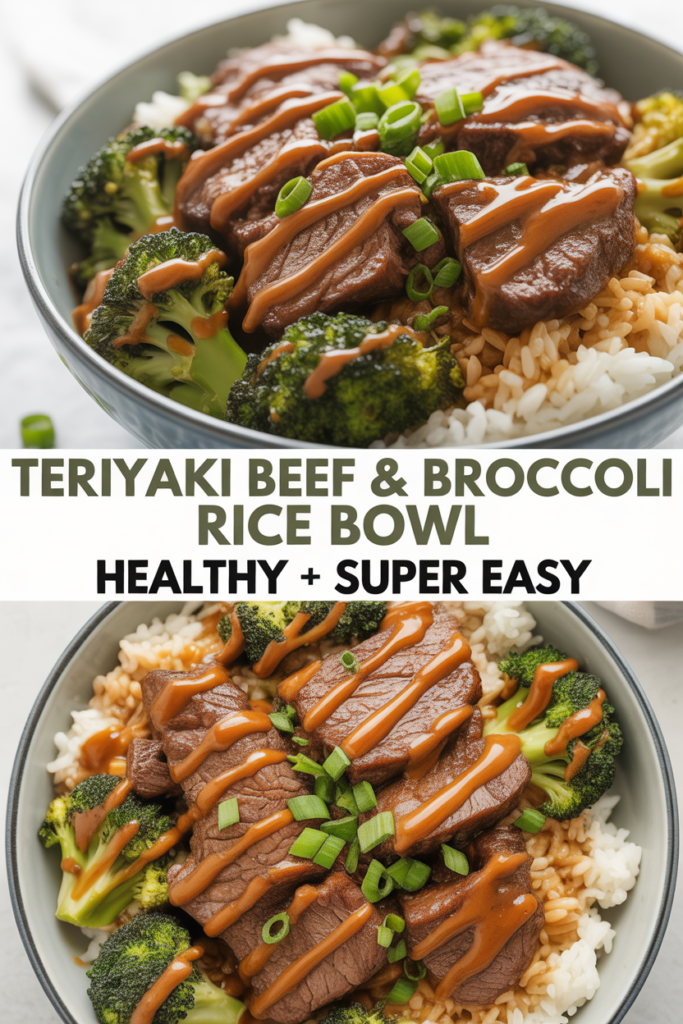
Light-brown, glossy teriyaki drizzle and fresh green onion finish
The sauce thickens in the pan in just a couple of minutes until it becomes a shiny, light-brown glaze. I assemble rice, steak, and broccoli, then drizzle the sauce over everything for maximum shine.
Fresh green onions go on top for brightness and a clean bite that lifts the whole dish. A final sprinkle of sesame seeds and a quick grind of pepper finish the presentation.
- I build each bowl with fluffy white rice that soaks up the sauce.
- Tender slices of beef are seared hot and fast to stay juicy.
- Broccoli provides color and a crisp-tender texture to balance richness.
- A glossy sauce and chopped green onions on top make the dish pop.
| Element | Role | Quick Tip |
|---|---|---|
| Rice | Base that absorbs sauce | Keep covered until plating |
| Steak | Protein, juicy texture | Sear fast on high heat |
| Broccoli | Crisp contrast and color | Steam briefly, then uncover |
Smart Swaps, Add-Ins, and Variations
I change proteins and sides to keep this weeknight recipe fresh without changing my method. Small swaps let me use what’s on hand and still finish in about 30 minutes.
Protein ideas
I rotate chicken, shrimp, tofu, or ground beef when I want variety. Each cooks fast and takes the same glossy sauce well.
- Chicken: thin strips, sear 4–6 minutes; low-fat and family-friendly.
- Shrimp: cook 2–3 minutes until pink for speedy prep.
- Tofu: press, cube, and pan-fry in a little oil for a firm texture.
Veggie upgrades
I add bell peppers, carrots, snap peas, or mushrooms for color and nutrients. Toss them in hot oil so they stay crisp.
Carb choices
Switch between jasmine, brown rice, cauliflower rice, or noodles to suit goals. Microwave rice or use pre-cooked grains to save time.
Add heat and balance
For heat, I use red pepper flakes or a drizzle of sriracha. If it gets too spicy, a splash of honey balances the flavor.
| Swap | Cook time | Quick tip |
|---|---|---|
| Chicken strips | 4–6 minutes | Slice thin and don’t overcrowd the pan |
| Firm tofu | 5–7 minutes | Press, cube, and brown in oil for texture |
| Shrimp | 2–3 minutes | Cook until just pink to avoid rubberiness |
- Simmer the sauce a few minutes so it thickens and clings; add cornstarch if needed.
- Scale the sauce when you add lots of veggies or noodles so everything gets coated.
- Finish with sesame and green onion for crunch and brightness.
Meal Prep, Storage, and Reheating
I prep meals so weeknights run smoother, and smart storage makes this dish a true time-saver.
Fridge life and reheating tips for the best texture
I store cooked beef and broccoli in airtight containers and plan for about 3–4 days in the fridge. For best texture, I keep rice or noodles separate from the sauced protein and vegetables.
- I portion servings into containers so lunches or dinners take minutes to reheat.
- To reheat, I warm portions in a lightly oiled skillet over medium heat, adding a splash of water to restore moisture.
- Microwave reheating works too — use short bursts (about a couple of minutes), stirring between intervals for even heat.
- If the glaze tightens in the fridge, I loosen it with 1–2 tablespoons of water and a brief simmer. A little dissolved cornstarch can help if it thickened too much.
- For frozen batches (up to 3 months), I thaw overnight in the fridge and finish in the pan so the meat stays juicy and the broccoli florets stay crisp-tender.
- I add green onions and sesame seeds after reheating for a fresh finish.
| Storage | Duration | Reheat |
|---|---|---|
| Fridge (portioned) | 3–4 days | Skillet, medium heat, splash of water — 2–3 minutes |
| Freezer | Up to 3 months | Thaw overnight, reheat in pan, adjust with water |
| Rice stored separately | 3–4 days | Microwave 1–2 minutes or reheat in pan |
Nutrition Snapshot and Serving Inspiration
Let’s look at what one serving delivers nutritionally and how I like to plate and garnish for the best results.
I consider this a balanced plate: lean beef provides solid protein, broccoli adds fiber and micronutrients, and a cup of grains gives steady energy.
As a reference, similar bowls often land around 500–525 calories and provide about 40–45 grams of protein per serving. I keep fat moderate by choosing lean cuts and small amounts of oil.
- I use low sodium soy in the teriyaki sauce to control salt and taste as I go.
- Finish each plate with a glossy sauce drizzle and plenty of fresh green onions for brightness.
- Switch grains—jasmine or basmati for fluff, brown for extra fiber, or cauliflower for a lighter option.
| Option | Why I use it | Quick tip |
|---|---|---|
| Jasmine / Basmati | Fluffy texture | Keep covered until plating |
| Brown rice | More fiber | Add an extra minute of time to cook |
| Cauliflower rice | Lower calories/fat | Toss with sesame and green onion on top |
Ready to Cook Tonight? Build Your Bowl and Dig In
Tonight, put a hot pan to work and assemble a fast, satisfying family dinner. Scoop warm rice on the bottom, then layer tender teriyaki beef and bright broccoli on top.
Spoon extra sauce over everything so the top glistens with a light-brown sheen. I use a hot skillet and a little oil to sear the steak, steam the veg until crisp-tender, then simmer the sauce for a minute or two.
Finish with sesame seeds and freshly chopped green onions for crunch and color. This one-pan meal takes about 30 minutes and makes a simple, healthy weeknight dinner that hits like takeout.