
This post contains affiliate links. I may earn a commission if you purchase through them at no extra cost to you.
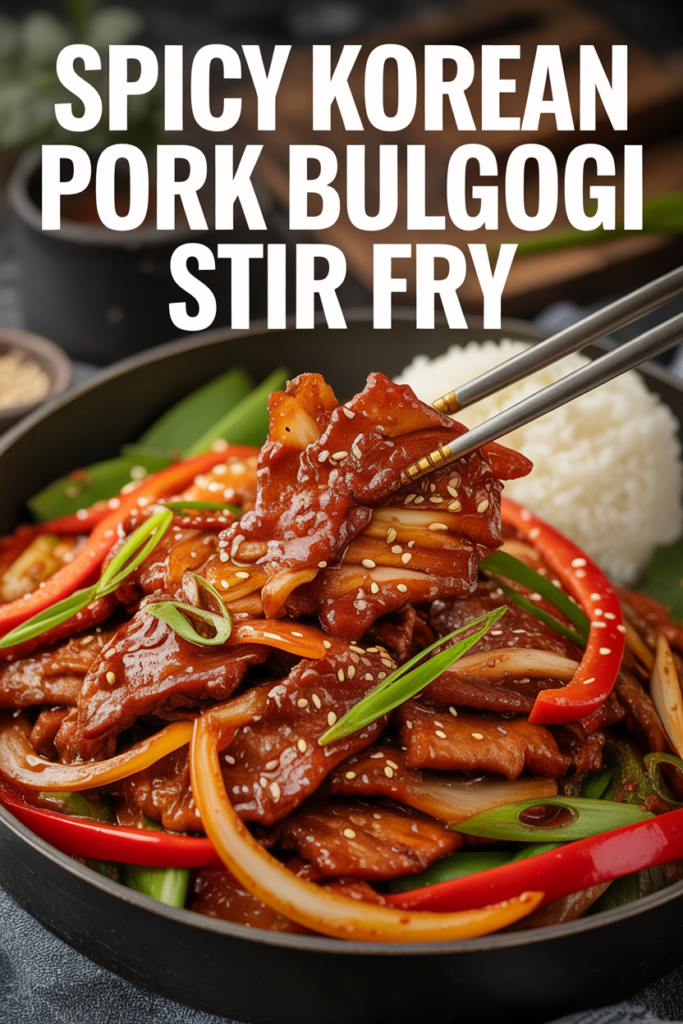
I turn to this Spicy Korean Pork Bulgogi Stir Fry as my go-to answer when I want bold BBQ flavor without firing up a grill. It uses a simple gochujang-based marinade, pantry staples, and one hot skillet to get dinner on the table in under 30 minutes.
Expect a punch of gochujang heat balanced with sweetness, bright garlic, and bites that caramelize at the edges. The method is quick: a short marinade, flash cooking on high, and a final reduction so the sauce clings to sticky, browned pieces.
This recipe is for cooks in the United States who can buy or order gochujang and who rely on everyday groceries. I’ll note best cuts — pork shoulder or pork belly — because a bit of fat helps flavor and caramelization.
Later I’ll show serving options like rice bowls or lettuce wraps, plus why this dish works, exact ingredients, timing, and storage tips so you can enjoy leftovers the next day.
Why I Make This Spicy Korean BBQ-Inspired Pork Stir Fry on Busy Nights
I cook this dish when I need bold BBQ-style flavor but only have a short amount of time. It hits the smoky-sweet, sticky notes I want while finishing in under 30 minutes.
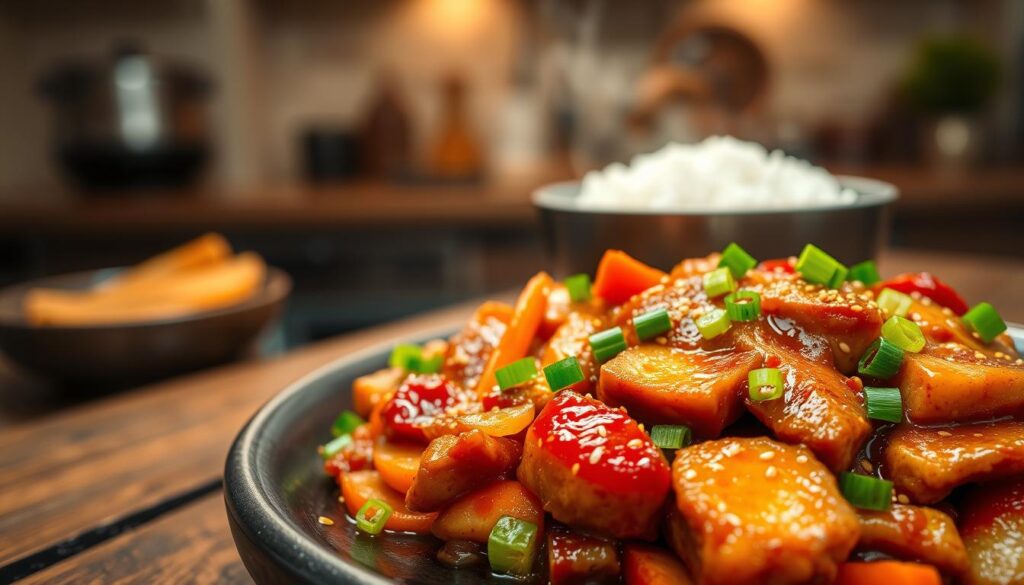
Jeyuk bokkeum flavors and fast caramelization
The payoff comes when the liquid reduces and the meat starts to sizzle. A short marinade and quick cooking create that caramelized bite in real weeknight minutes.
Why this is different from classic bulgogi
Here, the base uses gochujang instead of the soy-sugar profile of classic beef bulgogi. The result is a deeper, warmer sauce that doubles as both marinade and finishing glaze.
Key cooking principles I follow
- Hot skillet and medium to high heat so the pork sears, not steams.
- Cook in batches to avoid overcrowding the pan for better browning.
- Control the heat with gochugaru or less gochujang to make it mild or fiery.
Ingredients I Use for This Sticky, Sweet-Heat Weeknight Meal (Exact Measurements)
Here’s the exact ingredient list I use so you can get the same sticky, sweet-heat result every time. Everything is measured for two pounds of thinly sliced pork shoulder (Boston butt) or a pork belly swap if you want richer bites.
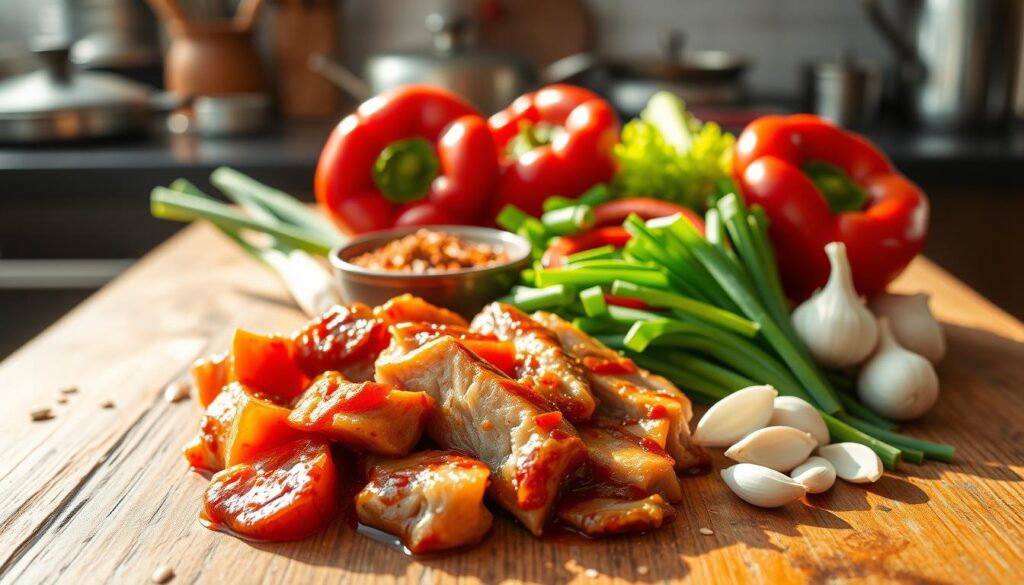
Pork and vegetables
- 2 lbs thinly sliced pork shoulder (Boston butt), partially frozen 1 hour for easier slicing — or 1.8–2 lbs pork belly to swap in
- 1/2 medium white onion, thinly sliced
- 1 red bell pepper, seeded and sliced
- 3 scallions, sliced (white for cooking, green for finishing)
Gochujang bulgogi-style marinade sauce
- 3 tbsp gochujang
- 2 tbsp soy sauce or tamari
- 1 tbsp sesame oil
- 1 tbsp rice vinegar
- 2 tbsp sugar
- 4 cloves garlic, minced
- 1 tbsp fresh ginger, grated
- 1/2 cup grated Asian pear or one small grated apple
Optional heat boosters and pantry swaps
- 1–2 tsp gochugaru to dial heat (start low for family-friendly)
- Toasted sesame seeds and extra toasted sesame oil for finishing
- Where to buy gochujang: international aisle, Asian markets, or online — pick a thick paste, not a pourable sauce
| Cut | Why I pick it | Best use |
|---|---|---|
| Pork shoulder | Good fat-to-lean balance, browns well | Everyday weeknight |
| Pork belly | Richer, more indulgent caramelization | When you want extra flavor |
My Gochujang Marinade: Sweet, Spicy, Garlicky, and Perfect for Pork Shoulder or Pork Belly
My gochujang-based marinade is the flavor engine that turns thin pork slices into a quick weeknight favorite. I treat the sauce as the dish’s personality: fermented depth from gochujang, sugar for balance, soy or tamari for umami, sesame oil for warmth, and rice vinegar to keep it bright.
Why fresh garlic and fresh ginger matter
I use fresh garlic and fresh ginger every time because they cut through strong meat notes and sharpen the overall flavor. Fresh aromatics also make the sauce taste cleaner than dried powders.
Fruit as tenderizer and sweetener
Grated Asian pear or apple does two jobs: it gently tenderizes and adds subtle sweetness. That mild fruit acidity rounds the sauce so the gochujang doesn’t feel one-note.
Controlling heat with gochugaru
Gochujang sets the baseline heat and fermented flavor. I add gochugaru as the volume knob: a little for a warm peppery lift, more for serious burn. Belly takes chili well because fat carries spice, while shoulder stays meaty and juicy.
Real-world marinating times and a texture tip
For thin slices I marinate about 30 minutes for best flavor. If I’m short on time, 15 minutes still works. For meal prep, overnight deepens the taste.
- Toss thoroughly so the thick marinade coats each slice instead of pooling.
- Watch for burning during cook—high heat, movement, and batch cooking fix that, which I’ll show next.
| Ingredient | Role in Marinade | Quick Tip |
|---|---|---|
| Gochujang | Fermented depth and base heat | Use 3 tbsp for two pounds; adjust with gochugaru |
| Fresh garlic & ginger | Sharp, clean aromatics; reduce strong meat smell | Minced or grated for even distribution |
| Grated Asian pear/apple | Tenderizer and mild sweetness | About 1/2 cup; avoids adding too much liquid |
| Soy sauce/tamari & sugar | Salt, umami, and rounded sweetness | Balance to taste; sugar helps caramelization |
| Sesame oil & rice vinegar | Nutty finish and bright acidity | Add oil sparingly; vinegar keeps the sauce lively |
How I Cook It Fast in a Skillet for High-Heat Caramelization
For weeknights, I rely on a hot skillet and tight timing to get that caramelized bite fast. The whole method fits inside a 30-minute window, from prep to plate.
Prep shortcut for easy slicing
I partially freeze the pork for about one hour so I can slice it thinly and evenly. This step saves time during cooking and helps the meat sear quickly in the pan.
Pan setup and batch cooking
I preheat a heavy skillet over medium-high heat until it’s properly hot. Then I add the pork in two batches so the pan stays hot and the meat sears instead of steams.
Timing cues during cooking
At first the pieces look wet. After a few minutes the liquid reduces and the sizzling sound changes. When browning begins and edges caramelize, that’s when flavor turns right. Total active cooking time per batch is short — just a few minutes each.
Veggie add-ins and texture
I add onions and red bell pepper so they soften but still keep a bit of crunch. Optional crunchy add-ins like snap peas or shiitake work well without changing the core dish.
How I avoid burnt sauce
Because a thick gochujang-based sauce has sugar, it can scorch fast. I keep the heat at medium-high, stir frequently, and wipe burnt bits between batches. Cook until the meat is glossy and caramelized, not dry.
| Step | What to watch for | Approximate minutes | Quick tip |
|---|---|---|---|
| Prep | Pork partially frozen for even slicing | 60 min chill (hands-off) | Slices cook faster and stay tender |
| Batch 1 | Pan hot, meat sizzles, liquid reduces | 3–4 minutes | Transfer when edges brown |
| Batch 2 + veggies | Onions soften, pepper keeps crunch | 3–4 minutes | Add veggies near end to preserve texture |
| Finish | Sauce glossy, meat caramelized | 1–2 minutes | Combine batches and toss to coat |
How I Serve Spicy Pork Bulgogi: Rice Bowls, Lettuce Wraps, and Easy Sides
For a fast, satisfying supper I arrange the cooked meat over rice and offer crisp lettuce for wrapping. That setup keeps the meal simple and lets everyone pick their heat and toppings.
My go-to weeknight bowl
I start with a hot bowl of rice, add a generous portion of pork bulgogi, then tuck in sliced peppers and scallions. A tiny drizzle of sesame oil finishes each bowl and lifts the aroma.
SSAM made easy at home
Ssam is just a wrap. I put a piece of meat on a lettuce leaf, add a pinch of rice, and smear a little ssamjang when I have it. Perilla or red leaf lettuce work well for texture.
Simple sides and finishing touches
I set out quick sides so the meal feels complete without extra cooking. Good options are cucumber salad, kimchi, or any crisp veg tossed in vinegar and sugar.
- Finish each plate with toasted sesame seeds and sliced green onions.
- Serve sesame oil on the side for drizzling at the table.
- Let guests build their own bowls and wraps for easy hosting.
| Serving | Why it works | Quick tip |
|---|---|---|
| Rice bowl | Comforting base that tames heat | Add green onions and a sesame oil drizzle |
| Lettuce wrap | Cool crunch balances rich meat | Include a small spoon of ssamjang |
| Simple sides | Bright contrast, no fuss | Kimchi or quick cucumber salad work well |
Make It Again Tomorrow: Storage, Reheating, and Meal Prep Wins
Cook once, enjoy twice: the sauce keeps its punch after reheating when you follow a few simple steps.
Cool leftovers and store in an airtight container in the fridge for quick lunches or second-night dinners. I label the container and use within 3–4 days for best flavor.
For texture, I reheat in a hot pan for a few minutes until the sauce turns glossy and the meat is warmed through. The microwave works for convenience—cover and heat in short bursts to keep the pork tender.
I prep by mixing the marinade, slicing the meat, and stashing a tray in the fridge or freezer. Frozen marinated portions (cooked or uncooked) make perfect emergency dinners that still taste bold.
Use leftovers in rice bowls, lettuce wraps, or quick fried rice. Belly stays juicier after reheating, while shoulder offers great everyday balance. This is the kind of recipe I’m happy to make once and eat twice at home.