

This post contains affiliate links. I may earn a commission if you purchase through them at no extra cost to you.

I pull a tray from the oven and the kitchen fills with warm, golden aroma. The little muffins puff high, set into tender centers, and get crisp, browned edges where the batter meets the pan.
There’s a melted-cheese moment that glistens on top, plus flecks of herbs and small bites of diced meat for a rustic, homemade look. I use one simple egg base that reheats well for meal prep and feels like comfort food.
I’ll walk you through the exact ingredients, foolproof steps, how to prevent sticking, doneness cues, and smart variations. You’ll get clear oven temps and total minutes so the muffins rise and hold their shape every time.
This is my go-to breakfast recipe when I want protein that’s quick, flexible, and truly satisfying.
Why I Make These Savory, Protein-Packed Egg Muffins on Repeat
When a tray comes out of the oven, each mini frittata has a puffed top, crisped rim, and a glossy, deep-golden cheese crown. That bakery-style finish makes them feel special, even on a rushed morning.
Freshly baked look and texture
The tops rise lightly while the centers stay tender and fluffy. The edges brown and crisp, giving a pleasant contrast to the soft interior.
How the cheese finishes
Cheese melts into a gloss, then browns to a savory cap that adds texture and rich taste. A little extra bake time makes that golden crust even more satisfying.

Perfect for meals, snacks, and make-ahead plans
These egg muffins are protein-packed and hold up well after chilling. I use them for quick weekday breakfasts, a grab-and-go snack, or a brunch board with fruit and coffee.
- Even mix-ins keep every bite balanced — no soggy pockets.
- They reheat fast and stay flavorful, so I make a batch for the week.
What You’ll Need for Savory Egg Muffin Cups
I like to set out the exact measurements first; it saves time and guessing once the oven is on.
Exact ingredients (yields 12 cups)
- 9 large eggs
- 3 tablespoons all-purpose flour
- 3/4 teaspoon baking powder
- 1 clove garlic, minced; salt and pepper to taste
- 1/2 cup red bell pepper, small dice
- 1/4 cup scallions, thinly sliced
- 3/4 cup shredded cheddar cheese (or use cheddar cheese)
- Olive oil or cooking spray for the pan
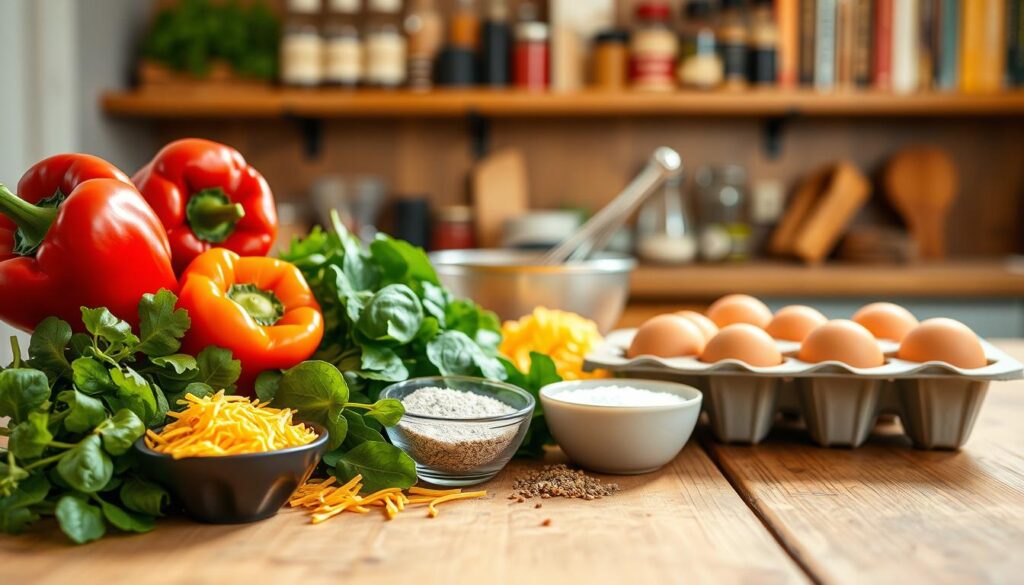
Optional add-ins and vegetables
- Protein: 3 slices cooked bacon (chopped) or 1/2 cup cooked turkey sausage
- Veg: 1/2 cup mushrooms (small dice), 1 cup packed spinach (sauté and squeeze dry), 1/2 cup diced tomatoes (drained)
- Herbs: 2 tablespoons chopped parsley or chives
Cheese swaps and tools
- Cheese options: feta for tang, or goat cheese for creamy richness (or stick with cheddar cheese)
- Tools: standard 12-cup muffin pan, silicone liners (optional), whisk, mixing bowl
- Pan prep: brush with a little olive oil or use a quick spray to prevent sticking
Ingredient Notes for the Best Rise, Flavor, and Texture
I focus on simple ingredient rules that guarantee rise, texture, and bright flavor every time.
Why I use whole large eggs (and how many you need)
I stick with whole large eggs because the whites give lift while the yolks add richness. That balance prevents a rubbery result and keeps the interior tender.
For a standard 12-cup tin I use 9 large eggs. That count creates even portions and a reliable set without overflowing the cups.
The “secret” lift: flour and baking powder
A spoonful of flour plus a dash of baking powder gives the egg mixture structure. They help the cups puff and stay stable, so you won’t see a sad collapse after cooling.
Whisk until mostly smooth; a few tiny flour specks are okay and bake right in.
Moisture control for spinach and tomatoes
Wet vegetables ruin texture fast. Sauté spinach, squeeze it dry, then cool before folding in.
Use seeded, diced tomatoes sparingly or drain them well to avoid sogginess.
- Sauté, drain, cool slightly, then fold into the mixture.
- Keep portions small so every cup bakes evenly.
Seasoning that pops
I use fresh garlic or a light garlic powder, enough salt, and plenty of black pepper so the flavor isn’t flat. Small herb flecks add a rustic, homemade look and a bright finish.
How I Prep the Muffin Pan So Egg Muffins Don’t Stick
I always prep the pan before I mix the filling so nothing sticks and cleanup stays quick. A few simple steps make sure the muffins release cleanly and the edges brown evenly.
Olive oil vs cooking spray vs silicone liners
I prefer olive oil when I want a good browned rim. A light brush of oil gives great release and flavor on the edges.
Cooking spray is my go-to for speed. It covers cups evenly and saves time on busy mornings.
Silicone liners give the cleanest release, but I still lightly grease them. That extra oil makes sure cheese or bits of vegetable don’t cling.
How full I fill each cup for a neat rise
I fill each cup about two‑thirds full. That leaves room for the muffins to rise without spilling over.
Overfilling can cause uneven cooking and a peaked top before the center sets. If mix-in pieces land on the rim, I wipe them off so they don’t burn onto the pan.
- Prep the muffin pan first so you aren’t rushing when the batter is ready.
- Grease liners or metal wells with oil or a quick spray for best results.
- Fill to about two‑thirds to make sure the muffins bake into neat portions.
Step-by-Step: How to Make Savory Egg Muffin Cups in the Oven
Before I touch the eggs, I decide whether I need a gentler 350°F bake or a quicker oven 375°F set for a crisper edge. That choice sets the cooking time and final texture.
Prep, chop, and portion mix-ins
I grease the muffin pan or line wells so the pan is ready before the egg mixture. I chop vegetables and cooked meat small and split them evenly among the cups so each muffin bakes the same.
Whisk and combine the mixture
I crack the eggs into a bowl, add minced garlic, salt, and pepper, then whisk until uniform and a bit frothy. I sprinkle the flour and baking powder over the mixture and whisk lightly—small flour lumps are fine and will bake out.
- Portion the mixture: pour about a scant 1/4 cup into each cavity to reach roughly two‑thirds full.
- Top each cup with cheese (feta or shredded cheddar cheese works great) so it bakes into a glossy, browned cap.
- Bake about 20–24 minutes until tops are puffed and set and edges are golden.
Let the pan cool 5 minutes so muffins firm. Run a butter knife around each cup, then lift out for a photo-ready rustic finish.
| Oven Temp | Bake Minutes | Result |
|---|---|---|
| 350°F | 22–24 minutes | Gentle rise, tender center, softer edges |
| 375°F | 20–22 minutes | Faster set, crisper rim, deeper golden top |
| Visual Cue | — | Puffed top, set center, golden-brown cheese |
Timing, Doneness, and Serving Ideas
A few minutes make all the difference between tender centers and dry edges. I rely on a clear bake-time window and visual cues so results stay consistent.
How I know they’re done
Bake about 20 minutes at 375°F or 22–24 minutes at 350°F depending on your oven and how full the wells are. Wet mix-ins can add a couple of extra minutes.
Doneness cues: tops should be lightly puffed, centers set (not wet), and edges browned and pulling slightly from the pan. A gentle press feels springy and a toothpick comes out clean of raw egg; melted cheese on the tip is fine.
Serving and pairing
I serve warm on a brunch board, tuck them into a breakfast plate with fruit, or grab one for a one-handed breakfast. For a light meal, add avocado slices or a small green salad.
- Quick toppings: salsa or hot sauce on the side.
- Finish: fresh cracked pepper and a little extra cheese for “just-baked” flavor after reheating.
Easy Variations Using What’s in Your Fridge
I often split one batch so each row on the pan gets a unique twist. This keeps mornings simple and gives everyone a choice without extra work.
Vegetable swaps that hold up
Use about 2½ cups total of vegetables, chopped small so the base binds well. I like red pepper and scallions for crunch, broccoli or kale for heft, and mushrooms for savory depth.
Meat add-ins and why I cook them first
Always use precooked meat. I crisp bacon or heat precooked sausage to render fat and remove excess moisture. That avoids undercooked bits and keeps bake time steady.
Cheese swaps to change the mood
Switch cheeses for different notes: sharp cheddar for classic comfort, feta for tang, goat cheese for creaminess. Parmesan or pepper jack also work well.
- Control wet ingredients: sauté spinach and drain; limit raw tomatoes or chop and drain so they don’t make the batter soggy.
- Try one real version I use: Jimmy Dean turkey sausage with poblano + red pepper and a few chopped cherry tomatoes for smoky-sweet balance.
- Keep mix-ins to about 2 cups total per dozen so the egg base can rise and set properly.
Make-Ahead, Storage, and Reheating for Busy Weeks
I plan my week around one Sunday bake so breakfasts are ready in minutes. Let the batch cool to room temperature before you touch storage. Cooling prevents condensation that makes them soggy in the container.
Short-term: refrigerator storage
Place the cooled muffins in a clean airtight container and refrigerate. I keep them in the refrigerator for up to 3 days so texture and flavor stay fresh. Use a single layer if possible or separate layers with parchment.
Long-term: freezing and thawing
For longer meal prep, freeze extras in a freezer-safe container or bag for up to 3 months. Freeze in a single layer first so individual pieces don’t stick, then stack or bag them.
Thaw overnight in the refrigerator for the best texture. Moving them to the fridge the night before gives even thawing and keeps centers tender.
Fast reheats for busy mornings
My quickest reheat is about 30 seconds in the microwave; add 10–15 seconds if needed. Avoid long pulses—overheating makes the egg muffins rubbery. A short burst preserves a fluffy texture.
| Storage | Container Type | Max Time | Thaw/Reheat |
|---|---|---|---|
| Refrigerator | Airtight container | Up to 3 days | Microwave 30–45 seconds |
| Freezer | Freezer-safe container or bag | Up to 3 months | Thaw overnight in refrigerator, then microwave |
| On-the-go | Insulated lunch container | Same-day | Eat warm or room temp |
Your Next Batch Starts Here: Recipe Card Preview and Prep Plan
I keep a clean recipe card as my go-to: exact ingredients, clear steps, and key measurements so I can jump in fast. The card is the quick-reference hub when I want a reliable breakfast ready all week.
My simple prep flow: prep the pan → prep mix-ins → whisk the egg base → portion into the muffin pan → top with cheese → bake → cool. This sequence saves time and keeps the process stress-free.
Aim for lightly puffed muffins with crisp edges and a glossy, deep-golden cheese top. Double the batch when you’re already chopping vegetables to get extra servings with almost no extra work.
Portion with a standard cup measure so each muffin cooks evenly. I usually do one classic row and one experimental row per pan — it keeps mornings familiar and fun.