
This post contains affiliate links. I may earn a commission if you purchase through them at no extra cost to you.
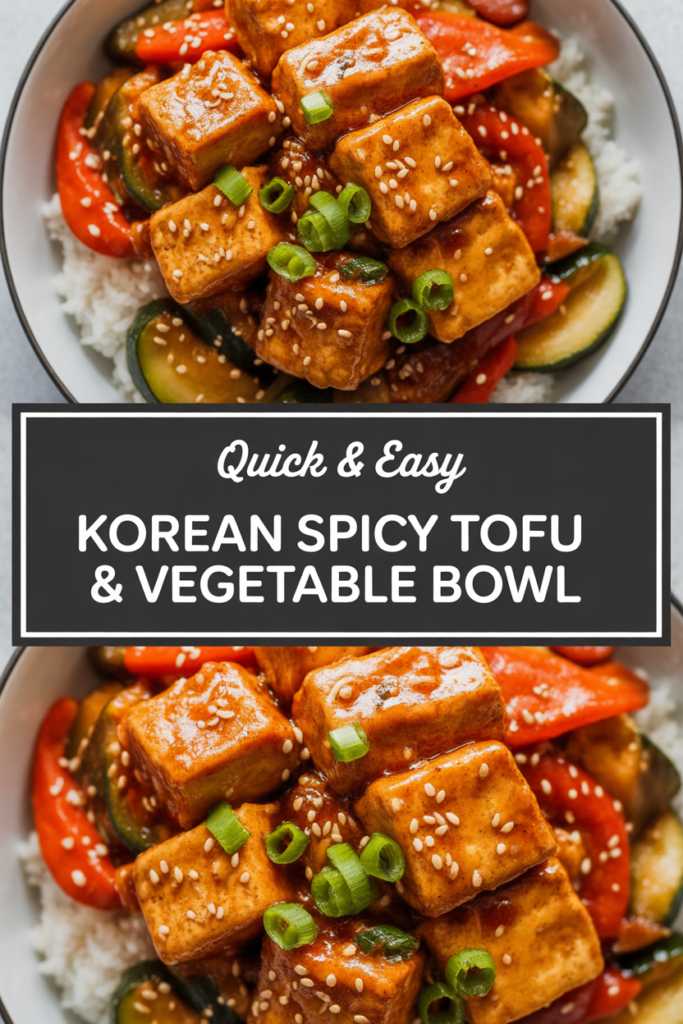
I reach for this bowl when I want takeout-level flavor with pantry-friendly ingredients and realistic cleanup. It’s my go-to for quick weeknight dinners and simple meal prep that still feels like comfort food.
I’ll share an exact list of ingredients with measurements — extra-firm tofu, gochujang (a thick, crimson-red paste made from red chile peppers and fermented soybeans), soy sauce or tamari, maple syrup or brown sugar, rice vinegar, sesame oil, neutral cooking oil, garlic, ginger, red bell peppers, zucchini, carrots, and optional gochugaru. The recipe includes clear steps for pressing and cubing the tofu, pan-searing or baking it, whisking a glossy sauce, and sautéing vegetables.
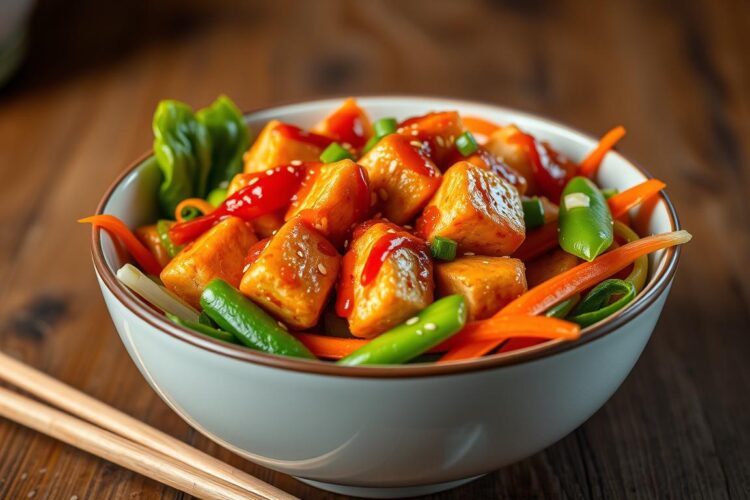
The eating experience is saucy and spicy-sweet: golden tofu coated in a shiny sauce over rice with colorful veggies that stay tender-crisp. This dish stands alone as a full weeknight meal and stores well for make-ahead lunches.
Why I Keep This Korean-Inspired Tofu Bowl on Repeat
This recipe lives on my weeknight menu because it delivers bold flavor with minimal fuss. I want quick dinners that still feel satisfying, and this one hits that balance every time.
Bold gochujang heat balanced with sweet, tangy, and sesame
The gochujang sauce gives a deep, savory backbone. I mellow it with a touch of sweet and bright rice vinegar, then finish with sesame for a toasty note. The sauce clings to the cubes, boosting umami with every bite.
A weeknight-friendly vegan comfort food that doubles as meal prep
Protein from tofu and carbs from rice make it a complete meal. It scales easily for leftovers and keeps well in the fridge. I often batch-cook components and assemble fresh for lunch.
Texture wins: lightly crisp tofu + tender-crisp veggies + fluffy rice
Crunchy exterior, soft interior, and fluffy rice create contrast that keeps each forkful exciting. That mix is why I treat this among my favorite rice bowls and recipes for busy nights.
| Component | Role | Texture |
|---|---|---|
| Tofu | Protein, sauce carrier | Lightly crisp outside, tender inside |
| Vegetables | Volume, freshness | Tender-crisp to retain bite |
| Rice | Carb, saucy base | Fluffy, soaks up sauce |
Quick Recipe Snapshot: Time, Servings, and What to Expect
On busy weeknights I need a real dinner that comes together fast and still tastes thoughtful. Below is a clear snapshot so you can plan without surprises.
Prep and cook minutes
| Step | Action | Minutes |
|---|---|---|
| Prep | Press, cube, and chop vegetables; whisk sauce | 15 minutes |
| Cook | Skillet crisping or oven/air-fryer hands-off finish | 20–25 minutes |
| Total | Start to table | 35–40 minutes |
Servings and portion guide
This yields about 4 servings. Each serving is a bed of rice, roughly 1 cup, topped with a generous scoop of golden tofu, a mix of colorful vegetables, sauce, and a sprinkle of scallions and sesame.
Spice and heat guidance
The spice level as written is noticeably hot but balanced by sweet and tangy notes. It suits anyone who likes Korean-inspired heat without overwhelming the plate.
- To make it milder, cut the gochujang and add a touch more maple or rice vinegar to balance flavor.
- For more assertive heat, stir in a pinch of gochugaru or increase it to taste.
- Oven or air-fryer at about 400°F reduces active skillet babysitting time and still crisps the tofu.
After the listed minutes you should have glossy, sauce-coated tofu, crisp-tender vegetables, and rice that soaks up the sauce—ready to serve and enjoy.
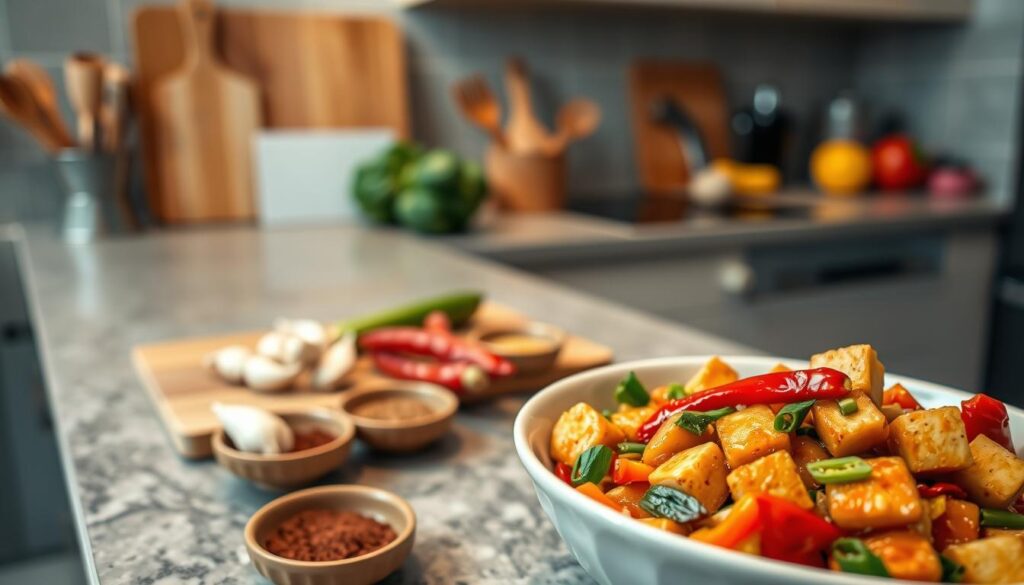
Ingredients for a Korean Spicy Tofu & Vegetable Bowl
I list exact ingredients so the balance is reliable and the texture reads like takeout at home. Below are my go-to items with precise measures for four servings.
Tofu
14 oz extra-firm tofu (best for a meatier, crispier bite). If you only find firm tofu, press 30–45 minutes and expect a softer interior.
Korean spicy sauce
Whisk together: 3 tbsp gochujang, 2 tbsp soy sauce or tamari, 1 tbsp maple syrup or 1 tbsp brown sugar, 1 tbsp rice vinegar (unseasoned), 1 tsp sesame oil, 2 garlic cloves minced, 1 tsp grated ginger. Optional: 1/2 tsp gochugaru for extra heat.
Vegetables
1 red bell peppers, sliced; 1 medium zucchini, half-moon sliced; 2 medium carrots, matchstick or thinly sliced. These cook fast and keep color.
Serving components and garnishes
Steamed white rice to serve. Garnish with chopped green onions and white sesame seeds.
| Item | Measure | Notes / Swaps |
|---|---|---|
| Tofu | 14 oz extra-firm | Press longer if using firm |
| Soy sauce / Tamari | 2 tbsp | Tamari for gluten-free |
| Sweetener | 1 tbsp maple syrup or brown sugar | Maple for liquid sheen; brown sugar if pantry-only |
| Oils & Vinegar | 1 tbsp neutral cooking oil + 1 tsp sesame oil; 1 tbsp rice vinegar | Neutral oil for sear; sesame for finish; unseasoned rice vinegar preferred |
My Korean Spicy Sauce: Gochujang, Soy, Sesame, and Rice Vinegar
This whisked sauce pulls the whole dish together with an easy balance of bold and bright flavors.
What gochujang is and why it matters
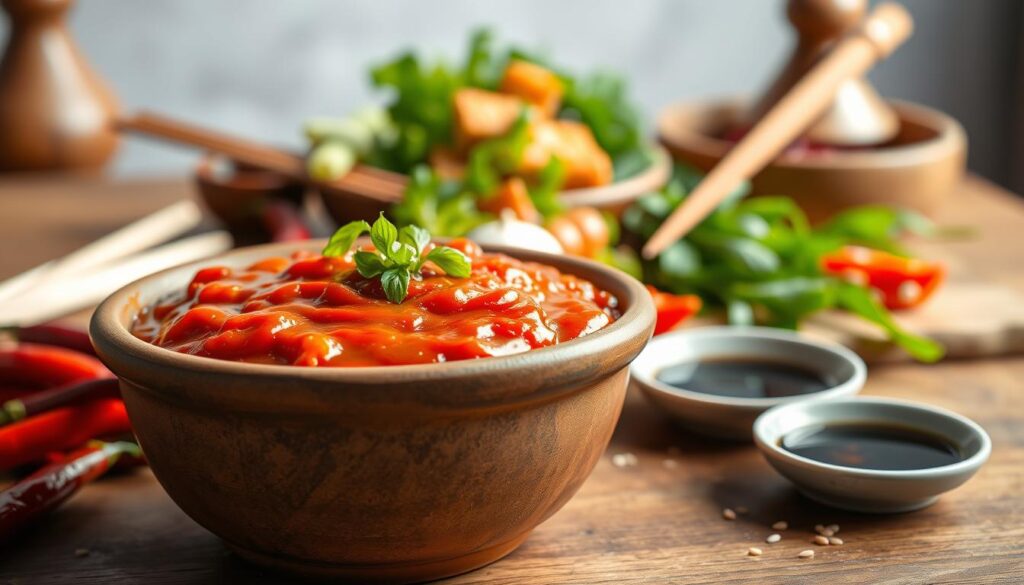
Gochujang is a thick fermented chili paste made from red chile peppers and fermented soybeans. Fermentation adds depth, so it gives more than just heat.
How I build and balance the sauce
I whisk together salty (soy sauce), sweet (maple or sugar), tangy (rice vinegar), nutty (sesame oil), and spicy (gochujang). Start with 3 tablespoons gochujang, 2 tablespoons soy sauce, 1 tablespoon maple syrup, 1 tablespoon rice vinegar, 1 teaspoon sesame oil, 1 clove garlic and 1 teaspoon grated ginger, then taste and tweak.
- Too sharp? Add a touch more maple or a pinch of sugar.
- Too sweet? Add a splash more rice vinegar.
- Need more heat? Stir in gochugaru a pinch at a time.
Gluten-free and extra heat notes
If you need gluten-free, swap soy sauce for tamari and check gochujang labels—many brands include wheat. I add gochugaru when I want a dryer, sharper chili heat; it’s optional and intensifies the spice without changing the paste base.
| Component | Role | Typical Amount |
|---|---|---|
| Gochujang (paste) | Heat & depth | 3 tbsp |
| Soy sauce / Tamari | Salt & umami | 2 tbsp |
| Rice vinegar + sesame oil | Tang & nutty finish | 1 tbsp vinegar, 1 tsp oil |
This sauce works especially well for gochujang tofu because it clings and becomes glossy when heated. The method is simple: whisk together in a bowl and toss with warm pieces for a quick, confident finish.
Prep Tips for Crispy Tofu and Fast Cooking
A few smart steps before heat make the tofu crisp and the whole dinner faster. These small moves cut active time and improve texture.
Pressing for a meatier, crispier bite
I press extra firm tofu between plates with a weight for about 20 minutes to remove moisture. This step helps the pieces brown instead of steaming.
Cube evenly so everything finishes together
I cut the block into uniform, bite-size cubes so each piece hits the skillet at the same time. If you use firm tofu, plan extra pressing and handle cubes gently to avoid crumbling.
Vegetable prep that speeds cooking
Matchstick carrots cook fast and match the quick slices I do for peppers and zucchini. When short on time, thinner slices shave minutes off cook time.
- Pre-measure sauce ingredients while the tofu presses so stove work runs smoothly.
- Use a thin layer of oil and a hot pan set to medium-high heat to get golden edges without overcooking.
| Task | Method | Why it helps |
|---|---|---|
| Pressing | 20 minutes under weight | Removes moisture for better browning |
| Cubing | Uniform, bite-size pieces | Even browning in same time |
| Veg cuts | Matchsticks vs quick slices | Faster, even cooking for carrots and peppers |
Step-by-Step: How I Make This Tofu Rice Bowl (Skillet or Oven)
Step-by-step cooking saves time and makes sure each component hits the table at peak texture. Below are the short, actionable steps I follow so the rice bowls come out glossy, hot, and balanced every time.
Press and cube the block
I press extra firm for about 20 minutes to remove water. Then I cut even, bite-size cubes so pieces brown at the same rate.
Pan-sear for a golden crust
Preheat a skillet, add neutral cooking oil, and spread cubes in a single layer. Cook over medium-high heat about 3–4 minutes per side until golden and lightly crisp.
Baked option for hands-off crisping
For hands-off time, toss cubes with a little oil and bake at 400°F for 20–25 minutes, flipping once so edges brown.
Whisk the sauce
In a bowl I whisk together gochujang paste, soy sauce or tamari, rice vinegar, a tablespoon sweetener, sesame oil, garlic, and ginger so the sauce is ready when the tofu is browned.
Sauté the vegetables
Over medium heat I cook red bell peppers, zucchini, and carrots just until tender-crisp, about 4–5 minutes. This keeps them bright and not watery.
Toss and finish
I add the tofu back to the skillet, pour in the sauce, and toss for 1–2 minutes until glossy and sticky. The sauce tightens fast, so this last step takes just a few minutes.
| Step | Heat | Minutes |
|---|---|---|
| Press | Room temp | 20 |
| Pan-sear | Medium-high heat | 6–8 total |
| Bake | 400°F | 20–25 |
Build Your Bowl: Rice, Saucy Tofu, Veggies, and Toppings
A well-built bowl starts with a fluffy layer of rice that soaks up every last drop of sauce. I use short-grain steamed white rice because its tender grains cling to flavor and temper the heat.
I assemble in this order so the flavors and textures stack right:
- Rice first — a warm base that absorbs sauce.
- Vegetables next — they sit on the rice and stay crisp-tender.
- Saucy tofu last — I place it on top so the sauce drips down into the rice.
Finishing touches: chopped green onions and white sesame seeds
I sprinkle chopped green onions for a fresh bite and scatter white sesame seeds for nutty crunch. These toppings add the last layer of texture and balance the savory sauce.
Timing matters: I like to assemble within a few minutes of finishing the sauce-coating step so everything stays hot. For meal prep, pack rice and tofu separately or reserve a tablespoon of extra sauce to spoon on when reheating.
| Component | Role | Tip |
|---|---|---|
| Rice | Absorbs sauce | Use short-grain steamed white rice for best soak |
| Tofu | Saucy, protein | Add last so sauce drips into rice |
| Garnishes | Freshness & crunch | Chopped green onions + white sesame seeds |
Make It Again: Meal Prep, Storage, and Easy Serving Ideas
Batching rice, protein, and sauce means I can build quick meals without losing texture. I portion rice, cubed tofu, vegetables, and sauce into airtight containers for grab-and-go lunches.
Store components in the fridge for up to 3 days. I often keep the sauce separate so the cubes stay crisp. If packed together, the sauce tightens—warm in short microwave bursts or reheat in a hot skillet for best results.
To refresh leftovers, add a splash of vinegar for brightness, a pinch of sugar or maple to balance, or a drop of soy sauce if flavors feel muted. A little water loosens thick sauce when reheating in the microwave.
Quick sides I use: sautéed spinach, mushrooms, or tangy kimchi-style vegetables. These sides add fiber and help round out the meal, while the tofu gives protein and iron depending on your soy sauce choice.
Make several recipes at once and assemble in minutes on busy nights. This approach keeps weeknight dinner simple, flexible, and satisfying.