
This post contains affiliate links. I may earn a commission if you purchase through them at no extra cost to you.
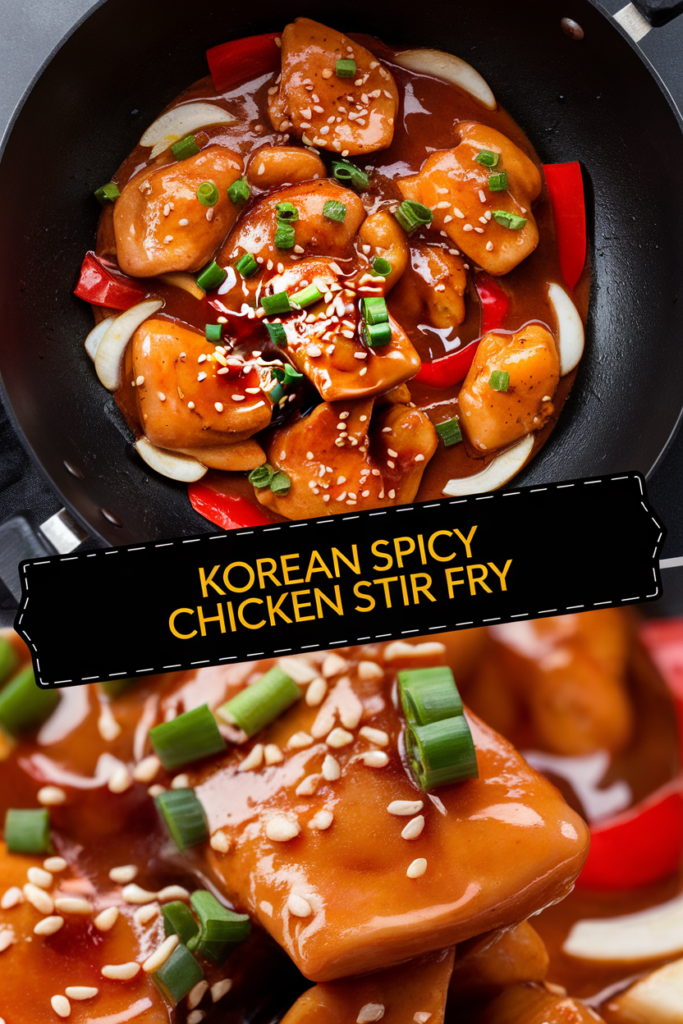
I love this one-pan, Chuncheon-inspired dakgalbi-style dish because it delivers big gochujang flavor with very little fuss. It comes together in about 25 minutes and gives you glossy sauce and caramelized edges that feel like restaurant food at home.
I use lean chicken breast for speed, with easy swaps to thighs if you want extra juiciness. The ingredients are pantry-accessible: garlic, ginger, gochujang, soy sauce or tamari, sesame oil, rice vinegar, red bell pepper, white onion, scallions, sesame seeds, and optional gochugaru.
This is weeknight cooking at high heat — quick tossing, browned edges, and no watery sauté. Expect a spicy, savory, slightly sweet profile where gochujang is the backbone of the sauce. I also tease the best part: finishing leftovers in the same pan as crispy fried rice for a second meal.
Serve it over rice, in lettuce wraps, or straight from the pan. If you want a fast, authentic-feeling recipe that respects real flavors and tight time, this is my go-to meal.
Why I Make This Korean Spicy Chicken Stir Fry on Busy Weeknights
I built this one-pan recipe to capture smoky, caramelized bites in under 30 minutes. It gives me the glossy gochujang flavor I crave with minimal prep and no long marinating.
Big flavors from fermented paste
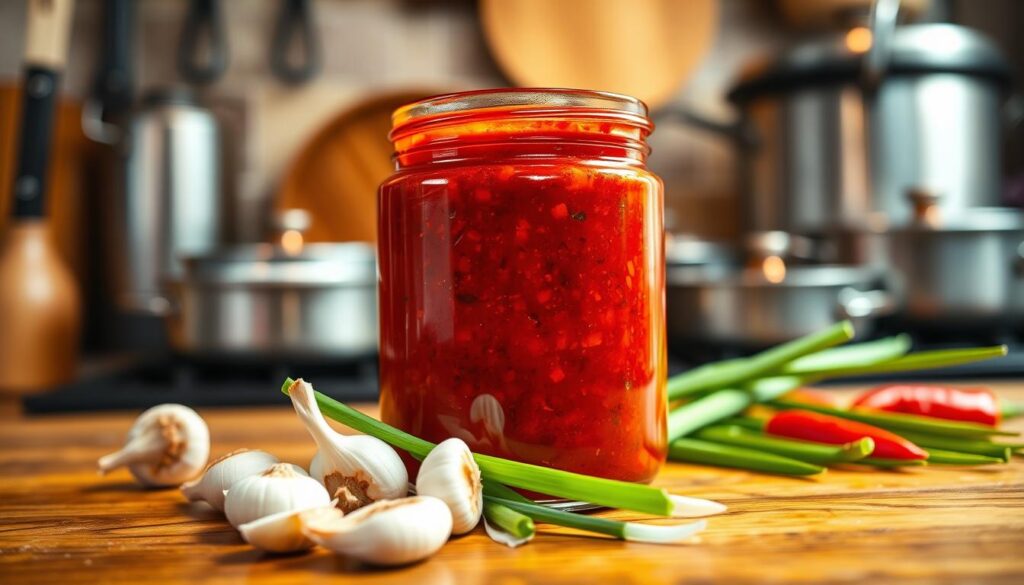
I use gochujang as my shortcut to instant depth. One spoon adds savory umami, a hint of sweetness, and the right korean chili heat so you don’t need dozens of ingredients.
Fast, one-pan dakgalbi inspiration
My version nods to dakgalbi: saucy chicken and vegetables cooked together. I streamline it so dinner is done in minutes with one hot pan and a simple sauce mixed in a bowl.
What makes it truly stir fried
Stir fried for me means a loud sizzle, quick tosses, and those browned, caramelized edges — not steaming. I avoid overcrowding the pan and keep heat medium-high so each piece gets a smoky bite.
| Goal | What I do | Result |
|---|---|---|
| Speed | Mix sauce while cutting veg | Dinner in under 30 minutes |
| Flavor | Use gochujang + soy | Glossy, balanced sauce |
| Texture | High heat, avoid crowding | Caramelized, smoky bites |
Ingredients I Use for Authentic Heat and Umami
Good heat and umami start with the right base ingredients and a few easy add-ins. Below I list what I shop for and why each item matters for a fast, flavorful weeknight meal.
Chicken and aromatics
I use chicken breast for speed and lean bites; thighs are fine if you want juicier results. Garlic and ginger are small but essential — they give the savory backbone that lifts the whole dish.
Spicy-sweet sauce essentials
Gochujang is the fermented backbone for bold flavor. I balance it with soy or tamari and a splash of rice vinegar so the sauce stays bright, not cloying.
Vegetables and finishing touches
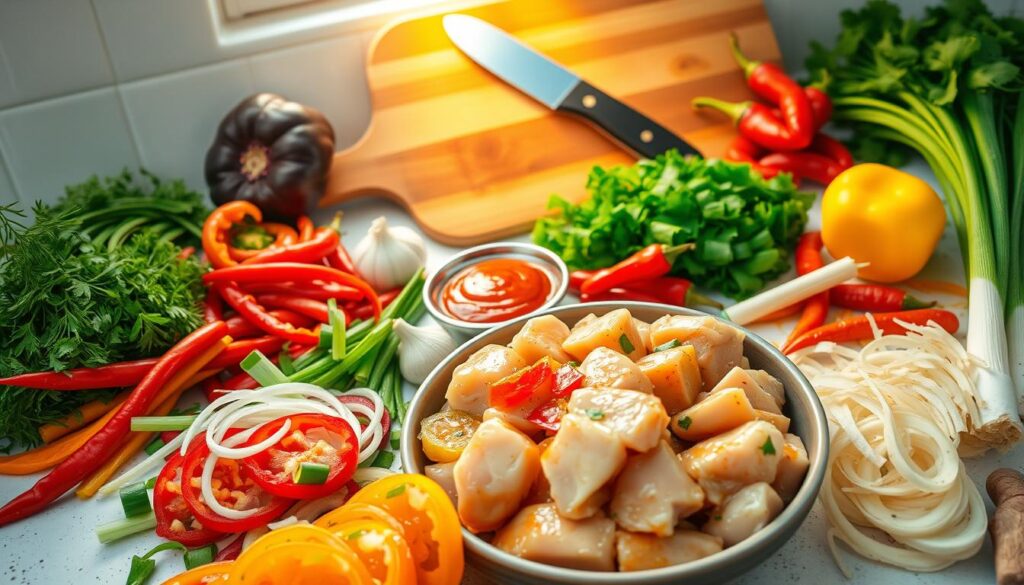
I rely on red bell pepper, white onion, and scallions for color and crunch. Toasted sesame seeds add texture and a nutty finish.
Optional heat enhancers and add-ins
For dakgalbi-style chew and balance I add rice cakes (soak briefly), cabbage, and thin sweet potato slices. Perilla leaves give a fresh herbal lift. Sprinkle gochugaru if I want sharper chili heat without extra salt.
| Ingredient | Role | Swap |
|---|---|---|
| Chicken | Protein, quick cook | Thighs for juicier bites |
| Gochujang + soy | Sauce base: umami and salt | Tamari for gluten-free |
| Rice cakes, cabbage, perilla leaves | Add chew, sweetness, fresh finish | Extra veggies from the fridge |
Exact Ingredient Measurements for My Sauce and Stir Fry
Here are the precise measurements I use so the sauce balances and the pan finishes hot. Measure ahead and mix the sauce in a bowl so everything moves fast once the pan is ready.
Chicken and stir-fry base
I use these amounts for about four servings.
- 1 1/2 lb chicken breast, cut into bite-size pieces
- 1 tbsp neutral oil (plus 1 tbsp more as needed)
- 4 cloves garlic, minced
- 1 tbsp fresh ginger, grated
- 1 medium white onion, sliced
- 1 red bell pepper, sliced
- 3 scallions, sliced (separate whites and greens)
- 1 tbsp toasted sesame seeds (to finish)
Gochujang sauce mix
Mix everything in a small bowl before you heat the pan.
- 3 tbsp gochujang
- 2 tbsp soy sauce or tamari
- 1 tbsp sesame oil
- 1 tbsp rice vinegar
- 1 tbsp sugar
- 2 tbsp water (to loosen; add more if needed)
- 1–2 tsp gochugaru (optional for extra chili heat)
Optional add-ons for dakgalbi vibes
Add these if you want more chew and sweetness like a classic pan version.
- 8 oz tteokbokki-style rice cakes, soaked 10 minutes and drained
- 2 cups chopped green cabbage
- 1 medium sweet potato, thinly sliced (about 1 1/2 cups)
| Component | Amount | Role |
|---|---|---|
| Chicken breast | 1 1/2 lb | Primary protein, quick-cooking pieces |
| Gochujang sauce | 3 tbsp gochujang + others | Umami, heat, and glossy coating |
| Rice cakes / sweet potato | 8 oz cakes / 1 medium potato | Add chew and sweetness for dakgalbi feel |
Prep Tips That Keep It Tender, Fast, and Weeknight-Friendly
A few simple prep steps set you up for fast cooking and tender results every time. These tricks save time and make the finish glossy and caramelized without extra fuss.
How I cut chicken for quick, juicy bites
I trim the breast, then slice across the grain into strips. I cut those strips into even bite size pieces so the meat cooks fast and stays tender on high heat.
Softening rice cakes the quick way
I soak rice cakes in water for about 10 minutes, then drain. This keeps them soft but still satisfyingly chewy when they hit the pan.
Marinate in a bowl while you prep
I toss the chicken in a bit of the sauce in a bowl while I slice onion and pepper. It builds flavor without adding extra time.
Which pan to use and staging tips
I reach for cast iron because it holds steady heat and makes caramelized edges. If you don’t have one, use heavy stainless or a large nonstick.
Avoid crowding: work in batches or keep extras warm so pieces sear instead of steaming. Keep a splash of water nearby to loosen the sauce if it tightens too fast.
| Prep Task | Why it helps | Quick tip |
|---|---|---|
| Cut into bite size pieces | Cooks evenly and fast | Slice across the grain for tenderness |
| 10-minute soak for rice cakes | Softens without getting mushy | Soak in water, then drain before cooking |
| Toss in a bowl with sauce | Builds flavor while you prep | Marinate only while you prep; no extra time |
| Use cast iron or heavy pan | Better caramelization, stable heat | Use heavy stainless or large nonstick as alternative |
How I Cook Korean Spicy Chicken Stir Fry in Under 30 Minutes
I keep the process tight so the whole meal comes together in about 25–30 minutes. My goal is clear: even coating, browned edges, and crisp-tender veg without babysitting the pan.
Mixing the sauce in a bowl for even coating
I whisk gochujang, soy, sesame oil, rice vinegar, and a touch of sugar in a small bowl. That one-step mix ensures every piece of chicken gets covered and prevents the sauce from scorching once it hits the pan.
Order that builds flavor: protein first, then vegetables
I sear the chicken first on a hot pan so it develops color and caramelization. Then I add onion and pepper so they stay bright and crisp-tender instead of collapsing.
Managing medium-high heat for quick browning
I cook over medium heat until I hear a steady sizzle, then raise to medium-high for short bursts to brown without burning. Listen for the sound and stir just enough to keep pieces moving and searing.
When to add a splash of water so the sauce turns glossy
If the pan looks dry or the sauce is clumping, I add a tablespoon or two of water. That loosens the sauce so it becomes glossy and clings to the meat rather than drying out.
Finishing with sesame oil, scallions, and sesame seeds
Off the heat I drizzle a little sesame oil, fold in scallion greens, and sprinkle toasted sesame seeds. Quick doneness cues: chicken cooked through, sauce glossy, veg still lively — then serve over rice or in lettuce wraps.
| Step | Minutes | Doneness cue |
|---|---|---|
| Sear chicken | 6–8 | Browned edges, no pink inside |
| Add veg + sauce | 4–5 | Veg crisp-tender, sauce thickening |
| Finish + rest | 2–3 | Glossy sauce, scallions added |
Easy Variations: Make It Your Favorite Spicy Korean Chicken
If you want to make this dish your own, a few smart swaps will get you there fast.
I switch to chicken thighs when I want maximum juiciness. Thighs forgive high heat and soak up sauce better, so they stay tender even with quick, hot searing.
Gluten-free and soy swap
For gluten-free, use tamari in a 1:1 swap for soy. The flavor stays deep and savory with no extra measuring.
Vegetable swaps I use
I rotate vegetables to use what’s fresh: cabbage, snow peas, baby corn, and carrots all work well.
Control the heat
Add gochugaru flakes for a sharper kick. Add more gochujang for deeper fermented spice. To mellow it, stir in a little extra sugar and water until the sauce softens.
Turn it into a dakgalbi-style version
Toss in rice cakes, thin sweet potato slices, and perilla leaves near the end. Rice cakes add chew, the sweet potato brings sweetness and body, and perilla leaves lend a bright, herbal finish.
| Swap | What it adds | Quick tip |
|---|---|---|
| Chicken thighs | Juiciness, forgiving on high heat | Sear a little longer for caramelized edges |
| Tamari for soy | Gluten-free savory depth | Use same amount as soy |
| Cabbage, snow peas, baby corn, carrots | Texture, color, quick-cook vegetables | Match total veg volume to avoid steaming |
| Rice cakes, sweet potato, perilla leaves | Chew, sweetness, fresh herbal finish | Add rice cakes early; perilla at the end |
What I Serve With It (Rice Bowls, Lettuce Wraps, and More)
I usually pile the finished pan over steaming rice so the glossy sauce soaks every grain. That turns the pan into a full bowl meal in one quick step and keeps dinner simple on weeknights.
Rice choices for the right texture
For fluffy grains, I pick jasmine rice. It stays separate and light, which I like when I spoon saucy meat over the top.
If I want a stickier, more traditional pairing, I use short-grain rice. It clings to the sauce and makes each bite cohesive.
Lettuce wraps and crunchy sides
Lettuce wraps give a fresh, crunchy contrast when the meal needs balance. I serve sliced cucumbers, quick pickled carrots, or a simple slaw so the heat doesn’t overwhelm the palate.
Meal prep and reheating without drying out
Leftovers keep well in the fridge for 3 days. Portion into bowls for quick lunches.
To reheat, warm gently over low heat and add a tablespoon of water if the sauce looks tight. Stir until the sauce loosens and turns glossy again — that restores moisture and flavor without overcooking the meat.
| Service | Why | Quick tip |
|---|---|---|
| Jasmine rice | Light, fluffy base for saucy meals | Scoop rice first, then ladle sauce |
| Short-grain rice | Stickier, clings to sauce for cohesive bowl | Use for more authentic texture |
| Lettuce wraps | Fresh, crunchy contrast to rich sauce | Serve with sliced veg and lime |
My Favorite Finish: Crispy Fried Rice in the Same Pan
The best part comes last: I use the pan’s sticky sauce to make a crunchy fried rice finish.
Once most of the chicken and vegetables are gone, I add cooked rice to the same pan and stir until each grain picks up that deep red sauce. Then I press the rice into an even layer and leave it alone for 3–5 minutes so a golden crust forms, like nurungji.
Cast iron is perfect because it keeps heat steady, but any heavy pan works if you control the temperature. Finish with a drizzle of sesame oil, toasted sesame seeds, and optional roasted seaweed or a touch more gochujang for extra dakgalbi vibe. If the rice feels dry, loosen it with a splash of water before crisping.
Choose the quick pan recipe for speed or add this fried rice step for a full, bold meal at home.