This post contains affiliate links. I may earn a commission if you purchase through them at no extra cost to you.
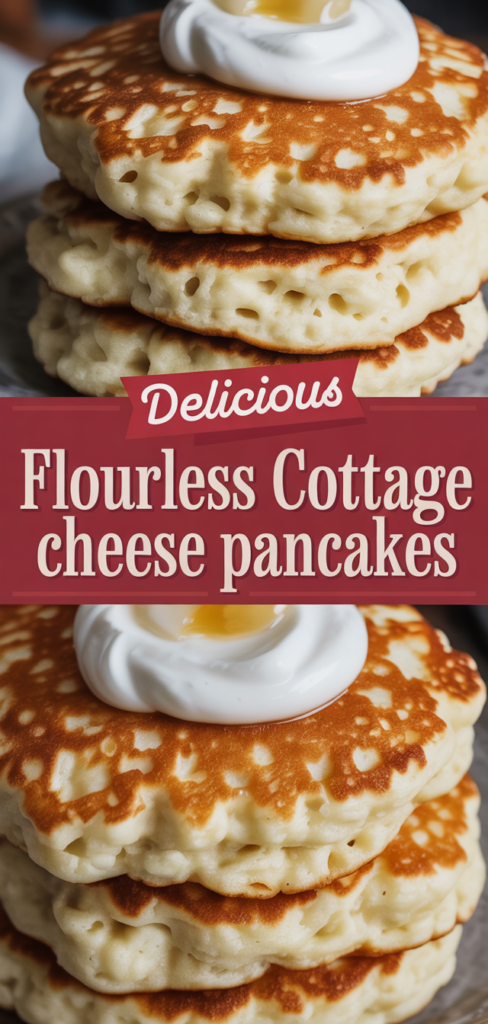
I make these flourless cottage cheese pancakes when I want a fast, high-protein meal that feels indulgent yet stays gluten-free. They come together in minutes and work great for busy mornings or a simple meal prep plan.
The texture is what sold me: fluffy with a slightly creamy center and crisp, golden edges. I aim for small rounds in a hot skillet so the outsides caramelize while the middle stays tender.
My base is full-fat cottage cheese and eggs for protein and richness. I use sugar-free sweeteners like monk fruit, erythritol blends, or allulose and note that carbs vary by brand and fat level.
At a high level the method is simple: blend, skillet, make small rounds, wait for bubbles, then flip. Later I share exact ingredients and a step-by-step skillet recipe so you can get consistent, golden results every time.
Fluffy, crispy-edged pancakes that are actually gluten-free and high-protein
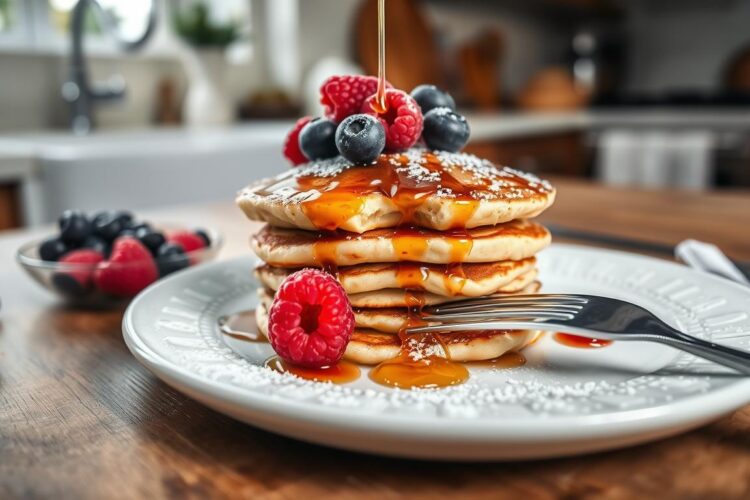
These rounds yield a fluffy, slightly creamy center and a golden, crisp outside every time. I portion small rounds in a hot skillet so the edges caramelize while the middle sets tenderly.
What they taste like
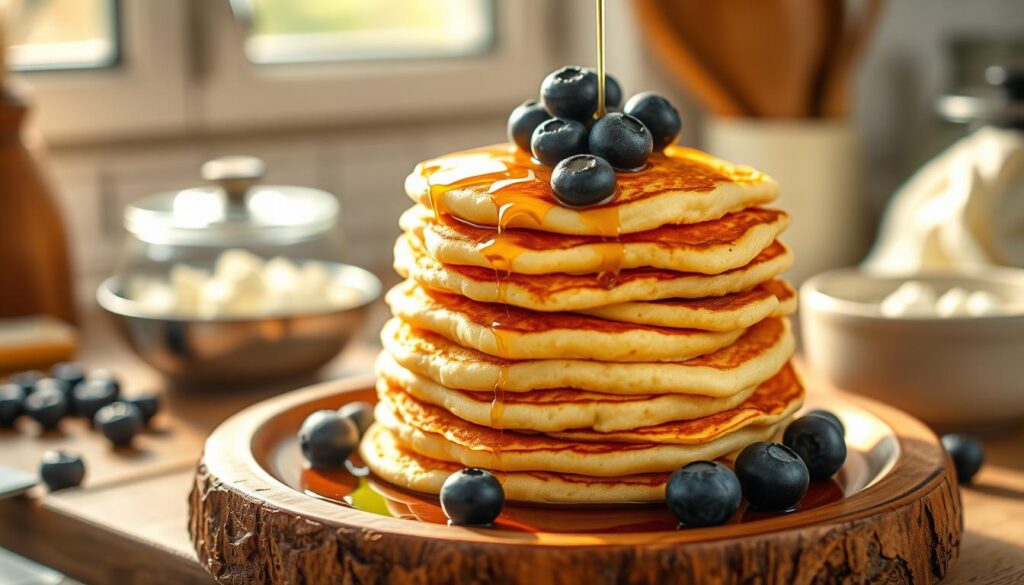
They sit between a classic pancake and a soft custard. The edges get lightly browned and offer a pleasant crunch.
Why I reach for them
Full-fat cottage cheese brings protein and lower carbs, so this food keeps me full through a busy morning. No wheat flour means a gluten-free option that still feels like comfort food.
- Sweetness: great unsweetened, or lightly sweeten to control sugar and calories.
- Texture tip: thin batter can create crepe-like results; keep batter slightly thick for fluff.
- Fiber option: add almond flour or a small amount of blended oats for structure and fiber.
| Feature | Result | Quick tip |
|---|---|---|
| Texture | Fluffy center, crisp edge | Spoon small rounds, medium heat |
| Nutrition | High protein, lower carbs | Use full-fat cottage and eggs |
| Variations | Fruit, nuts, or oat boost | Keep batter thickness balanced |
Why I make these on busy mornings
Busy mornings call for a blender batter that is fast to mix and fills me with protein and fat. It takes little time to blend and only a few minutes on a hot skillet.
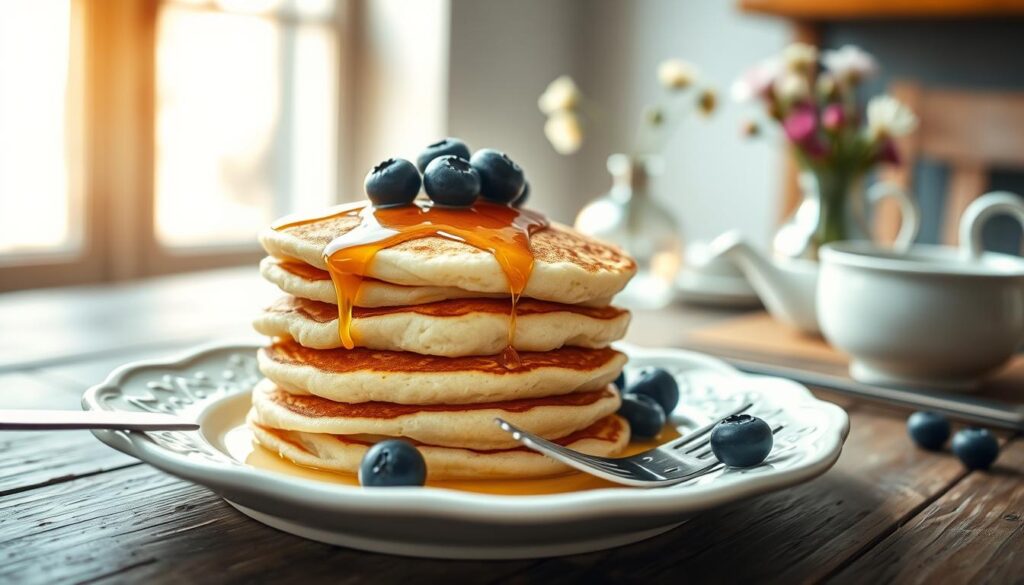
High-protein, low-carb benefits
I use full-fat cottage cheese and eggs because they give reliable protein and satisfying fat without relying on flour for structure. The dairy base keeps carbs low and helps the rounds hold together.
Why baking powder matters
A small amount of baking powder creates lift in a batter that has no grain. The chemical reaction releases air as the pan heats, so the batter puffs and stays fluffy instead of collapsing into a thin crepe.
- I reach for full-fat cottage cheese and eggs for lasting energy and texture.
- Keeping the mix mostly dairy + egg makes this a practical low-carb morning choice.
- Blend the batter in under a minute; cook small rounds for quick flips and fast cook time.
- Swap sweeteners or add a spoon of almond flour for extra structure if you like.
| Ingredient | Role | Quick tip |
|---|---|---|
| Full‑fat cottage cheese | Protein and fat base | Use slightly thick curds for texture |
| Egg | Bind and set | One whole egg per cup of cheese works well |
| Baking powder | Lift and fluff | Use a small pinch to avoid metallic taste |
Ingredients for cottage cheese pancakes (with exact measurements)
Here are the exact measurements I use to make a single skillet batch. Measure with standard US cups and teaspoons for consistent results.
Base batter ingredients
- 1/2 cup full‑fat cottage cheese
- 2 large eggs
- 1 tsp vanilla extract
- 1 tsp baking powder
- Pinch of salt
Optional low-carb sweetener choices
Choose one to taste: monk fruit, erythritol blends, or allulose. I use about 1–2 tsp if I want sweetness without sugar.
Optional add-ins for structure
For thicker, more structured rounds add one of the following:
- 3/4 cup almond flour for moist, soft texture
- 2–3 tbsp coconut flour (start small; it soaks up liquid)
- 1/4–1/3 cup blended oats for a classic feel (not strict low-carb)
| Add-in | Amount | Effect |
|---|---|---|
| Almond flour | 3/4 cup | Moist, tender, holds shape |
| Coconut flour | 2–3 tbsp | Thickens batter, very absorbent |
| Blended oats | 1/4–1/3 cup | Classic pancake texture, more carbs |
Use plain cottage cheese without added sugar and prefer full‑fat for best flavor and macro balance. Exact measuring keeps the batter consistent and the recipe repeatable.
Kitchen tools I use (blender method + non-stick skillet)
With the right gear I get smooth batter and golden edges every time. A quick blend and a hot pan speed the whole process and cut cook time to minutes.
Blender vs immersion blender vs food processor
I use a countertop blender when I want the silkiest pancake batter. It pulverizes curds so the texture stays fluffy rather than lumpy.
An immersion blender is my go-to for fewer dishes and fast work. It smooths the mix right in the bowl.
A food processor works well as a backup when I need a sturdy motor and a wider bowl for added ingredients.
What I look for in a skillet and workflow tips
I prefer a reliable non-stick skillet with even heat. That reduces sticking and helps flips stay intact.
I preheat the skillet over medium to medium-low while I blend. This keeps cook time short and prevents the outsides from burning before the center sets.
- I grease the pan lightly with butter or a neutral oil to get crispy, golden edges.
- Portion small rounds so they cook evenly and flip easily.
- Blend until smooth — no cottage cheese curds — for the best texture in these pancakes.
| Tool | Why I use it | Quick tip |
|---|---|---|
| Countertop blender | Smoothest batter | Pulse then blend 20–30 seconds |
| Immersion blender | Fast, fewer dishes | Blend directly in bowl |
| Non-stick skillet | Even heat, easy flipping | Preheat and grease lightly |
These simple tools make the recipe repeatable and stress-free in a busy home kitchen.
How I make flourless cottage cheese pancakes step by step
My method keeps the process fast and repeatable. I focus on getting a silky batter, steady heat, and small rounds so each pancake cooks evenly.
Blend until smooth
I combine the cottage cheese, eggs, vanilla, and baking powder and blend until no curds remain. Smooth means you cannot see lumps; the batter should pour easily from a spoon.
Preheat and grease
I warm a non-stick skillet over medium to medium-low heat so the outside browns without the center overcooking. Heat control is key.
I lightly grease the pan — a dab of butter for flavor, coconut oil for crisp edges, or a neutral oil for a clean finish.
Cook in small rounds
I spoon about 1/4 cup or smaller per pancake into the hot skillet. Small rounds cook in about 1–2 minutes per side and flip without breaking.
- Watch for bubbles and set edges — that tells you the bottom is ready.
- Slide a thin spatula under the pancake and flip confidently in one motion.
- Finish until both sides are golden brown, then cook another batch, re-greasing the pan as needed.
| Step | Visual cue | Timing |
|---|---|---|
| Blend | No visible curds | 30–45 seconds |
| Cook | Bubbles and set edges | 1–2 minutes per side |
| Finish | Golden, crisp outside; fluffy, slightly creamy inside | Repeat until batter is used |
My best tips for fluffy texture and crispy golden edges
The trick to pillowy centers and crisp rims is simple: steady heat and the right scoop size.
I set the stove to medium-low so the exterior browns slowly while the center has time to set. That heat rule stops burnt edges and undercooked middles.
Portion size and flipping
I cook small rounds. Smaller pancakes flip easily and stay tall instead of spreading thin. I use about 1/4 cup per round and cook each side until bubbles form.
Fixes for thin, crepe-like batter
If your batter runs, thicken it slightly. Reduce any extra liquid, or add a tablespoon of almond flour for light structure.
Use coconut flour very sparingly — it soaks up moisture fast and can over-thicken a mix.
- Always include a small amount of baking powder for lift.
- Grease the pan lightly with butter or oil for crisp edges.
- Be patient on the first side; resist flipping too soon.
| Feature | Why it matters | Quick fix |
|---|---|---|
| Heat | Controls browning vs. doneness | Use medium-low; adjust after the first batch |
| Portion | Smaller rounds stay fluffy | Scoop 1/4 cup or less |
| Structure | Prevents runny, crepe-like results | Add almond flour or a touch more egg |
These small changes keep the recipe protein-forward and satisfying without relying on traditional flour. They make the pancakes reliably tender and golden in minutes.
Recipe variations to match your macros and pantry
I keep the core method the same: blend smooth, cook small rounds, and flip carefully. From there, small swaps change texture and macros so the batch fits your goals.
Almond flour vs coconut flour: texture and handling
Almond flour makes lighter, tender rounds with a soft crumb. Use it to boost fat and keep the feel close to traditional pancakes.
Coconut flour soaks liquid fast and yields a thicker, more substantial bite. You need much less coconut flour for the same thickening effect.
Oat-boosted option for a classic feel
Blend rolled oats and add a small amount for a more familiar texture. This oat-boosted mix gives structure and mild carbs if you want a classic stack.
Sweet and savory flavor ideas
For sweet versions, fold in vanilla, cinnamon, or a handful of blueberries. Use monk fruit or erythritol if you limit sugar. For a banana-style note use extract or a tiny mashed piece if carbs allow.
For savory, skip sweetener and serve with salted butter and a protein-rich side like eggs or smoked salmon.
| Variation | Effect | Macro/pantry note |
|---|---|---|
| Almond flour | Light, tender texture | Higher fat, low carbs; use 3/4 cup option |
| Coconut flour | Thicker, denser bite | Use sparingly; very absorbent |
| Blended oats | Classic pancake mouthfeel | Adds carbs and fiber; pantry-friendly |
Serving ideas and toppings I reach for
Toppings can make a simple plate feel indulgent without adding too much sugar or work. I pick items that add color, texture, and a little fiber so the meal lasts longer.
Fresh fruit and berries
I often heap fresh berries on top—blueberries and sliced strawberries are my go-to. They add bright flavor, a natural sweetness, and a touch of fiber.
Syrup choices and how I use them
For a sweet finish, I reach for sugar-free syrup or a maple-style sugar-free option. A light drizzle of syrup gives the feel of a treat without a load of sugar.
Extra finishing touches
A small pat of butter melts into the hot rounds for glossy edges and richness. Whipped cream makes it feel special, and a sprinkle of nuts or seeds adds crunch and staying power.
- If the batter is already sweetened, I keep toppings simple—berries or butter only.
- If the batter is unsweetened, I add a drizzle of maple syrup or a few berries for balance.
- Choose nuts or chia for extra fiber and protein when you want a heartier serving.
| Topping | Effect | Serving tip |
|---|---|---|
| Fresh berries (blueberries, strawberries) | Bright, natural sweetness; adds fiber | Scatter a small handful per plate for color and bite |
| Sugar-free maple syrup | Sweet, low sugar; maple flavor without carbs | Drizzle sparingly—start with 1 tsp and add if needed |
| Butter, whipped cream, nuts | Richness, treat factor, and crunch | Butter for glossy edges, cream for indulgence, nuts for fiber |
Make-ahead, storage, and reheating so breakfast is always ready
A make-ahead batch keeps my mornings simple and my protein goals on track.
I cook a full batch, cool the stack, and portion into single servings so grab-and-go breakfast is ready all week. I layer rounds with parchment and place them in an airtight container in the fridge for up to 3–5 days.
For fast reheating I use the microwave for about a minute, depending on stack size. If I want crisp edges, I rewarm in a hot skillet or pop them in an air fryer for a few minutes to revive texture.
To freeze, I flash-freeze single layers, then seal them in an airtight container. Thaw overnight in the fridge before reheating.
This simple make-ahead strategy saves time and keeps this recipe a high‑protein, moderate‑fat option that uses cottage cheese and eggs without extra fuss.