
This post contains affiliate links. I may earn a commission if you purchase through them at no extra cost to you.
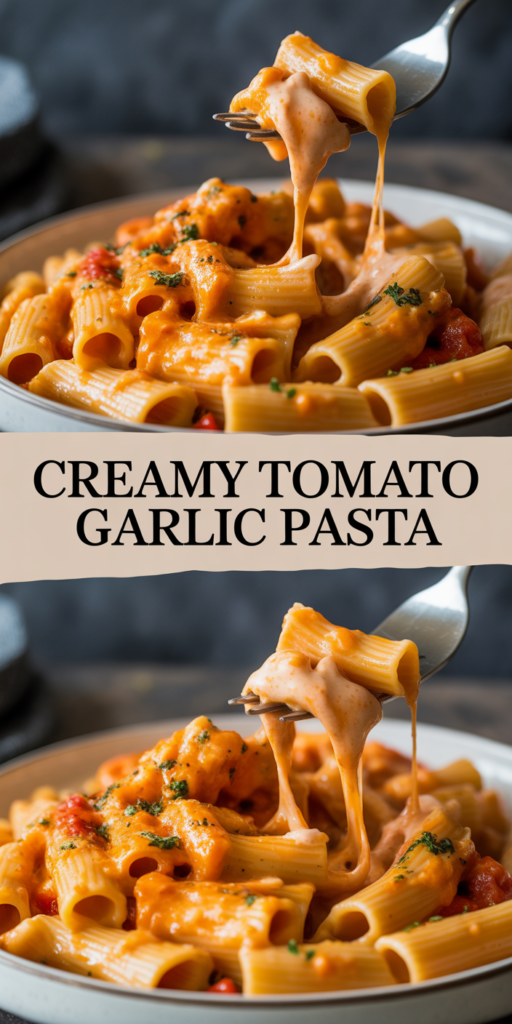
I call this my go-to Creamy Tomato Garlic Pasta when I need comfort fast. It gives a glossy, silky sauce that clings to every bite and feels like a warm hug on a busy weeknight.
Ready in under 30 minutes, this easy weeknight pasta uses pantry staples and a short ingredient list. The sauce comes together while the pasta cooks, so you save time without losing depth of flavor.
I lean on a garlic-forward base, a splash of cream, and grated Parmesan for a deeply savory, slightly spicy finish. Rigatoni or penne are my favorites since the sauce fills the tubes and stays glossy instead of sliding off.
In the recipe ahead I share exact measurements, a step-by-step method, tips to avoid curdling, and simple variations like chicken or shrimp. I’ll also cover storing leftovers and the ideal serving to keep the sauce shiny and smooth.
Why I Make This Creamy Tomato Pasta on Busy Weeknights
On busy weeknights I rely on a quick, restaurant-style sauce that comes together while the pasta boils. It saves time and keeps cleanup simple with one pan for the sauce and a single pot for the noodles.
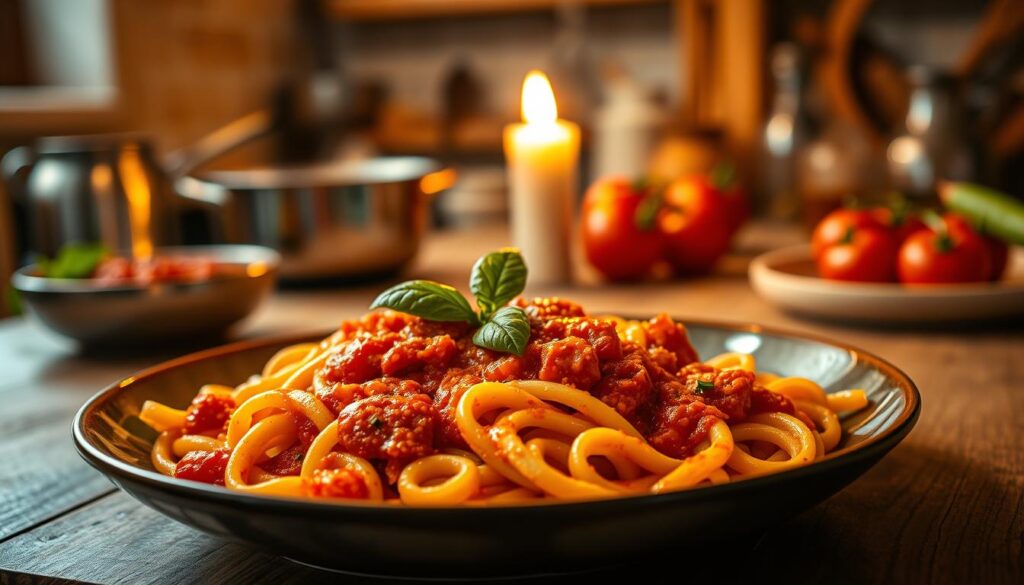
Rich, velvety sauce in under 30 minutes
I get the water boiling first, then start the sauce as the pasta goes in. In about 20–25 minutes the meal is ready, perfect for an easy weeknight pasta that feels like more effort than it takes.
Flavor profile: glossy, deeply savory, and a little spicy
The final dish tastes glossy and deeply savory, with a gentle kick from red pepper flakes that adds warm heat without stealing the show. A touch of cream smooths any sharp edges from the tomatoes into a velvety finish.
Best pasta shapes for sauce-clinging comfort
Rigatoni and penne trap sauce inside and outside, so each forkful is coated instead of dry. Even canned tomatoes taste elevated with grated Parmesan and cracked black pepper at the end.
| Shape | Cling | Best Use |
|---|---|---|
| Rigatoni | High | Thick, tube-friendly sauce |
| Penne | High | Even coating, quick bites |
| Spaghetti | Medium | Light coating, silky texture |
Ingredients for Tomato Garlic Rigatoni (Exact Measurements)
I keep the ingredient list short and exact so the sauce comes together without fuss. Below are pantry-friendly items you can copy straight into a grocery app.
Pasta and base ingredients
- 12 oz rigatoni or penne — sturdy rigatoni pasta traps sauce; penne works too.
- 2 tablespoons olive oil — for sautéing and shine.
- About 1 cup reserved hot pasta water — loosens and emulsifies the sauce as needed.
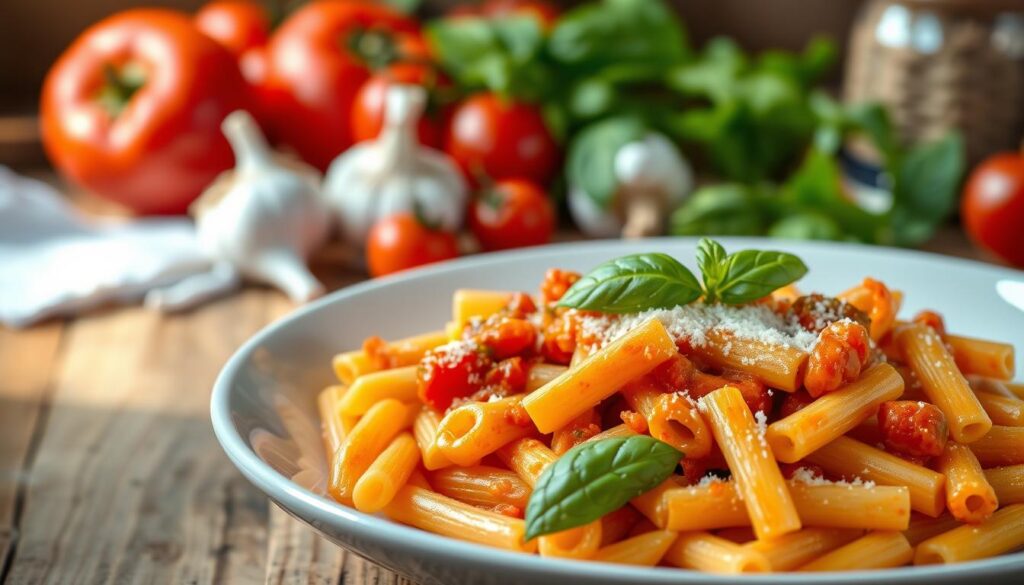
Tomato and cream components for a silky sauce
- 1 (28 oz) can crushed tomatoes — base flavor and body.
- 2 tablespoons tomato paste — concentrates tomato flavor.
- 3/4 cup heavy cream — makes a stable, silky sauce and reduces curdling risk.
Seasonings and finishers for maximum flavor
- 4–6 garlic cloves, minced — fragrant backbone.
- 1/2 teaspoon red chili flakes — adjust for heat.
- 1 teaspoon salt (plus more for pasta water) and 1/2 teaspoon black pepper — balance acidity.
- 3/4 cup freshly grated Parmesan — cheese adds salty umami; grate fresh for best melt.
- 2 tablespoons chopped fresh parsley — bright finish.
Kitchen Tools I Use for This Easy Weeknight Pasta
A few reliable kitchen tools make this dish come together in under 30 minutes. I keep the list small so prep stays fast and cleanup is simple.
Start with a large pot for boiling the noodles and a wide pan or skillet for the sauce. The pan’s surface area speeds reduction and gives better texture in fewer minutes. Use a colander to drain the pasta quickly and safely.
My one must-have stirring tool
My go-to is a sturdy silicone spatula or a hardwood spoon. It scrapes the pan bottom after adding tomato products so nothing sticks, and it helps me deglaze with reserved hot pasta water while cooking.
- Large pot for boiling pasta (I say this twice because it’s essential).
- Wide pan/skillet for the sauce—more surface area means faster reduction.
- Colander for draining and a measuring cup for cream and reserved pasta water.
- Microplane or fine grater for fresh Parmesan so it melts smoothly.
Keeping the pan on medium heat during the finish helps me move quickly from garlic to sauce without losing momentum. With these simple tools, the entire cooking flow feels calm and efficient.
How I Cook Creamy Tomato Garlic Pasta Step by Step
I walk through each step so dinner is ready fast and the sauce stays glossy.
Boil and reserve
I start a large pot of well-salted water and cook pasta to package time minus one minute for perfect al dente. Before draining, I scoop out one cup of hot pasta water — my gloss insurance.
Sauté the aromatics
In a wide pan over medium heat I warm olive oil, then add garlic and stir until fragrant, never browned. That keeps the flavor sweet and avoids bitterness.
Build the tomato base
I stir in tomato paste to bloom, then pour in crushed tomatoes and a pinch of red chili flakes. I let the sauce bubble gently for a few minutes so acidity rounds out.
Add the cream and finish
I lower the heat to barely bubbling and slowly whisk in heavy cream until the sauce turns velvety. I season with salt and pepper, then toss the drained pasta into the pan for 1–2 minutes so the sauce clings.
Final toss and garnish
If the mixture feels thick, I add a splash of reserved water a tablespoon at a time until every tube is coated. Off the heat I stir in grated Parmesan and chopped parsley, then finish with a crack of black pepper.
My Tips for a Velvety, Non-Curdled Tomato Cream Sauce
The secret to a silky finish is steady simmering and smart thickening, not more ingredients. I keep the heat low once the cream goes in so the mixture barely bubbles. This prevents the fat from separating and keeps the texture smooth.
Heavy cream works best because its higher fat resists curdling with acidic tomato. I avoid lower-fat dairy here; milk and half-and-half can break. If the pan gets too hot, I pull it off the burner and stir for a minute.
How I thicken without losing smoothness
I use one of two paths depending on time: simmer a bit longer to reduce, or whisk a slurry. For a slurry, I mix 1 teaspoon flour or cornstarch with a little cool water and drizzle it in while stirring. Wait a minute and check the body.
- If it’s too thick, I add a splash of hot pasta water and stir until glossy.
- To balance acid, I taste, add salt first, then grated parmesan for depth, and only a tiny pinch of sugar if needed.
- Remember that pepper and chili read stronger as the sauce reduces, so re-taste before adding more heat.
Follow these steps and you’ll get a velvety, non-grainy sauce that coats every bite with balanced flavor.
Easy Variations and Add-Ins I Love
Small swaps and quick add-ins let me turn this base into many different weeknight meals without extra fuss.
I often add protein for a heartier meal. I sear chicken first, remove it, finish the sauce, then fold the sliced or shredded chicken back in so it stays tender. For faster nights I quick-sear shrimp and return it the same way; that keeps seafood juicy and perfectly timed.
Veggies are my shortcut to more color and texture. I sauté onion until sweet, brown mushrooms for umami, and stir fresh spinach in at the end so it just wilts into the hot sauce. Don’t overload the pan—too many add-ins dilute the glossy coating that makes this dish comforting.
For heat and herbs I tweak a little at the end. Add more chili flakes for real heat or cut them for kid-friendly bowls. Fresh basil brightens the tomatoes, while a pinch of italian seasoning gives a classic, rounded aroma. Finish with a crack of pepper and a sprinkle of grated cheese.
- Cook proteins first, then fold back in after cream is added.
- Sauté onion and mushrooms early; add spinach last.
- Adjust chili flakes and basil to control heat and flavor.
| Add-in | When to Add | Effect |
|---|---|---|
| Chicken | Cook first, add after sauce finish | Hearty, protein-forward |
| Shrimp | Quick-sear, fold in at end | Light, tender seafood note |
| Onion / Mushrooms | Sauté early | Sweetness and umami depth |
| Spinach | Stir in last | Fresh color, wilts quickly |
| Basil / Italian seasoning | Finish or sprinkle | Bright or classic herb aroma |
Serving Ideas for Creamy Tomato Garlic Rigatoni
I serve this rigatoni in big bowls so the sauce feels indulgent and easy to share. A warm, saucy portion looks inviting and helps the dish read as a true comfort meal.
What I garnish with
I always finish each plate with a generous shaving of grated parmesan and a scatter of chopped parsley. The cheese adds salty depth while parsley brightens the flavor.
A final crack of black pepper and a light drizzle of olive oil lift the gloss on the sauce and make the bowl look restaurant-ready.
What I serve on the side when I want full comfort mode
For a balanced meal, I pair the pasta with a simple green salad to cut richness. If I’m leaning into comfort, I bring out warm garlic bread for dunking and extra indulgence.
- Serving style: generous, saucy bowls rather than dry mounds so every bite is coated in sauce.
- Portions scale easily for guests—this recipe plates well for casual family dinners.
- At a gathering, I set out extra parmesan and parsley so people can customize their serving.
How I Store and Reheat Leftovers Without Drying Out the Sauce
Leftovers can taste just as bright if you store and reheat them with a little care. I follow a few simple steps so the pasta and sauce stay glossy and fresh for the next meal.
Refrigerating in an airtight container up to 3 days
I let the pan cool briefly, then transfer the portion to an airtight container and seal it. This keeps the noodles from soaking up all the sauce and preserves flavor.
Store in the refrigerator and eat within up to 3 days for best texture and taste.
Reheating gently with a splash of water or cream
On the stove I warm leftovers over low heat, stirring so nothing sticks. I add a splash of water or a bit of cream to loosen the sauce and regain gloss.
Keep the heat low and take your time; gentle warming protects texture and prevents separation.
Microwave quick method (minutes)
For single bowls, reheat in short bursts—about 30–45 seconds—stirring between each. Add a tablespoon of water to loosen the sauce so it reheats evenly in minutes.
Why I avoid freezing this recipe
I skip the freezer because cream-based sauces often break and turn grainy when thawed. Freezing can wreck the velvety texture that makes this recipe special.
Make It Tonight and Let the Sauce Do the Comforting
When dinner needs to be fast and comforting, this creamy tomato pasta is my easy weeknight pasta go-to. It delivers a warm, glossy bowl with minimal cleanup and only pantry staples.
The signature is a rich, velvety garlic cream pasta sauce—slightly spicy, deeply savory, and shiny on every bite. A short gentle simmer keeps the texture smooth and the flavors rounded.
Use this flexible pasta recipe as written or add chicken, shrimp, or spinach to stretch it. Two small habits make this sauce restaurant-good at home: reserve hot pasta water and lower the heat after you add cream.
Check your pantry for tomato, garlic, cream, and Parmesan—if you have those, dinner is basically handled. Make it tonight and let the sauce do the comforting work.
Please leave a comment with your favorite add-ins and how spicy you like your tomato pasta. I’d love to hear what you tried.