
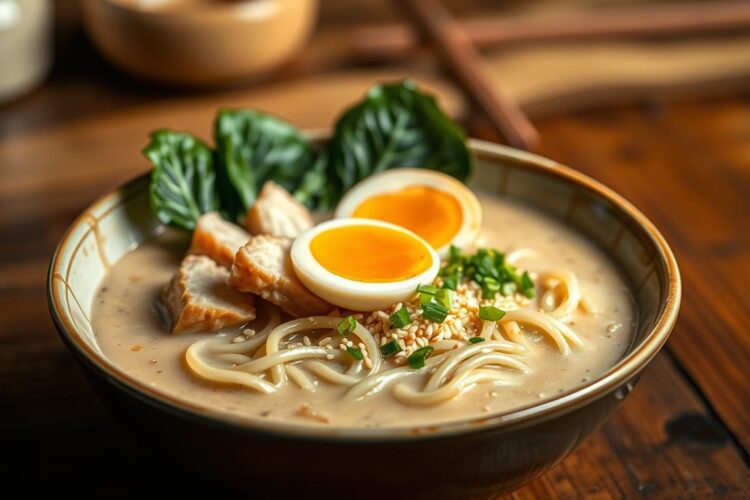
This post contains affiliate links. I may earn a commission if you purchase through them at no extra cost to you.
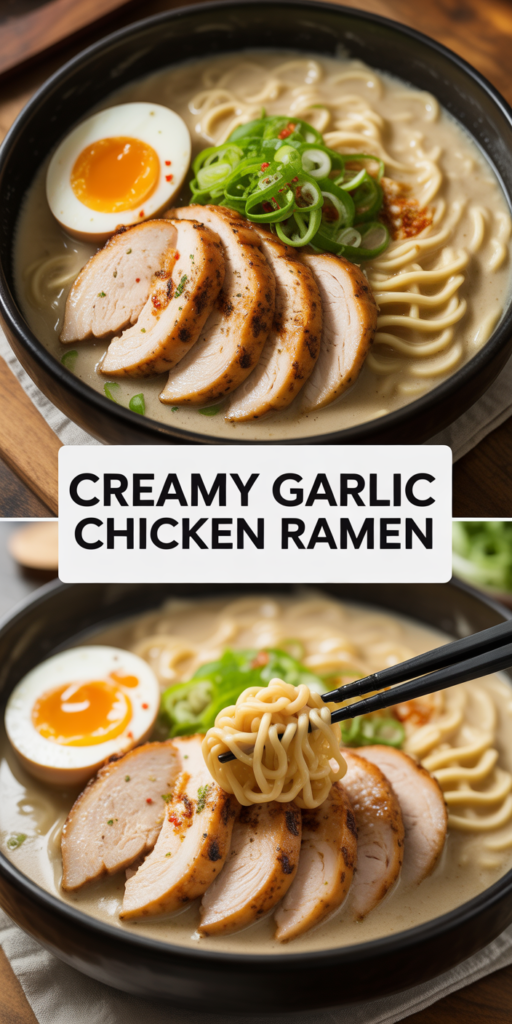
I reach for this bowl when I want a restaurant-style meal without leaving home. This cozy comfort food doubles as a homemade ramen bowl that feels special on a cold night and is craveable any time.
The first spoon tells you why: silky noodles, tender chicken, and a deeply flavored broth that tastes rich and rounded. The ramen has a velvety body and a savory backbone that keeps you coming back.
I keep the method simple so this easy chicken noodle bowl fits weeknight life. I build flavor fast with a bold base, soy for umami, and a touch of cream to round the edges. You can make it mild or turn up the heat with chili and bold toppings to match your mood.
Below I walk through ingredients, kitchen notes, step-by-step directions, tasty variations, and how to store leftovers. This recipe is meant to be clear, cozy, and reliable so you can enjoy this dish often.
Why I Love This Creamy Chicken Ramen for a Cozy, Restaurant-Style Night In
I often pick this recipe for nights when I want bold flavor without the fuss of restaurant technique.
Rich, velvety broth with tender meat and silky noodles
The broth is silky and rich, clinging to every strand of noodles so each bite feels indulgent.
The cream rounds the edges and makes the chicken taste extra tender and satisfying.
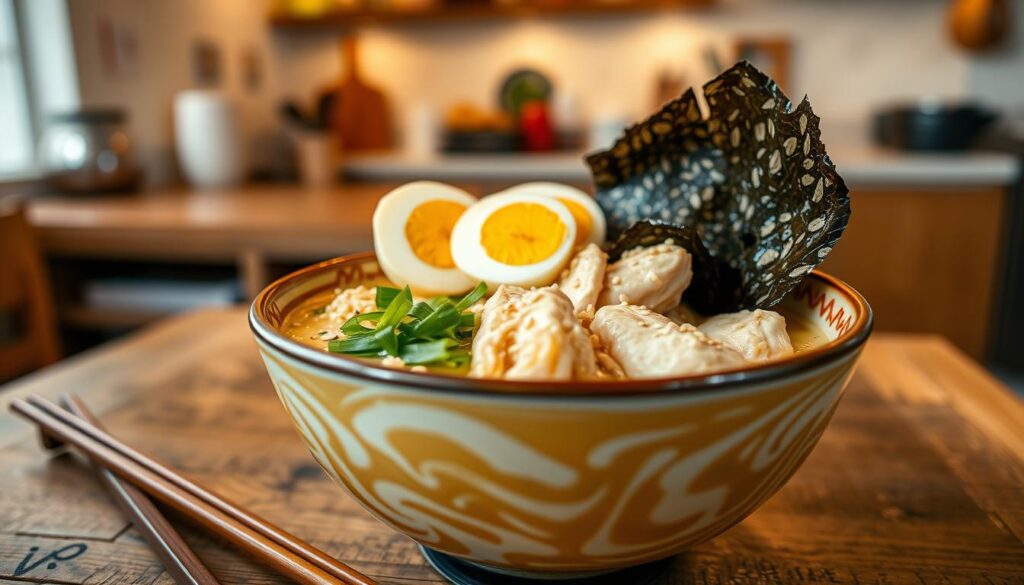
A homemade bowl that tastes special but stays weeknight-easy
This feels restaurant-style because of layered umami, a glossy finish, and careful seasoning — not long, fiddly technique.
My workflow is simple: sear the chicken, simmer the broth, cook noodles separately, then assemble for a fast, special meal.
Garlic-forward comfort with customizable heat and toppings
I build a bold base for this garlic ramen recipe but control the heat with chili flakes or chili oil so it suits everyone.
- Fresh green onions add bite.
- Chili oil or flakes bring warmth without overpowering.
- Sesame oil or a soft egg balances richness and rounds the food into a cozy bowl.
Ingredients for a Garlic Ramen Recipe That Turns Out Creamy Every Time
A clear shopping list and exact measures make this recipe simple to pull off. Below are the ingredients I use, with US measurements so you can shop and cook without guesswork.
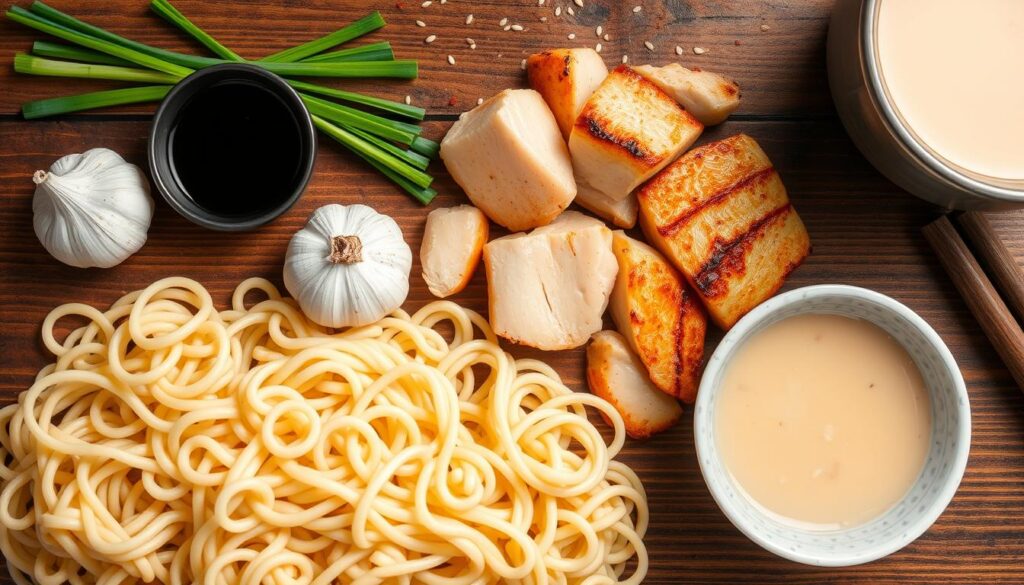
Ramen noodles and broth base
- 8 oz chewy ramen noodles (1 package instant or fresh)
- 4 cups low-sodium chicken broth
- 1 cup water (optional to adjust salt)
Chicken and seasonings
- 1 lb boneless chicken breast, trimmed
- 1 tsp salt and 1/2 tsp black pepper
- 1/2 tsp paprika (optional)
- 2 cloves garlic, minced
Creamy element and umami boosters
- 1/2 cup heavy cream (or 1/2 cup full-fat coconut milk for dairy-free)
- 2 tbsp soy sauce
- 1 tsp chili paste (optional; does not replace chili flakes)
Toppings and finishing oils
- 2 soft-boiled eggs (jammy yolks add richness)
- 2 green onions, sliced for freshness
- 1 tsp sesame oil for aroma
- Pinch of chili flakes for heat
| Type | Cook tip | Texture |
|---|---|---|
| Instant | Follow package, rinse briefly | Chewy if not overcooked |
| Fresh | Cook 1–2 min, drain fast | Silky and springy |
| Gluten-free | Check soak time, test early | Firm when timed right |
Kitchen Notes Before I Start This Easy Chicken Noodle Bowl
A few quick habits in the kitchen make this bowl come together without soggy noodles or dry meat. These tips keep the process simple for a weeknight meal and save cleanup later.
Keep noodles springy by cooking them separately
I always boil ramen noodles in a second pot and drain them right away. That prevents them from softening in the broth as it simmers.
Cook the noodles for the package minutes minus one for extra chew. Then rinse briefly under cold water and set aside until serving.
Breast vs. thighs and how I stop dryness
I prefer thighs for juiciness, but breast works if I pound to even thickness and sear quickly. After searing, I let the meat rest and set aside while the broth finishes.
Searing adds crust and flavor. For a smooth finish, I sometimes stir a small knob of butter or a few drops of sesame oil into the broth before ladling the bowl.
- Use one main pot for broth and a second pot for noodles.
- Time matters: stagger cooking so noodles are ready when you assemble.
- Store leftovers with noodles and broth separated for best texture.
| Item | Tip | Result |
|---|---|---|
| Noodles | Boil separately, drain, rinse | Springy texture |
| Breast | Pound even, quick sear, rest | Lean but tender |
| Thighs | Longer sear, finish in broth | Juicy, forgiving |
How I Make Creamy Garlic Chicken Ramen Step by Step
This step-by-step approach keeps timing tight so every element—noodles, broth, and meat—arrives at the table perfect. I break tasks into short windows so a single pot of broth and a second pot for noodles run smoothly together.
Soft-boiling eggs for that jammy center
Bring a pot of water to a gentle boil. Lower eggs in and cook for 6–7 minutes for jammy yolks. Total time usually sits at about 7 minutes for the texture I like.
Drop eggs into ice water for 3–4 minutes to stop cooking and make peeling easy. Set aside until serving.
Searing the chicken for golden color and flavor
Season the breast with salt and pepper. Heat 1–2 tbsp oil in a hot pan and sear each side for 3–4 minutes until golden.
Remove and let the meat rest for 5 minutes, then slice thinly and set aside so juices stay locked in.
Building the garlic base
In the broth pot, add 1 tbsp oil and sauté minced garlic gently until fragrant—about 30–45 seconds. Take care not to brown the garlic so it stays sweet, not bitter.
Optional extra: fry thin garlic slices for 2–3 minutes and save for a crisp topping, or stir in a spoon of roasted garlic for deeper flavor.
Creating the creamy broth
Pour chicken broth into the pot with the garlic. Add 1–2 tbsp soy sauce and simmer 4–6 minutes to marry flavors.
Stir in 1/2 cup heavy cream or coconut milk and warm through for 1–2 minutes. Taste and adjust salt, pepper, or a dash more soy sauce.
Cooking noodles properly
Boil ramen noodles in a separate pot per package time—often about 2–3 minutes. Drain and rinse briefly to keep them springy, not mushy.
Assembling the bowl
- Place a nest of noodles in each bowl.
- Ladle hot broth over the noodles so they heat evenly.
- Arrange sliced chicken on top and add the soft-boiled egg halves.
Finishing touches
- Drizzle a few drops of sesame oil and a splash of soy sauce for aroma and depth.
- Sprinkle chili flakes to taste for heat and sliced green onions for brightness.
- Serve immediately so bowls stay hot and textures stay balanced.
Flavor and Texture: What to Expect From This Homemade Ramen Bowl
This bowl greets you with a rounded, savory profile that feels both luxe and familiar. The broth is rich and silky, with a clear garlic presence that lifts every spoonful.
Deeply savory, garlicky broth with a smooth, creamy finish
The cream smooths the broth so it coats the noodles and spoon without feeling heavy. A splash of soy and a touch of sesame give the sauce depth and balance.
How the toppings balance richness with freshness and heat
Texture is key: springy noodles, tender chicken slices, and a jammy egg create contrast in each bite.
- Green onions and thin sliced onions add bright, fresh notes.
- Chili flakes or a drizzle of chili oil bring adjustable heat.
- Sesame oil or seeds add a warm, toasty aroma that ties the bowl together.
| Element | Role | Effect |
|---|---|---|
| Broth | Base | Silky, savory mouthfeel |
| Noodles | Texture | Chewy counterpoint to cream |
| Toppings | Contrast | Freshness, heat, and aroma |
I keep the default spice level mild-to-medium so this comfort food feels approachable. But it scales easily if you want more chili punch for a bolder taste.
Variations and Add-Ins I Use to Make It My Own
Small swaps and a few bold add-ins let me shape this bowl for any mood or diet. I keep the base intact so changes are fast and reliable.
Dairy-free swap with full-fat coconut milk
I replace heavy cream with 1/2 cup full-fat coconut milk for a dairy-free bowl. It keeps the broth rich but adds a faint coconut note.
Use the same timing and taste for salt and soy. Expect a slightly sweeter finish that pairs well with lime or chili flakes.
Spicy upgrades: three simple paths
- Chili flakes — quick warmth when you want light heat.
- Chili paste — deeper, more blended spice in the sauce and broth.
- Chili oil — finishing kick and aroma right before serving.
Vegetables and protein scaling
I add sliced mushrooms and quick-wilting greens like spinach or bok choy near the end so they stay bright. Corn adds sweet crunch.
To make it a fuller meal, add extra sliced chicken (or thighs) and increase broth by 1 cup per extra cups chicken to keep balance.
Extra garlic options
Roast heads at 400°F about 30 minutes until soft for sweet depth. Or fry thin slices until crisp for a crunchy, aromatic topping.
| Variation | When to Add | Flavor Note |
|---|---|---|
| Full-fat coconut milk | With broth, before serving | Rich, slightly sweet |
| Chili paste | While simmering | Deep, integrated spice |
| Mushrooms & greens | Last 1–2 minutes | Earthy and fresh |
| Fried garlic | As a topping | Crisp, aromatic contrast |
Serving and Leftovers: How I Keep This Ramen Cozy to the Last Bite
My go-to serving rule is simple: assemble just before you sit so the noodles stay springy and the taste is fresh.
I portion evenly into bowls—divide noodles, ladle hot broth from the pot, then arrange sliced chicken and eggs on top. This gives a neat, restaurant-style finish every time.
For leftovers, store noodles and broth separately in airtight containers for up to 3 days. Set aside eggs or toppings so they keep their texture.
Reheat gently on the stove for a few minutes, adding a splash of stock or cream if the broth has reduced. Serve immediately and refresh with green onions, chili flakes, or a tiny drizzle of sesame oil to revive the bowl.