
This post contains affiliate links. I may earn a commission if you purchase through them at no extra cost to you.
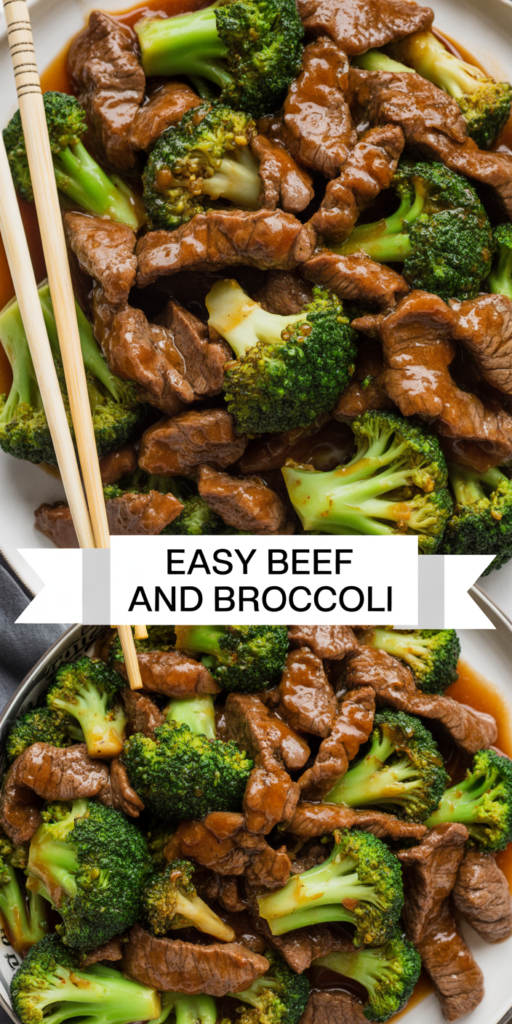
I make this stir fry when I want a takeout-style dinner without the wait. It uses one pan and pantry staples, which saves cleanup and keeps prep fast.
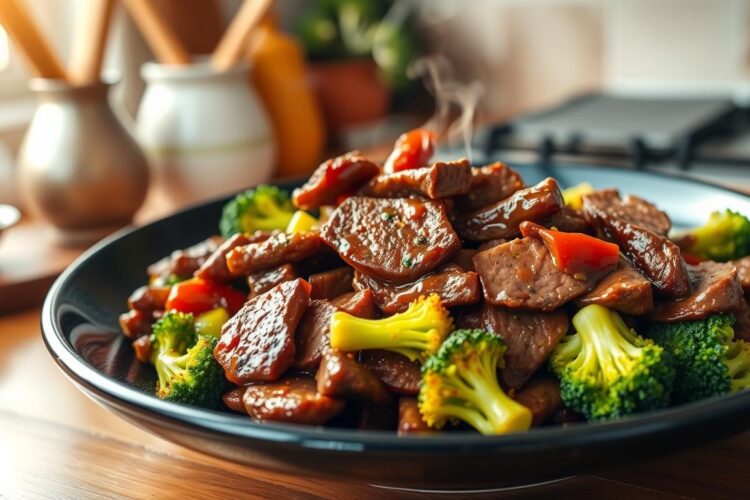
This easy beef and broccoli recipe delivers tender, juicy beef and bright green florets coated in a glossy, copycat-style sauce. Done right, the dish is ready in under 30 minutes, so it fits busy weeknights and meal prep plans.
I’ll show simple techniques that make a difference: slice steak thin across the grain, sear over high heat for a quick crust, and thicken the sauce with cornstarch for shine and flavor. You’ll get a reliable recipe marked by speed, texture, and bold taste for U.S. home kitchens using a skillet or wok.
Why I Make This Easy Beef and Broccoli on Busy Weeknights
When the clock runs out and dinner needs to appear fast, I reach for this weeknight go-to. It beats delivery times and gives a restaurant-style finish on the stove.
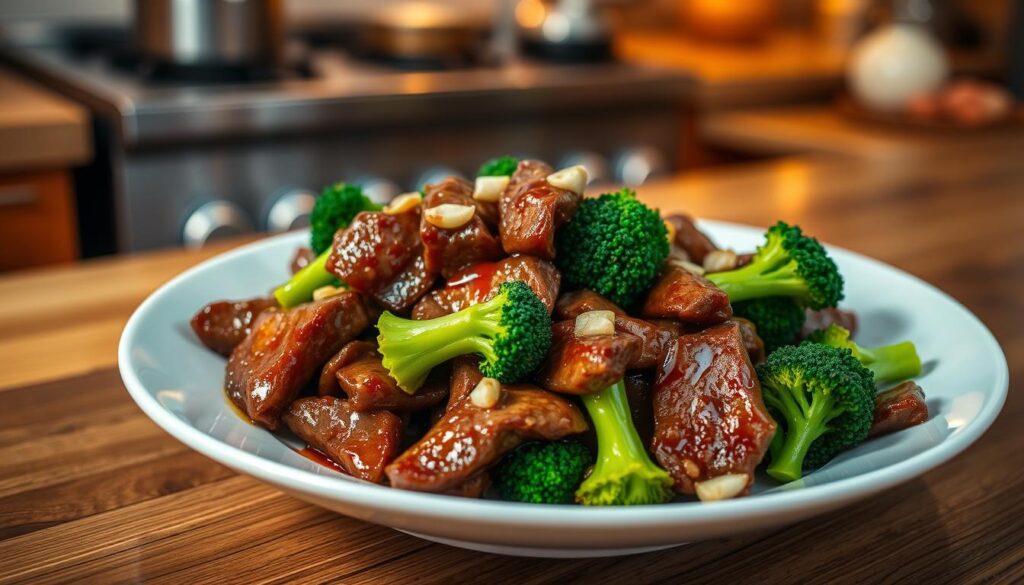
The real difference is the sauce. A quick mix of soy sauce, oyster sauce, brown sugar, cornstarch, sesame oil, garlic, and ginger makes a garlicky, savory-sweet glaze that coats every bite.
- Pantry-friendly ingredients mean you can assemble this from what’s already in the cupboard.
- One-pan cooking cuts cleanup and keeps the process fast during weeknight cooking.
- High heat and a fast sear lock in juices so texture beats most takeout versions.
- It’s flexible—swap proteins or vegetables to match what you have on hand.
I’ve found kids eat the vegetables quicker when they’re tossed in that glossy sauce. That small win, plus short prep and bold flavor, is why this recipe is my go-to when time is tight.
Homemade Beef Stir Fry in Under 30 Minutes
A well-planned workflow gets dinner done in minutes without frantic multitasking.
Prep time vs cook time (and what to do first)
I front-load prep: slice the steak, cut broccoli, and whisk the sauce before I touch the stove. This setup saves crucial time when cooking starts.
Start the rice first if you’re serving it. Then briefly chill the steak so it slices cleanly. Prep the sauce and place everything within arm’s reach.
How to keep the pan moving fast once the heat is on
Make sure the skillet is hot before the first piece of beef hits the surface. A very hot pan gives a quick sear and prevents steaming.
Cook broccoli briefly, then set aside while you sear the meat in a single layer. Add the sauce, simmer 3–4 minutes until glossy, then return the broccoli and toss. That step-by-step order keeps the entire cooking process under 30 minutes.
What You’ll Need for Easy Beef and Broccoli Stir Fry
A tight ingredient lineup makes this dish fast without sacrificing flavor. I focus on a few fresh components and a simple sauce that gives restaurant-style depth.
Core components
- Beef: thin slices sear quickly; flank steak or sirloin work best for juicy strips.
- Broccoli: fresh florets stay bright and crisp-tender when cooked briefly.
- Sauce base: soy sauce plus oyster sauce builds savory depth with minimal fuss.
Gloss makers, oils, and aromatics
Cornstarch and brown sugar create shine and balance. Neutral oil gives a hot sear while sesame oil finishes with aroma. Garlic and ginger add instant stir-fry flavor.
| Ingredient | Amount (4 servings) | Role | Tip |
|---|---|---|---|
| Flank steak or sirloin, thinly sliced | 1 lb | Main protein (beef) | Slice against the grain for tender bites |
| Fresh broccoli florets | 6 cups (about 1 lb) | Vegetables; texture contrast | Cut uniform florets for even cooking |
| Low-sodium soy sauce & oyster sauce | 1/3 cup soy sauce; 3 Tbsp oyster sauce | Sauce base | Simmer briefly to mellow aromatics |
| Brown sugar, cornstarch, water, oils, aromatics | 1 Tbsp sugar; 1.5 Tbsp cornstarch; 1/2 cup water; 2 Tbsp neutral oil; 1 tsp sesame oil; 3 cloves garlic; 1 tsp ginger; 1/4 tsp pepper | Gloss, consistency, flavor | Use water to steam broccoli or thin sauce as needed |
Scale as needed, but I cook beef in batches if I double the recipe to keep a proper sear. These ingredients give a fast, reliable result every time.
Choosing the Best Beef for Beef Broccoli
Choosing the correct steak gives you tender strips that finish in minutes over high heat. The right cut affects texture, cooking time, and how well the sauce clings to the meat.
Flank steak vs sirloin for tenderness and speed
Flank steak is lean with a pronounced grain. It soaks up sauce and is a classic choice for beef broccoli. Top sirloin is a good alternative—slightly more marbled and still quick to cook when sliced thin.
Why briefly freezing the steak makes slicing easier
I chill steak in the freezer for 20–30 minutes so it firms up. That brief freeze keeps the meat steady and helps me cut thin, uniform slices without shredding the fibers.
How to slice against the grain for juicy, tender strips
Find the muscle lines, then slice perpendicular to the grain. Aim for about 1/8″–1/4″ thick. Thinner slices cook in minutes and stay tender at high heat.
| Cut | Texture | Role |
|---|---|---|
| Flank | Lean, pronounced grain | Classic for stir-fry; soaks sauce |
| Top sirloin | Slightly more marbling | Quick-cooking, tender |
| Other cut beef | Varies | Choose lean but flavorful |
Use a sharp knife and a stable board for safety. These simple tips keep slicing fast and controlled.
Broccoli Prep for Bright Green, Crisp-Tender Veggies
Bright, crisp broccoli makes the whole plate feel fresh, so I treat prep like a small but important step.
How I cut florets for even cooking
I cut the head into uniform, bite-sized florets so everything cooks at the same pace. I trim the thick stem and slice any large stalks thinly; the stem is sweet when sliced and cooks quickly.
Fresh vs frozen: why fresh wins here
I use fresh broccoli for this recipe. Frozen broccoli often releases extra liquid that can water down the sauce and make the texture soft. Fresh florets stay bright and crisp-tender, which keeps the vegetables lively next to the beef.
Quick steam trick for softer broccoli
If I want softer veggies, I add 2 Tbsp water to the hot pan after tossing in the florets, then cover for 1–2 minutes to steam. Remove the lid as soon as the color turns vivid green so the broccoli keeps a pleasant bite and avoids becoming mush.
- Keep florets similar in size for even results.
- Use a splash of water and a lid for faster, gentle steaming.
- Avoid overcooking—bright green and slightly firm is the goal.
My Glossy Garlic-Ginger Stir Fry Sauce (Soy Sauce + Oyster Sauce)
My go-to sauce recipe turns pantry staples into a glossy finish that makes every bite sing. I build depth with soy sauce and oyster sauce, round it with brown sugar, and finish with sesame oil for that toasty aroma.
How I balance savory, sweet, and sesame flavor
I start with low-sodium soy sauce and a hit of oyster sauce for umami. A small spoonful of brown sugar softens the salt while sesame oil at the end adds aroma. I taste before serving and adjust salt or sugar to suit the final taste.
Mixing cornstarch correctly to prevent lumps
Whisk cornstarch into cool water first to make a smooth slurry. Add that to the rest of the cold sauce and whisk until uniform. Cornstarch thickens fast, so stir constantly once it hits the hot pan.
When to add water if you want a thinner sauce
Simmer the sauce about three minutes to mellow garlic and ginger and reach a glossy sheen that clings to the food. If it tightens too much, add 1–2 tablespoons of water at a time until it coats evenly. Finish with a pinch of pepper to lift the flavor.
Tools That Make This Quick Asian Beef Recipe Easier
A few reliable tools speed up the whole process and keep results consistent every time. I keep my kit simple so cooks in U.S. home kitchens can copy the method without extra fuss.
What I use and why it works
I rely on one hot pan and a small set of utensils. This setup helps me sear at high heat and move ingredients quickly so nothing steams.
- Large skillet (12-inch) or wok — gives surface area so the beef sears in a single layer without crowding.
- Tongs or a sturdy spatula — let me flip and toss fast without tearing the meat.
- Small bowl or measuring cup — my sauce station for whisking and pouring cleanly.
- Neutral oil with a touch of sesame — oils that tolerate high heat let me get a brown crust, then finish with aroma.
- Optional lid — handy for a quick broccoli steam trick when I want softer florets.
| Tool | Purpose | Tip |
|---|---|---|
| 12-inch skillet or wok | One-pan cooking; even sear | Preheat until very hot before adding oil |
| Tongs or spatula | Fast turning and tossing | Use tongs for single-layer flips |
| Small bowl | Sauce mixing and quick pour | Whisk slurry here to avoid lumps |
Prep Ahead So This Easy Beef and Broccoli Cooks Fast
I rely on a short mise en place so the whole cooking step goes smoothly. When ingredients are ready, the pan work is quick and controlled.
My “mise en place” checklist before I turn on the stove
Slice the steak thin and place it on a plate. Pat the slices dry so they sear instead of steaming.
Trim and cut the florets next. Keep similar-sized pieces for even cooking and toss stems in a separate pile.
What to slice, chop, and whisk in advance
- Whisk the sauce in a bowl and chill it if you made it ahead; keep the slurry separate so it thickens only in the pan.
- Measure aromatics, oil, and cornstarch into a small cup so you can pour in one smooth step.
- Set aside prepped veggies and beef near the stove so you don’t hunt for anything once heat is on.
| Prep item | When to do it | Set-aside tip |
|---|---|---|
| Beef, thinly sliced | First (can chill 20–30 min) | Plate, cover, refrigerate if prepping earlier |
| Broccoli florets | Second (cut uniform sizes) | Drain excess moisture; towel-dry if washed |
| Sauce & slurry | Last (mix right before cooking) | Store in small bowl; keep separate from cornstarch slurry |
| Aromatics & oil | Anytime | Measure into ramekin for one quick pour |
Make sure everything is in reach before you heat the pan. This step saves time, preserves texture, and keeps the cooking under 30 minutes.
How I Cook Beef and Broccoli Stir Fry at High Heat
I rely on very high heat to get a restaurant-quality sear that locks in juices and builds flavor fast. A hot skillet gives that immediate crust while the inside stays tender.
Searing the beef without steaming it
I preheat the pan until it just starts to shimmer, then add a thin layer of oil. I add the beef in a single layer so each strip touches the hot surface and browns instead of turning gray.
Once the meat hits the pan, I don’t move it for 30–45 seconds. That pause forms a crust that seals juices and adds flavor.
Why I fry the broccoli first and set aside
I flash-fry the broccoli first to develop slight char and bright color. Then I set aside the florets so they don’t overcook while I finish the beef.
Removing the broccoli keeps the pan free for high heat on the meat and prevents steamed, soggy vegetables.
How to avoid overcrowding the pan (and when to cook in batches)
If the pan looks crowded, it is. Overcrowding drops the temperature and causes steaming instead of searing. I cook in batches so every piece has room to brown.
- If liquid pools, the pan is too cool or too full—raise the heat and finish the current batch before adding more.
- Work quickly: fry small batches, then combine everything at the end with sauce for an even finish.
| Problem | Cause | Fix |
|---|---|---|
| Gray, soft meat | Low heat or overcrowded pan | Preheat skillet hotter; cook fewer pieces per batch |
| Soggy broccoli | Left in pan too long | Fry briefly, set aside, and return at the end |
| Excess liquid | Too much crowding or low heat | Drain or raise heat; finish beef in smaller batches |
Step-by-Step: Easy Beef and Broccoli Stir Fry
This clear, timed method helps the skillet work for you so everything finishes hot and balanced.
Slice the meat thin and uniform
I slice the beef against the grain about 1/8″–1/4″ thick. Even pieces cook in the same time, so nothing dries out.
Whisk the sauce until smooth
I whisk soy, oyster, brown sugar, garlic, ginger, and cornstarch into cold water until lump-free. Keep the slurry separate until the pan is hot.
Stir-fry broccoli, then set aside
Heat oil, toss florets, and fry 4–5 minutes until vivid green. Remove and set aside so they keep snap.
Cook the beef in a single layer
Raise heat, add oil, and sear strips 1–2 minutes per side without crowding. Work in batches if needed.
Add sauce, simmer, then return broccoli
Pour the sauce, simmer 3–4 minutes until glossy. Return the broccoli, toss to coat. If the sauce is too tight, add 1–2 Tbsp water or use the 2 Tbsp steam trick with a lid for softer florets.
| Step | Action | Timing |
|---|---|---|
| Broccoli | Fry then remove | 4–5 minutes |
| Beef | Sear single layer | 1–2 minutes per side |
| Sauce | Simmer to thicken | 3–4 minutes |
How to Tell When the Sauce Is Thickened Perfectly
I judge the sauce by its sheen and how it coats the back of a spoon, not by a timer. When the liquid no longer runs off like broth but leaves a thin, glossy layer, it is ready.
What glossy looks like on a spoon
Dip a spoon into the pan and tilt it. The sauce should cling in a thin film and slowly trail off. That glossy coat shows the cornstarch has activated and the texture will cling to the beef and vegetables.
Quick fixes if the sauce is too thick or too thin
If it is too thick, add 1 Tbsp of water at a time and stir until the texture loosens and still coats the spoon. If it is too thin, simmer a minute longer to reduce, or whisk a tiny extra cornstarch slurry (1 tsp cornstarch + cold water) and add sparingly while stirring.
| Issue | Cause | Fix |
|---|---|---|
| Too thin | Not reduced enough | Simmer longer; add small cornstarch slurry |
| Too thick | Too much slurry | Add water 1 Tbsp at a time until desired amount |
| Grainy | Unmixed cornstarch | Whisk slurry in cold water before adding |
Taste before serving and adjust salt or sweetness in small increments. These simple tips help you hit the right texture every time.
What This Dish Tastes Like When It’s Done Right
A single bite should show why homemade versions often outshine takeout—texture and balance make the difference. I look for a clear contrast: tender, juicy beef coated in a rich savory glaze, paired with bright green, crisp-tender broccoli that still snaps.
Tender, juicy beef in a rich savory sauce
The goal for the beef is a quick sear that leaves the inside juicy and the edges caramelized. I taste for fullness: savory depth, a hint of sweetness, and a garlicky-ginger lift. The sauce should cling to each strip, not pool at the bottom, and finish with a warm sesame aroma.
Bright green broccoli with just the right bite
For broccoli, color and texture tell the story. When it’s done right the florets glow and offer a gentle crunch. That crisp-tender bite balances the meat and keeps the overall flavor fresh.
- Sauce: rich, glossy, and layered with umami—never watery.
- Beef: tender, not chewy; slicing and quick searing are key.
- Broccoli: vivid green and slightly firm to the bite.
| Element | How it should taste | Why it matters |
|---|---|---|
| Sauce | Savory, slightly sweet, glossy | Clings to food and ties flavors together |
| Beef | Juicy, well-seared | Provides richness and mouthfeel |
| Broccoli | Bright, crisp-tender | Adds freshness and textural contrast |
Serving Ideas: Rice, Noodles, and More
I prefer a fluffy bed beneath the glazed meat and vegetables to soak up every drop of sauce. That quick swap makes weeknight meals feel complete without extra fuss.
My go-to: jasmine or basmati rice
Fluffy jasmine or basmati soaks sauce and balances richness. Start the rice first so it finishes within the same minutes the pan cooks. White rice is neutral and family-friendly for busy weeknights.
Noodle options for a restaurant-style bowl at home
For a bowl, choose ramen for springy texture, soba for a nutty edge, udon for chew, or rice noodles for a gluten-free swap. Cook noodles per package instructions and drain well before tossing with sauce.
Garnishes that add crunch and aroma
Finish with toasted sesame seeds for crunch and sesame oil for aroma. A few grinds of black pepper lift the final taste.
| Base | Why it works | Prep timing |
|---|---|---|
| Jasmine or basmati rice | Soaks sauce; mild aroma | Start 15–20 minutes before serving |
| Ramen / Soba / Udon | Restaurant bowl feel; variety of textures | Boil 4–8 minutes per type |
| Rice noodles | Light, gluten-free option | Soak or quick boil per package |
- Plate straight from the skillet for casual nights.
- Bowl it up for a cozy, takeout-style presentation.
This simple pairing advice keeps dinner practical and fast, and it helps every bite hit the right balance of sauce, texture, and taste.
Easy Variations Using Other Vegetables or Proteins
I treat this recipe as a flexible method rather than a strict list. Swap produce and proteins to match what’s in the fridge, while keeping the same hot-pan technique.
Veggie add-ins and how I cut them
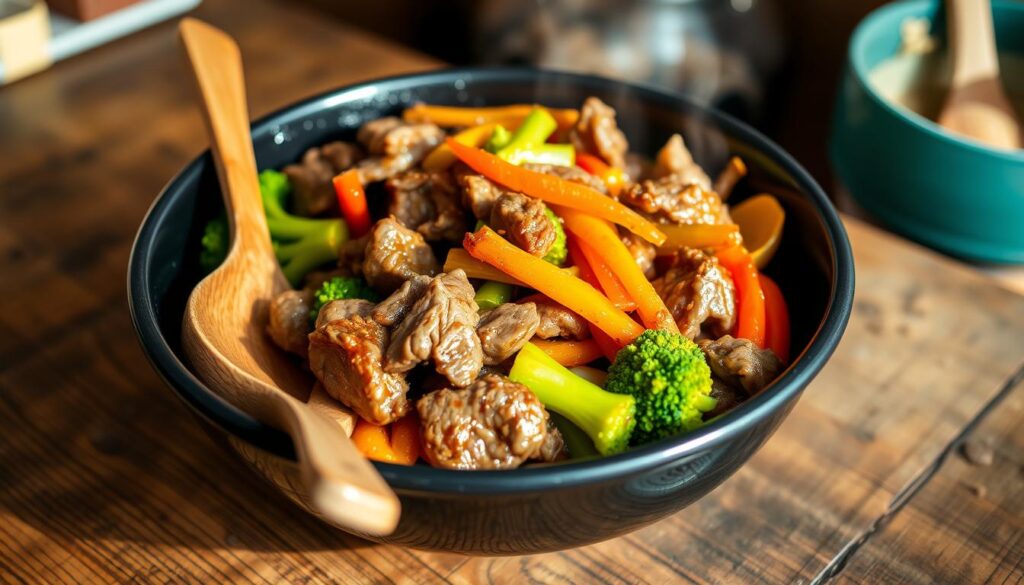
My favorite vegetable swaps are carrots, snap peas, bell peppers, and mushrooms. Cut carrots into thin matchsticks so they cook fast. Slice bell peppers into strips and trim snap peas whole for a crisp pop.
- Carrots: thin matchsticks for quick cook time.
- Snap peas & bell peppers: add near the end for crunch.
- Mushrooms: slice and toss early so they brown.
Protein swaps that keep the method
I also swap in thin-sliced chicken or pork with no change to technique. Slice across the grain, sear over high heat, then add the sauce and finish with the veggies.
| Swap | Cut | When to add |
|---|---|---|
| Chicken or pork | Thin strips | Same timing as beef |
| Firm vegetables | Carrots, stems | Add first |
| Quick veggies | Peas, peppers | Add last |
If you want to make beef stretch, bulk the plate with more vegetables and serve over rice or noodles. The sauce ties everything together, so substitutions still taste great.
Leftovers, Storage, and Reheating Tips
Leftovers from this dish store well, so I plan meals around getting a second dinner out of one night. Cool the food to room temperature, then transfer to airtight containers. I follow USDA guidance and refrigerate for about 3-4 days.
How I store and portion for quick reheats
I portion into meal-size containers so the sauce stays balanced by amount. Storing in smaller portions speeds reheating time and keeps the beef tender.
- Cool fully before sealing to avoid soggy broccoli.
- Label containers with date so you know the safe fridge time.
- Set aside any garnish and add fresh when serving.
Best way to reheat in a skillet or pan
Heat a skillet over medium, add the portion, and stir until warm. If the sauce tightened in the fridge, add a small splash of water to loosen it. Reheating usually takes just a few minutes; stop as soon as it’s hot to protect texture.
Freezing notes
You can freeze for up to 3-4 months, but broccoli will soften after thawing. Flavor holds up well, though texture changes are expected.
| Storage | Time | Note |
|---|---|---|
| Refrigerator | 3-4 days | Airtight containers; cool first |
| Freezer | 3-4 months | Flavor holds; broccoli softens |
| Reheat | Few minutes | Skillet over medium; add water if needed |
Make It Tonight and Skip the Takeout Line
For a fast, confident weeknight meal, this one-pan beef broccoli gives restaurant flavor at home without fuss. It cooks in about 30 minutes, reheats well, and makes smart meal prep.
The three things that make it work: thin-sliced beef for tender bites, a very hot pan to sear for color, and a whisked sauce that simmers until glossy. Nail those steps and the rest falls into place.
Try it tonight over rice or noodles, stash leftovers for lunches, and swap vegetables or heat to suit your taste. Make it once, learn the technique, and skip the takeout line whenever cravings hit.