
This post contains affiliate links. I may earn a commission if you purchase through them at no extra cost to you.
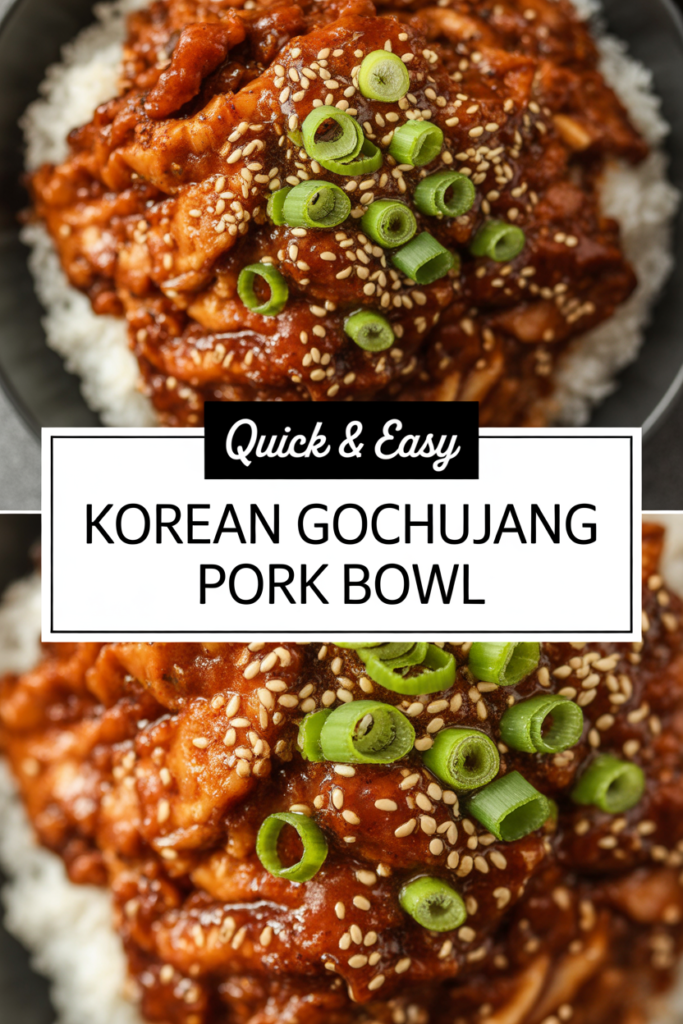
I love a quick, flavor-packed weeknight meal that tastes like takeout but cooks in minutes. This recipe delivers glossy, spicy-sweet sauce and caramelized pork over fluffy rice, all without a long ingredient list.
I’ll show exact measurements, my sauce-mixing method, and step-by-step tips for slicing pork thin and searing until lightly caramelized. The sauce is based on gochujang, a fermented chili paste that brings deep, restaurant-style umami with minimal effort.
This dish fits busy nights and meal prep. I use thinly sliced shoulder, loin, or belly and adapt toppings to what’s in my fridge. For US readers, check the international aisle first, then an Asian grocery or H Mart, or order the paste online if needed.
What you’ll learn: exact ingredients, my thin-slicing prep, and the sear/stir-fry method for those browned bits. I’ll share easy variations later, and I’d love to hear how you customize your bowl.
Why I Make This Spicy-Sweet Korean-Inspired Pork Bowl on Busy Weeknights
When weeknights get hectic, I reach for a fast, bold-flavored meal that still feels special. The sauce and a hot pan do the heavy lifting, so dinner comes together in minutes without a long simmer.
Big flavor with fast cook time and minimal prep
I want dinner that tastes exciting, and gochujang brings that spicy-sweet depth quickly. One small sauce bowl and one hot pan give a big payoff with almost no fuss.
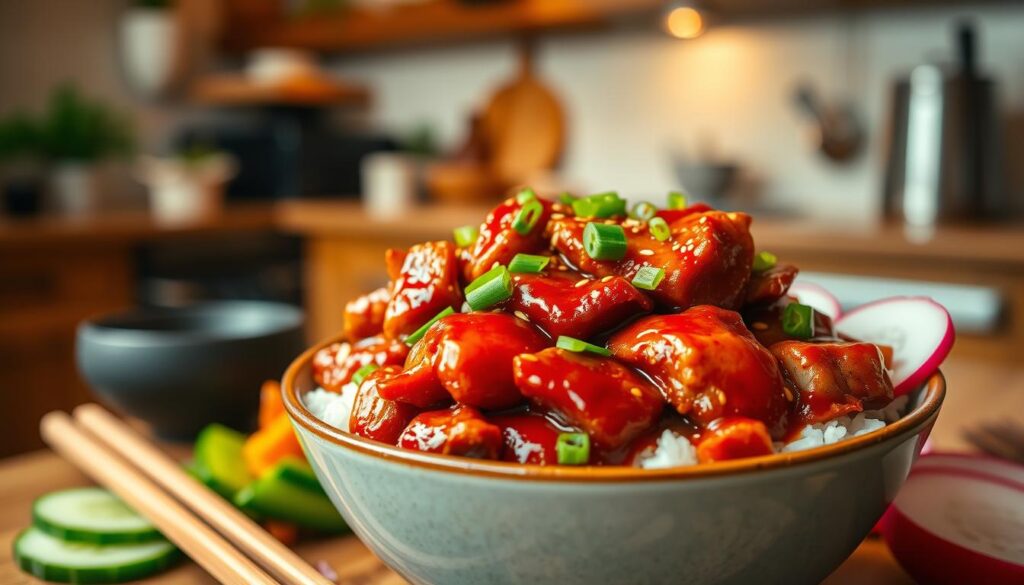
Slicing pork thin keeps total cooking time short, or I can add ground pork when I’m really rushed. The result is sweet-heat up front, salty umami in the middle, and a nutty sesame finish that rounds the dish.
Perfect for meal prep and customizable toppings
I portion rice and pork separately so everything reheats well from the fridge. That makes this ideal for lunches or scaling up for several meals.
- Adjust the spice—gochujang comes in levels (often 1–5) so I match the heat to my comfort.
- Top with crunchy veg, tangy kimchi, or a fried egg to keep the foods interesting.
Ingredients for the Gochujang Pork Bowl (Exact Measurements)
Below you’ll find a clear, pantry-friendly list that keeps prep fast and results reliable.
Pork and aromatics
- 1 lb thinly sliced pork (shoulder, loin, or belly) — thin slicing helps it cook quickly and stay tender. Shoulder = juicy, loin = lean, belly = rich.
- 1 medium onion, thinly sliced
- 3 cloves garlic, minced
- 1 tsp fresh ginger, grated
Gochujang sauce ingredients
- 3 tbsp gochujang
- 2 tbsp soy sauce or tamari
- 1 tbsp honey or 1 tbsp brown sugar
- 1 tbsp rice vinegar
- 1 tsp toasted sesame oil
- Optional: ½ tsp gochugaru for extra heat
For cooking
- 2 tbsp neutral cooking oil (avocado, grapeseed, or canola)
- 1 tbsp sesame oil (added at the end for aroma)
For serving and garnishing
- 3 cups steamed white rice or jasmine rice (about 1 cup uncooked)
- 2 green onions, thinly sliced
- 1 tbsp toasted sesame seeds
| Cut | Texture | Best use |
|---|---|---|
| Shoulder | Juicy, fattier | Weeknight meals with tender bites |
| Loin | Lean, firm | Cleaner flavor and less splatter |
| Belly | Rich, silky | More indulgent, great for reheating |
How I Mix the Gochujang Sauce for Maximum Umami
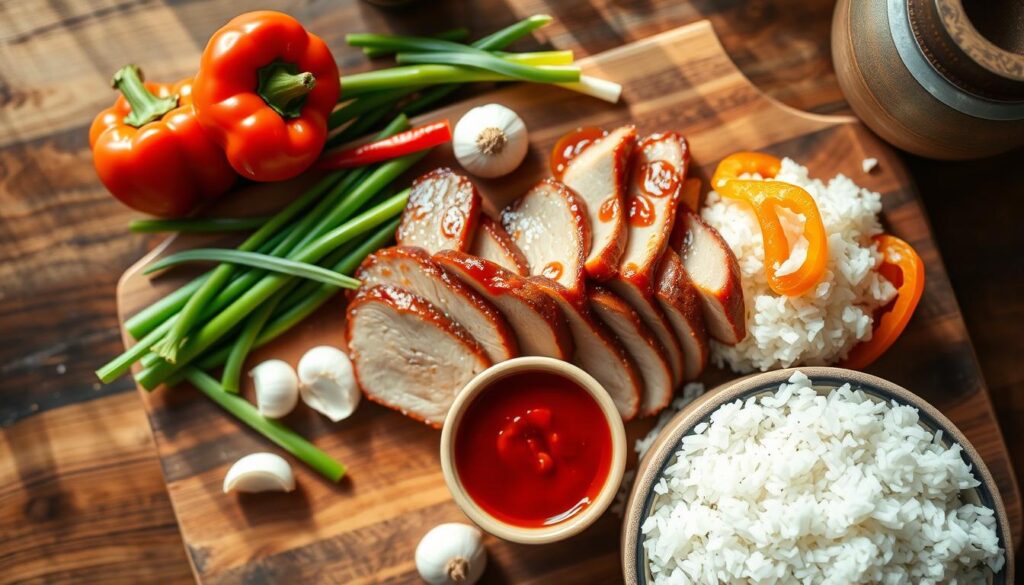
I start every sauce in one small bowl so mixing is fast and mess-free. This one-bowl method lets me whisk the paste, soy sauce, and sweetener in under a minute before the pan gets hot.
Balancing sweet, salty, and fermented depth
I combine 3 tbsp gochujang paste with 2 tbsp soy sauce (or tamari). Then I add 1 tbsp honey or 1 tbsp brown sugar. The gochujang gives fermented chili umami, soy adds savory salt, and the honey smooths sharp edges.
Tang, nutty finish, and optional heat
A splash of rice vinegar lifts the richness so the meat doesn’t feel heavy. I always stir in 1 tsp toasted sesame oil at the end so the sesame aroma stays bright and doesn’t burn.
Adjusting thickness and spice
- If I want a clingy glaze, I keep the mix concentrated.
- For spoonable sauce, I add a tablespoon of water or a small splash of cup-measured liquid.
- For more kick, I sprinkle ½ tsp gochugaru; it adds heat without altering the core flavor.
| Tweak | Effect | When I use it |
|---|---|---|
| Less water | Thicker glaze that clings | Quick sear to caramelize |
| Extra vinegar | Lifts richness, brighter bite | Richer cuts or heavy rice |
| Gochugaru | Cleaner, added heat | When I want a spicier finish |
Quick tip: check the heat rating on the tub (many brands use 1–5). I start moderate — it’s easier to add heat than take it away. The goal is a glossy, punchy sauce that caramelizes and coats the meat evenly.
Prep Tips: Slicing Pork Thin for Quick, Tender Cooking
Thin, even slices are the secret that turns a quick meal into a tender one. Proper prep saves time at the skillet and helps the sauce cling to every bite.
Best cuts to use
I pick shoulder when I want juicy bites, loin for a leaner result, and belly if I want rich, indulgent texture.
| Cut | Texture | When I use it |
|---|---|---|
| Shoulder | Juicy, forgiving | Weeknight meals that reheat well |
| Loin | Lean, firm | Cleaner flavor, less splatter |
| Belly | Rich, silky | Indulgent bowls and caramelized edges |
My safe, easy slicing method
I chill the meat until very firm—sometimes 15–20 minutes in the freezer—so it slices cleanly without slipping. Then I slice against the grain so pieces stay tender even under high heat.
- Use a sharp knife and steady, consistent strokes so slices cook evenly.
- Keep slices thin so the cooking time drops to minutes and sauce coverage improves.
- If you’re short on time, many Asian grocery stores sell pre-sliced cuts for hot pot or BBQ—check the meat counter when you pick up paste or other ingredients.
Cooking Method: Searing or Stir-Frying Pork Until Caramelized
A hot pan and the right timing are everything when you want seared, caramelized meat in under twenty minutes.
Skillet or wok and the heat I set
I choose a wok when I want faster evaporation and sharper browning, but a large skillet works fine if it’s well preheated. I heat to medium-high so the meat sears instead of steaming.
Drop a tablespoon of neutral oil, wait until it shimmers, then add aromatics—onions, garlic, and ginger—just until fragrant. That builds flavor in the fat before the meat goes in.
Timing cues and what caramelized looks like
Spread the pork in a single layer when possible. Cook until pieces are just cooked through, then keep going a bit until you see golden-brown spots and slightly crisp edges. Those browned bits are the flavor jackpot.
Preventing tough meat and keeping the sauce glossy
Don’t crowd the pan and give moisture time to cook off; crowding makes the pork steam and toughen. If the meat renders a lot of fat, spoon off a little but leave enough to carry flavor and help browning.
Add the gochujang-based sauce when the pork is mostly done, toss briefly, and remove from the heat. This tightens the sauce into a glossy glaze without burning it.
Quick ground alternative
If I add ground pork for speed, I break it into small pieces and cook until small crispy bits form. The goal is the same: tender meat with browned, savory edges.
- Preheat pan well.
- Use medium-high heat for sear, not steam.
- Cook until just done, then aim for light caramelization.
- Finish with sauce tossed briefly so it glazes, not burns.
- Make sure the pork is tender and the pan shows browned fond, not black burn.
How I Build a Rice Bowl Everyone Wants to Eat
My favorite way to serve this recipe is simple: warm rice, caramelized meat, and a few lively garnishes.
Steamed white rice, jasmine rice, or a frozen shortcut
I use white rice when I want a neutral base and jasmine rice when I want floral aroma. For jasmine, I rinse the grains, combine 1 cup rice with 2 cups water, bring to a simmer, then cover and rest for 10 minutes off heat for fluffy results.
When time is tight, frozen pre-cooked rice is my weeknight shortcut. Heat it quickly in a skillet so it stays separate and warm before building the bowl.
Garnishes that make it pop
Chopped green onions add fresh bite. Toasted sesame and sesame seeds give crunch and toasty aroma.
Easy add-ons for a fuller plate
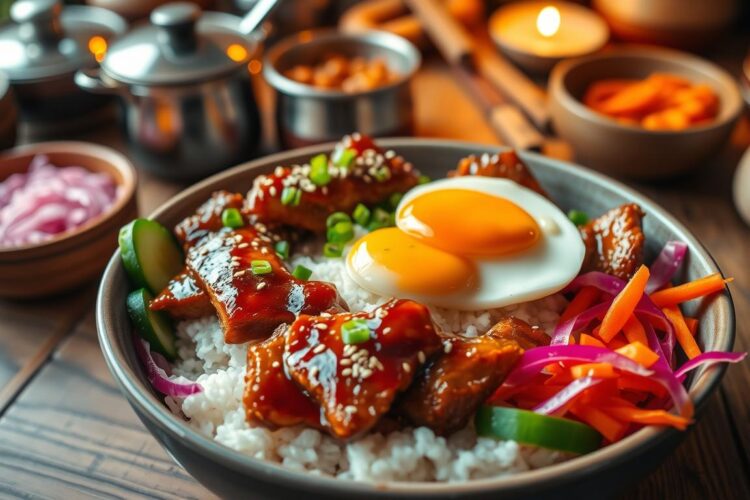
I toss in thin cucumber slices for snap, kimchi for tangy heat, or a crisp cabbage slaw for contrast. A fried egg with a runny yolk turns the meal richer and adds a silky “sauce” element.
- Build order I follow: hot rice first, then the sauced pork, then cool crunchy toppings, then garnish.
- I portion the pork so the sauce can lightly soak into the rice—this is the comfort-food part.
- These bowls are choose-your-own-adventure; rotate toppings to keep foods interesting.
| Rice choice | Texture | When I use it |
|---|---|---|
| White rice | Neutral, soft | Classic base for saucy recipes |
| Jasmine rice | Fragrant, slightly sticky | When I want aroma and lift |
| Frozen pre-cooked | Fast, reliable | Busy nights and quick sides |
Taste and adjust at the end—add extra sauce, a sprinkle more sesame, or a dash more gochujang if you want it bolder. I find small tweaks make this bowl the perfect, repeatable weeknight meal.
Saving It for Later: Storage, Reheating, and Meal Prep Notes
Storing components smartly keeps texture and flavor intact for easy lunches. A little prep up front saves time all week and makes this recipe stress-free.
How I store the pork and rice so it stays flavorful
I pack the cooked pork and rice in separate containers in the fridge. That stops the rice from getting soggy and helps the pork keep a good texture.
Gently cool both before sealing to limit condensation. The meat holds up well for 3–4 days, and rice is fine for the same period if refrigerated promptly.
Make-ahead strategy for quick lunches and weeknight repeats
I mix the sauce and slice the pork ahead when I have time. Then I either cook and chill the pork or freeze portions for later. Doubling the batch gives me ready meals in minutes on busy days.
- Store crunchy toppings separately so cucumbers and slaw stay crisp.
- Refresh rice with a splash of water before microwaving; heat pork briefly to avoid overcooking.
- Keep opened gochujang pork sauce sealed in the fridge so it doesn’t dry out.
- Batch-cook the pork and refrigerate in single portions for fast assembly.
I make sure to label dates on containers so I use oldest meals first. With a little planning, these foods give multiple tasty lunches and quick dinners with minimal effort.
Time to Dig In: My Go-To Korean Gochujang Pork Bowl for Comfort, Heat, and Crunch
For a fast, satisfying dinner, this recipe always gets me the right mix of spice, rice, and crunch.
It stays in my rotation because warm rice, bold gochujang heat, and crisp toppings hit comfort and texture in one easy plate. The method is repeatable: quick sauce, a hot pan for caramelized pork, then build the bowl with what’s on hand.
Note: paste heat varies by brand, so I add spice slowly. If I’m rushed, I simply add ground meat and still get great caramelized bits.
I shop the international aisle first, then grocery stores or H Mart, and I keep a tub of paste on hand. Try your own toppings, then please leave comment below with your favorites—I read them all.