This post contains affiliate links. I may earn a commission if you purchase through them at no extra cost to you.
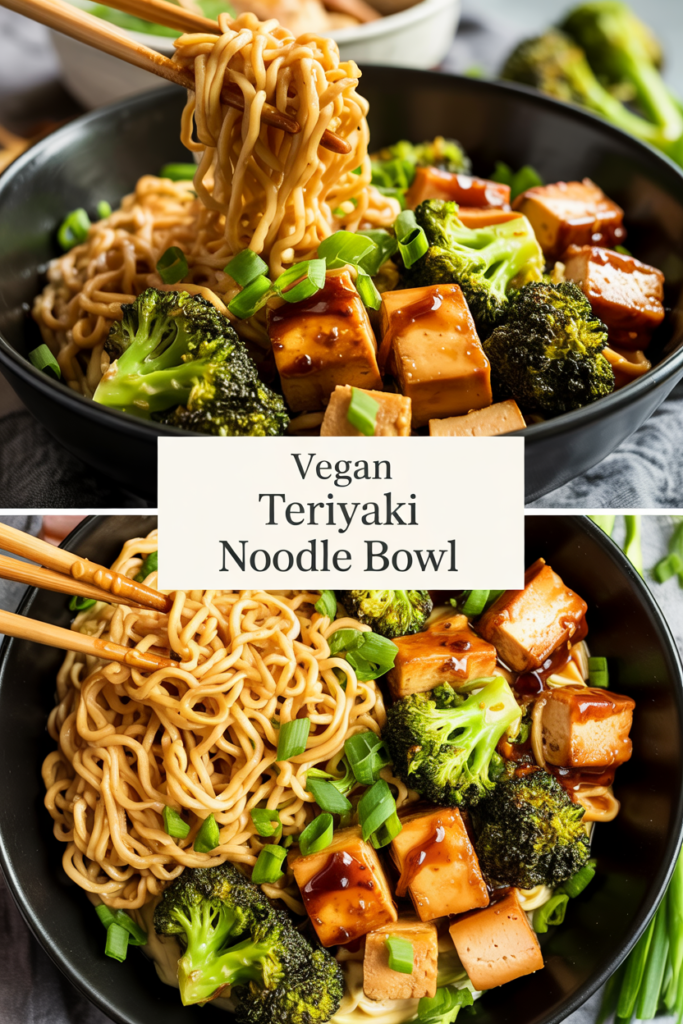
I love this Vegan Teriyaki Noodle Bowl because it tastes sweet-salty, glossy, and deeply savory — the kind of comfort food that feels like a treat but comes together fast.
I make this on busy weeknights when I want big flavor without fuss. It takes about 30–45 minutes from start to finish, so it’s great for quick dinners and vegan meal prep.
The core formula is reliable: chewy, egg-free ramen-style noodles + crisp-tender broccoli + firm tofu + a thick homemade sauce that clings to each strand. My sauce uses tamari or soy, maple or brown sugar, rice vinegar, garlic, ginger, sesame oil, and cornstarch.
You can top it with sesame seeds or chili flakes, add extra veggies, or swap in different noodles. Below I walk through why it works, the exact ingredients and measurements, the sauce method, texture tips, variations, and storage so you can make this dish with confidence.
Why I Make This Teriyaki Noodle Bowl on Busy Weeknights
This quick teriyaki weeknight dish consistently gets me dinner on the table without stress. I can usually finish it in about 30–45 minutes, so it fits right into my evening routine.
Here’s how the minutes break down: boiling the noodles, pressing and crisping tofu, a fast stir-fry of vegetables, and a brief simmer for the sauce. The one-pot + one-pan vibe keeps cleanup simple and saves time.
The reason I come back to this recipe is simple: chewy noodles, a sticky teriyaki sauce, and a good mix of protein and vegetables make it feel like a real meal. It hits that cozy takeout craving but uses ingredients I find at any U.S. grocery store.
- I prep the sauce ahead and refrigerate it to cut dinner time down to mostly assembly.
- Leftovers keep well for 3–4 days and reheat with a splash of water or extra sauce.
- If I’m short on a specific vegetable, I swap what I have and the dish still shines.
Ingredients I Use for the Best Teriyaki Noodles
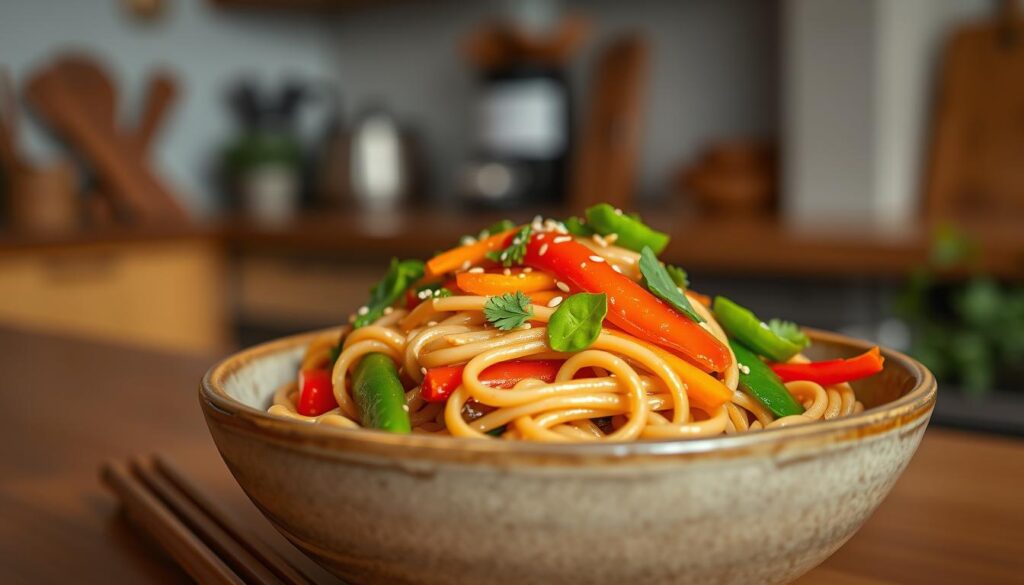
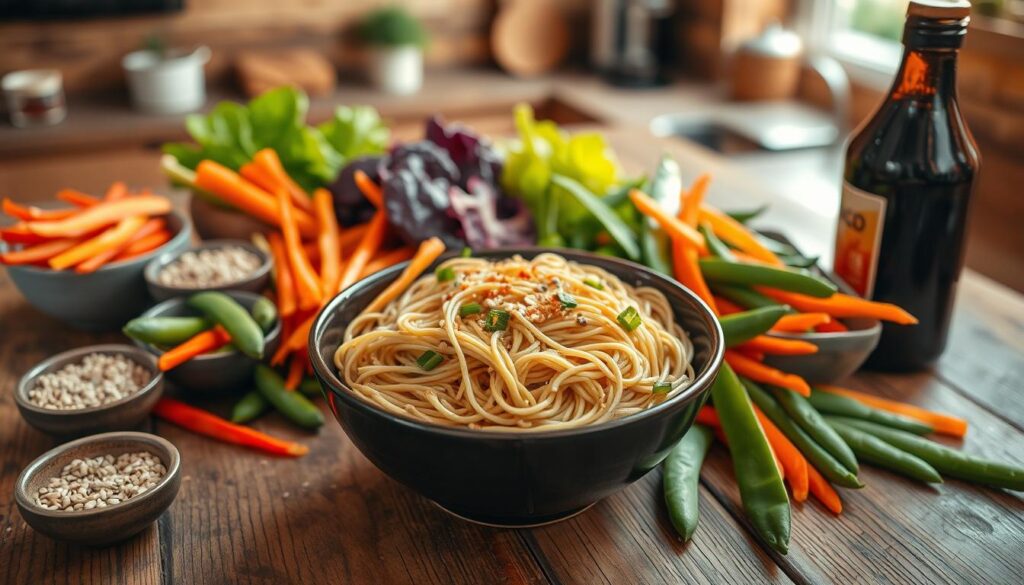
I focus on simple, easy-to-find ingredients that deliver texture and balance. The core is thick egg-free ramen-style noodles, firm tofu, broccoli, and green onions. For the sauce I use soy sauce or tamari, maple syrup or brown sugar, rice vinegar, garlic, ginger, sesame oil, and cornstarch.
Noodles and protein
Thick ramen noodles are my favorite for chew and sauce cling. Good swaps are soba noodles (buckwheat-based), udon, rice noodles, or even spaghetti if that’s what’s in the pantry.
My go-to protein is firm tofu. It crisps, soaks up sauce, and keeps the bowl hearty. Tempeh or edamame also work well.
Vegetables that stay crisp-tender
I aim for roughly 5–6 cups raw vegetables total. Broccoli florets and sliced green onions are staples.
Quick add-ins include carrots, mushrooms, snap peas, or bell pepper. They all hold up under high heat and stay crisp-tender.
Optional toppings and add-ins
- Sesame seeds for crunch
- Chili flakes for heat
- Extra green onions for freshness
Exact Ingredient List With Precise Measurements
Here’s the exact shopping list I use so you can grab everything in one trip and cook without guesswork.
Thick ramen noodles, tofu, and broccoli
- 8 oz thick ramen noodles (egg-free) — check the package for vegan labeling.
- 14 oz firm tofu, pressed and cut into cubes.
- 3 cups broccoli florets (about one medium head).
- 4 green onions, thinly sliced (reserve tops for garnish).
Homemade teriyaki sauce ingredients
- 1/3 cup soy sauce or tamari
- 1/4 cup maple syrup or packed brown sugar
- 1 Tbsp rice vinegar
- 2 cloves garlic, minced
- 1 Tbsp fresh ginger, grated
- 1 tsp sesame oil
- 1/2 cup water
- 1 Tbsp cornstarch + 1 Tbsp water (for the slurry)
Optional garnishes and heat boosters
- 1 Tbsp sesame seeds
- 1/4 tsp chili flakes, or to taste
- Fresh ground black pepper, pinch
| Pantry item | Why | Note |
|---|---|---|
| Soy sauce / Tamari | Base of the sauce | Use tamari for gluten-free |
| Maple / Brown sugar | Sweet balance | Pack brown sugar for depth |
| Cornstarch + water | Thickens sauce | Mix as a slurry to avoid lumps |
If you like extra sauce, double the sauce ingredients. The sauce keeps well refrigerated for several days and is handy for meal prep.
How I Make Homemade Teriyaki Sauce That Clings to Every Noodle
My goal is a sticky, balanced sauce that hugs each noodle for an even bite every time. I build flavor in a small pot, so the technique is repeatable and fast.
Sweet-salty base and flavor builders
Whisk soy sauce or tamari with maple syrup or brown sugar, a splash of rice vinegar, minced garlic, grated ginger, sesame oil, and water in a small pot. Bring to a boil, then lower to a gentle simmer for about three minutes to meld flavors.
Thickening without lumps
Make a smooth slurry: stir 1 Tbsp cornstarch into 1 Tbsp water until no streaks remain. Never add dry cornstarch to hot liquid.
Whisk continually and pour the slurry in slowly. Stop when the sauce becomes glossy and sticky. It will thicken more as it cools and cling better to hot noodles.
Quick tweaks and make-ahead tips
- If too thick, whisk in a splash of water and reheat briefly.
- If too sweet, add a little extra rice vinegar to balance.
- I make teriyaki sauce up to five days ahead and store it chilled. Rewarm in a pot, whisk, and use.
| Step | Why | Tip |
|---|---|---|
| Simmer base | Melds garlic & ginger | 3 minutes |
| Slurry | Prevents lumps | Whisk as you pour |
| Store | Saves time | Keep refrigerated 5 days |
How I Cook My Vegan Teriyaki Noodle Bowl Without Mushy Noodles
Keeping noodles springy starts with timing and a quick cold rinse after boiling. I cook noodles according package directions but stop a touch early so they stay al dente. Then I drain and run cold water over them to halt the cook and prevent soggy strands.
Press and crisp the tofu
I press firm tofu, cube it, and crisp it in a hot skillet with a little oil until edges turn golden. That takes about 6–8 minutes and gives the tofu a chewy-crisp texture that holds up when sauced.
High heat for broccoli
I stir fry broccoli over medium-high to high heat so florets stay bright and crunchy. I cook the stems covered about 6–7 minutes, adding a splash of water if they need a little steam to soften.
Tossing order that makes the sauce cling
My order matters: get veggies hot, pour in the sauce to thicken and glaze, then add the noodles. Toss for 1–2 minutes so the sauce coats everything without overcooking the pasta.
| Tool | Why I use it | When to pick it |
|---|---|---|
| Wok | Max heat, fast evaporation | When I want quick searing |
| Large skillet | Even contact, easier for home cooks | Most weeknights |
| Pot (for noodles) | Room to boil per package | Always start here |
Timing is simple: noodles 6–8 minutes (per package), tofu 6–8 minutes, broccoli 6–7 minutes, final toss 1–2 minutes. Done looks like glossy sauce, springy noodles, crisp-tender vegetables, and tofu with golden edges.
Easy Swaps and Variations for Teriyaki Noodle Bowls
A few simple swaps let you tailor this stir fry to any diet or pantry without losing the glossy sauce and satisfying texture. I keep the core method the same and change one element at a time to see how flavor shifts.
Gluten-free checklist
Use tamari instead of soy sauce and pick egg-free, certified gluten-free ramen or rice noodles like Lotus Foods.
Note: some soba noodles contain wheat, so check labels before you buy.
Noodle and protein swaps
Soba noodles add a nutty buckwheat note. Rice noodles make the dish lighter. Spaghetti is a pantry-friendly swap that holds sauce well.
For protein, try tempeh, edamame, or vegan chicken strips. If you add chicken, the dish is no longer plant-based—fine for mixed households, but worth noting.
Veggies, spice, and finishing touches
Quick-cook vegetables that work in a stir fry include bell peppers, snap peas, mushrooms, shredded cabbage, zucchini, bok choy, or spinach stirred in at the end.
To dial heat, add chili flakes, sriracha, or hot sauce. Finish with sesame seeds, cracked pepper, and a tiny drizzle of sesame oil for aroma.
| Swap | Effect | When I’d use it |
|---|---|---|
| Tamari + rice noodles | Gluten-free, lighter mouthfeel | For gluten-free diners or meal prep |
| Soba noodles | Nuttier flavor, firmer texture | When I want earthier taste |
| Spaghetti | Neutral, pantry-friendly, clings to sauce | Low on specialty noodles |
| Tempeh / edamame / vegan strips | More chew or pop of protein | When I want variety or extra protein |
If your sauce tightens when reheating, whisk in a splash of water and rewarm briefly. To change sweetness or saltiness, nudge the sauce ratios until it tastes right to you.
Meal Prep, Storage, and Reheating Tips I Actually Rely On
A little planning saves me minutes and stress, so I treat leftovers as intentional next-day lunches. I cool the cooked noodles and vegetables slightly before portioning to avoid steam buildup.
I store servings in an airtight container and refrigerate for up to 3–4 days. The sauce keeps separately up to five days if I make homemade teriyaki ahead, which speeds things up on busy nights.
Stovetop reheating
I warm a skillet or pot over medium heat, add the contents, and stir in a splash of water or extra sauce. Two to four minutes of gentle heat brings back gloss and texture without drying the vegetables.
Microwave reheating
For quick lunches, I reheat in short bursts: 30–45 seconds, stir, then another 20–30 seconds if needed. I always add a teaspoon or two of water or sauce so the noodles don’t dry out.
- I don’t freeze this recipe — noodles change texture and get grainy after thawing.
- Prep ahead: make the sauce, press and cube tofu, and chop broccoli and green onions. That cuts active time to just the final stir and toss.
| Task | Why it helps | Quick tip |
|---|---|---|
| Store in airtight container | Preserves flavor and keeps vegetables crisp | Cool slightly before sealing |
| Reheat in pot or skillet | Even heat restores sauce gloss | Add a splash of water or extra sauce |
| Microwave for convenience | Fast for lunches | Short bursts + stir between heats |
| Prep sauce ahead | Saves active weeknight minutes | Keep sauce chilled up to 5 days |
My Favorite Ways to Serve This Vegan Teriyaki Noodle Bowl Tonight
My favorite way to serve this tonight is simple: I pile hot teriyaki noodles into a bowl, spoon on a little reserved teriyaki sauce, and scatter sliced green onions for a fresh bite.
For finishing touches I pick one of two paths: sesame seeds for nutty crunch or chili flakes / sriracha for bold heat. A tiny drizzle of sesame oil and a crack of fresh pepper lift the garlic notes and the vegetables.
When I want a fuller spread, I add a quick cucumber salad or a simple slaw. Leftovers get a glow-up cold as a noodle salad — just add a splash of sauce and toss with extra veggies.
I like to set toppings on the side so everyone customizes their own bowl. If you want more ideas, try other easy recipes on the site like sesame-ginger noodles, tofu-and-broccoli meals, or a quick spaghetti with rice-side stir fry. Make teriyaki at home once and you’ll use the sauce in many recipes.