
This post contains affiliate links. I may earn a commission if you purchase through them at no extra cost to you.
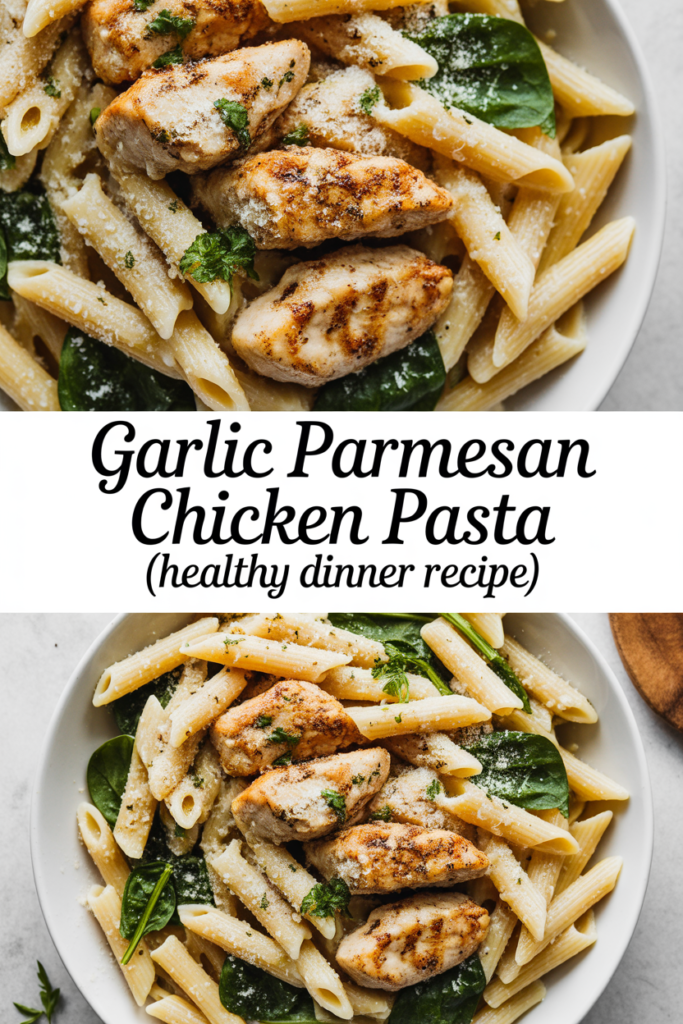
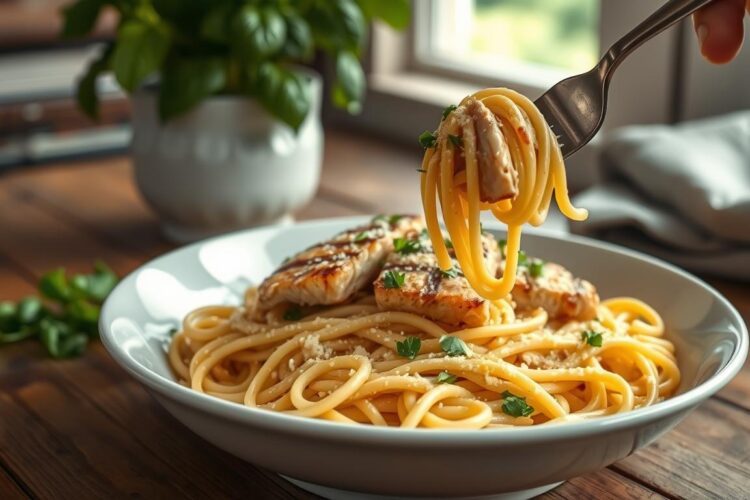
I love a one-skillet meal that feels indulgent but works on busy weeknights. My high-protein version pairs seared chicken with al dente penne in a silky, savory sauce that comes together fast.
I sear seasoned chicken first, then sauté onion and garlic, deglaze with chicken broth, and let the pasta cook right in the pan. Off heat, I stir in very finely grated parmesan and cream so the sauce stays glossy and smooth.
To keep things bright I fold in fresh spinach and finish with chopped parsley and cracked black pepper. This method makes meal-prep simple and cleanup minimal, and it reheats well when you add dairy carefully.
Expect golden slices, glossy sauce, and a pop of green on your plate. Below I share exact amounts and timing so you can hit the same tender texture and balanced flavor every time.
Why I Love This High-Protein, Healthy Weeknight Pasta
Weeknights are easier when a single skillet gives me comfort food that still feels smart and satisfying.
Flavor-first: creamy garlic parmesan with juicy grilled chicken
The creamy garlic parmesan profile delivers big taste without restaurant effort. I sear seasoned chicken in a hot stainless steel pan to lock in juices and get a golden crust.
Then I simmer penne right in chicken broth so the noodles soak up savory depth. Turning off the heat before I add very finely grated parmesan and a splash of cream keeps the sauce glossy and smooth.
Balanced macros and satisfying comfort without the fuss
- It comes together in one skillet in about 30–35 minutes, perfect for a busy weeknight.
- The protein-forward chicken plus carbs and fats give a balanced plate that fills you up.
- I finish with fresh parsley and cracked black pepper to brighten the rich notes.
- It scales easily for meal prep and reheats well with a splash of broth.
Recipe Snapshot at a Glance
If you want the essentials fast, read this short overview. I list total time, yield, pan needs, and quick reheat tips so you can plan the evening.
Total time, yield, and one-pan simplicity
Total time is about 35 minutes: 5 minutes prep and roughly 30 minutes cook. I use one large skillet with a lid from start to finish.
The yield serves about 4, so it works well for family meals or a couple of meal-prep portions. I sear the chicken first, then build the sauce and cook the pasta right in the same pan to save cleanup.
Meal-prep friendly and reheat tips at-a-glance
- Keep the pasta al dente so it holds texture on reheating.
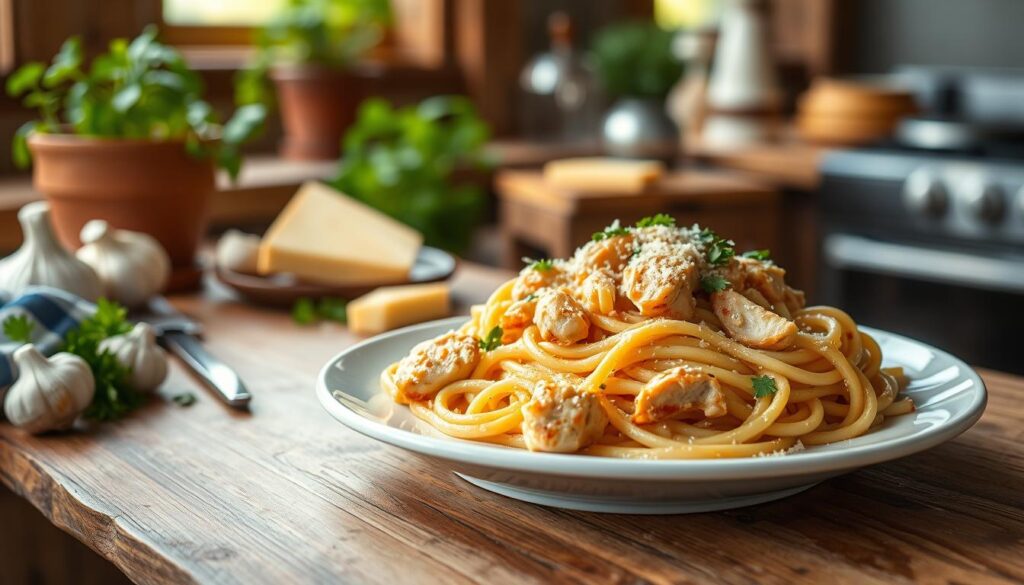
- Reheat gently over low heat with a splash of chicken broth or water to loosen the sauce.
- Leftovers store well in an airtight container after cooling and taste great cold or warmed.
| Metric | Value | Notes |
|---|---|---|
| Total time | ~35 minutes | 5 min prep + 30 min cook |
| Yield | Serves 4 | Good for family or meal prep |
| Pan | One large skillet | Use a lid for covered simmer |
| Reheat | Low heat, splash of broth | Protects sauce and texture |
Ingredients You’ll Need
Start by lining up the staples so the cook flow stays fast and relaxed. I list exact amounts below so shopping and prep are simple.
For the chicken
I use 1 lb boneless, skinless chicken breast, 1 tbsp Italian seasoning, 1/2 tsp paprika, and salt & pepper to taste. Sear in 1 tbsp olive oil (or avocado oil) to build flavor.
For the pasta and sauce
- 8 oz dry penne (regular, gluten-free, or protein) — choose a protein pasta if you want extra protein.
- 2 cups chicken broth
- 1/2 jumbo yellow onion (about 1 cup) diced
- 4–6 large cloves garlic, minced
- 1 tbsp unsalted butter, 1/2 cup heavy cream
- 1 cup very finely grated parmesan cheese
- 2 tbsp chopped parsley and freshly cracked black pepper to finish
- Optional: several handfuls fresh spinach folded in at the end
| Ingredient | Amount | Note |
|---|---|---|
| Boneless, skinless | 1 lb | Pound or butterfly to even thickness |
| Penne | 8 oz | Regular, GF, or protein pasta |
| Chicken broth | 2 cups | Used to cook the noodles in-pan |
| Grated parmesan | 1 cup | Use a microplane for silky melt |
Essential Equipment for Best Results
Good tools cut stress in the kitchen and help you hit great texture every time.
I keep the setup simple so I can focus on technique instead of hunting for gadgets.
Must-have pieces and why they matter
- I choose a large stainless steel skillet to get a beautiful golden sear on chicken and to build flavorful browned bits.
- A matching lid is essential for simmering the pasta in broth and trapping steam so the noodles cook evenly.
- Tongs make flipping chicken and tossing pasta with sauce easy and controlled, so nothing rips or spills.
- A microplane or the fine side of a box grater gives ultra-fine parmesan that melts smoothly into the cheese and cream base.
- Preheat the stainless pan properly: when a splash of water beads and dances, it’s ready for oil.
| Tool | Purpose | Quick tip |
|---|---|---|
| Stainless skillet | Even sear and deglazing | Preheat until water dances, then add oil |
| Lid & tongs | Simmer and flip safely | Use lid to trap steam for even pasta cooking |
| Microplane & thermometer | Fine grating and safe doneness | Grate cheese fine; check chicken to 165°F |
I also keep a sturdy cutting board, a sharp knife, a measuring cup for broth, and a small bowl to mix seasoning. These small steps save time and keep the pan workflow smooth.
Step-by-Step: How to Cook Garlic Parmesan Chicken Pasta
I’ll guide you through each cooking stage so the protein stays juicy and the sauce stays smooth. Follow the timed steps below for consistent results and a creamy finish.
-
Pound and season
Flatten the chicken breasts to about 1/2″ thickness. Pat dry and season with Italian seasoning, paprika, salt, and pepper.
-
Sear and rest
Preheat a skillet over medium heat with a splash of oil. Sear 3–5 minutes per side until golden and the internal temp reads 165°F. Rest 5 minutes, then slice.
-
Sauté and deglaze
Reduce heat slightly. Add 1 tbsp butter plus a bit of oil. Sauté diced onion 3 minutes, add minced garlic for 1 minute.
Pour in 2 cups chicken broth and scrape browned bits to build the sauce base.
-
Cook the noodles in-pan
Add 8 oz dry penne and stir to submerge. Cover and simmer about 10 minutes until al dente, stirring once mid-cook.
-
Finish off heat
Turn off the heat. Stir in 1 cup very finely grated parmesan, 1/2 cup heavy cream, and 2 tbsp chopped parsley for a silky sauce. Taste and adjust salt pepper.
-
Assemble
Return sliced chicken to the pan to warm. Fold in several handfuls of fresh spinach until just wilted and bright.
| Step | Minutes | Quick tip |
|---|---|---|
| Pound & season | 5 | Even thickness cooks faster |
| Sear & rest | 10 | Use thermometer for 165°F |
| Simmer noodles | 10 | Keep broth simmering, cover |
| Finish & toss | 3–4 | Add cheese off the heat for a silky sauce |
Pro Tips for Creamy Garlic Parmesan Sauce and Tender Chicken
A couple of timing tricks keep the sauce glossy and the protein juicy without extra fuss. These are technique-focused steps I use every time to avoid clumping and separation.
Preheat stainless steel so meat won’t stick
I preheat my stainless skillet until a few drops of water bead and dance. Then I add a splash of oil.
This prevents sticking and helps the meat release naturally when it’s ready to flip. Letting it go undisturbed builds a true golden crust.
Why very finely grated cheese matters
I use a microplane for very fine parmesan so the particles melt uniformly into the sauce. Finer particles give a glossy, smooth finish.
Coarser shreds or pre-grated blends often contain anti-caking agents that resist melting and cause clumps. Grate fresh for best results.
Add dairy off heat to keep the sauce silky
Turn off the heat before you stir in cream and grated cheese. This keeps the emulsion stable and stops curdling or graininess.
If the sauce tightens too quickly, whisk in a splash of warm broth or reserved hot water to loosen it back to a perfect coating consistency.
- Stir steadily when folding in cheese so it disperses evenly.
- Avoid vigorous boiling after adding dairy to prevent separation.
- Thin with hot liquid if needed and whisk to restore gloss.
| Tip | Why it matters | Quick fix |
|---|---|---|
| Water “dance” preheat | Prevents sticking and aids browning | Add oil after water beads; don’t move meat too soon |
| Microplane-grated cheese | Melts into a silky sauce | Use fresh microplane grating |
| Add dairy off heat | Protects the emulsion and texture | Turn heat off, then stir in cream and cheese |
| Thin with warm broth | Restores coating consistency | Add small amounts, whisk until smooth |
Garlic Parmesan Chicken Pasta (Healthy Dinner Recipe)
When I need a fast, filling meal that still feels special, this skillet dish is my go-to.
I build deep savory flavor by cooking the noodles right in broth and finishing with very finely grated parmesan off the heat. The method keeps the sauce glossy and prevents graininess.
The protein stays juicy because I sear the chicken to a golden crust, rest it briefly, then slice and warm it back in the pan. I aim for 165°F internal temp for safe, tender meat.
- One-pan convenience — about 30–35 minutes from start to plate.
- Pasta simmers in broth so each bite is savory through and through.
- I fold in fresh spinach at the end for a bright hit of green.
- This approach pairs well with meal prep or a relaxed weeknight dinner.
| Feature | Timing | Quick tip |
|---|---|---|
| One-pan cook | 30–35 min | Use a lid to keep broth simmering |
| Chicken sear | 3–5 min per side | Rest 5 min before slicing |
| Pasta finish | Simmer ~10 min | Stir once mid-cook to avoid sticking |
| Finish off heat | 2–3 min | Add dairy off heat for a silky sauce |
This is my reliable, high-protein weeknight pick. Try it tonight and see how easily a quick skillet can feel special.
Healthy Swaps, Substitutions, and Variations
A few smart ingredient swaps make this dish work for many diets without losing taste. I keep the technique the same and tweak timing or textures to suit needs on a busy weeknight.
Gluten-free penne and timing tweaks
I reach for Banza, Jovial, or Bionaturae when I need a GF option. Check the package time closely so the noodles stay al dente.
If the GF penne cooks faster than my broth reduces, I shorten the covered simmer and taste early to avoid mush.
Dairy-free swaps that still feel creamy
To go dairy-free I swap butter for olive oil and use a plant-based cream like Country Crock Plant Cream. I add vegan parmesan knowing it melts differently.
If I want fewer calories, I cut back on parmesan cheese and add a splash more plant cream for silkiness. I use garlic sparingly so the overall balance stays bright.
No-wine option: broth plus lemon
I skip wine by adding extra chicken broth and a tablespoon of lemon juice for acidity. Finish by seasoning to taste with salt and pepper.
- Protein pasta is a great high-protein variation; monitor timing closely.
- For a lighter take, add more spinach or roasted veg and reduce dairy slightly.
- On busy nights I pre-measure swaps and grate cheese ahead so the cook stays smooth.
| Swap | Use | Quick tip |
|---|---|---|
| Gluten-free penne | Banza, Jovial, Bionaturae | Follow package time; taste early |
| Dairy-free | Olive oil + plant cream | Expect different melt; add extra liquid if needed |
| No wine | Chicken broth + lemon | Add acidity, then adjust salt & pepper |
Add-Ins and Flavor Boosters
A few simple add-ins brighten the pan without changing how I cook the core dish. I use them to adjust texture, heat, or brightness at the end so the sauce stays silky and cohesive.
Vegetable mix-ins
- I boost color and nutrients by folding in fresh spinach at the end for a quick, gentle wilt that won’t water down the cream.
- Lightly roasted broccoli or asparagus work as a tossed-in side or folded into the skillet for extra bite.
- Roasted cherry tomatoes add juicy pops that cut through richness.
- Sautéed mushrooms give savory, umami depth that pairs well with cheese.
Seasoning finishes
- Red pepper flakes bring a subtle kick that complements the creamy garlic base.
- A shower of lemon zest brightens heavy notes and boosts overall flavor.
- Extra cracked black pepper amplifies savory, nutty qualities from the parmesan.
- A thin drizzle of good oil at the end adds sheen and rounds the mouthfeel.
| Add-in | When to add | Effect on dish |
|---|---|---|
| Fresh spinach | Stir in after turning off heat | Wilts quickly; adds color and nutrients |
| Roasted broccoli | Toss in after roasting or midway | Provides crunch and a green side element |
| Red pepper flakes | Sprinkle at finish | Adds gentle heat without overpowering |
| Lemon zest | Grate over just before serving | Brightens and lifts rich, creamy notes |
Serving Ideas for a Balanced Dinner
I choose quick pairings that balance richness with crunch and acidity. These small sides help each bite feel fresh and rounded.
Pairings that work every time
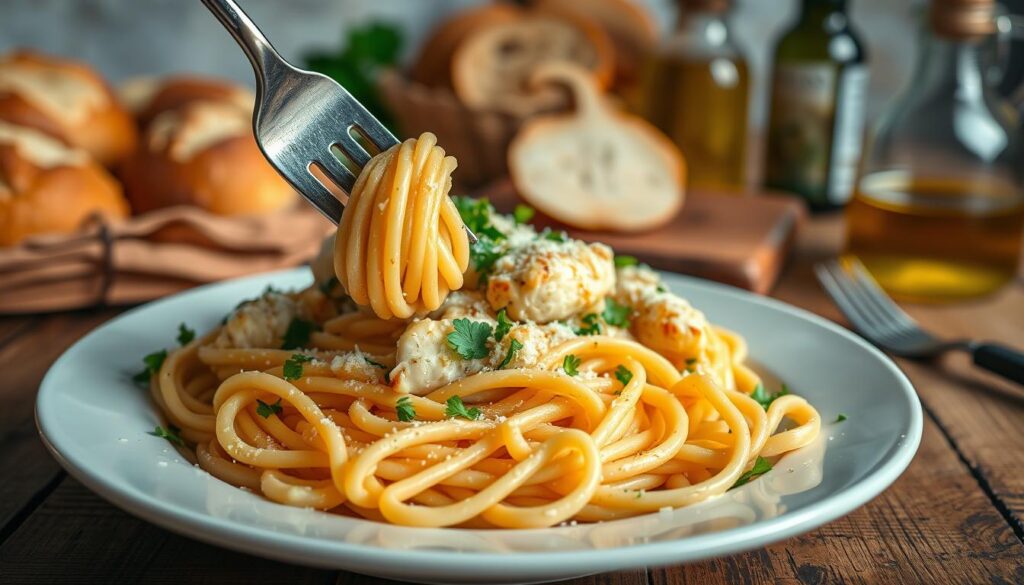
- I love serving this with warm crusty bread to swipe up every bit of creamy sauce. It adds a toasty texture and comfort to the plate.
- A crisp green salad dressed with olive oil and lemon keeps the meal light and refreshing. The acidity cuts through richness.
- Roasted broccoli on a sheet pan is an easy side that echoes the savory notes. It adds fiber and a pleasant bite.
- For crowds, I set out a large salad bowl and sliced bread so people can serve themselves.
| Side | Why it works | Quick tip |
|---|---|---|
| Crusty bread | Soaks up the sauce; adds chew | Warm in the oven for 5–7 minutes |
| Green salad | Brightens and lightens the plate | Toss with oil, lemon, salt, and pepper |
| Roasted broccoli | Provides crunch and savory contrast | Roast at 425°F until edges brown |
When I plate, I top the main with sliced chicken so the dinner looks inviting. A sprinkle of parsley ties the sides back to the main dish and adds color.
Nutrition and Macros Made Simple
Putting numbers on my plate makes it easy to meet protein goals. I position this as a high-protein meal thanks to a full pound of chicken and a sauce that doesn’t skimp on cheesy richness.
For accurate tracking, I weigh the final cooked mixture and divide by four to set serving sizes. I also log each component—pasta, chicken, cheese, and cream—so totals match my tracking app.
Weigh cheese before adding it and note any swaps, like a protein pasta, to update macro entries. Some versions of this dish clock around 41 g protein per serving when divided into four equal portions.
- I weigh the cooked pan, then divide the total weight by servings to portion precisely.
- Log ingredients individually for exact calories, carbs, fat, and protein.
- A splash of water or broth when reheating restores a silky sauce without extra calories.
- A pinch of salt and pepper changes flavor but not macros in any meaningful way.
| What to weigh | Why it matters | Typical note |
|---|---|---|
| Total cooked yield | Sets accurate serving weight | Weigh then divide by 4 for portions |
| Cheese & pasta pre-add | Improves macro accuracy | Weigh grated cheese and dry pasta before cooking |
| Reheat liquid | Restores texture | Use water or broth, 1–2 tbsp per serving |
Troubleshooting and Timing
A little attention in the last minutes ensures a glossy sauce and perfectly al dente pasta. These fixes are fast and keep the final plate smooth and balanced.
If the sauce is too thick or clumps, here’s how to fix it
Turn the heat off before you add dairy. I always stir in cream and finely grated parmesan off heat so the emulsion stays stable.
If the sauce tightens, whisk in warm broth or a few teaspoons of hot water in small splashes until it loosens. Clumps often mean the cheese was too coarse or the pan was too hot; turn off the heat, whisk, and add liquid.
Coordinating pasta doneness with finishing the sauce
Start the sauce components so they finish in the last few minutes of pasta cooking. If the noodles reach al dente early, remove the pan from heat and keep it covered for a minute while you finish the sauce base.
- Check doneness a couple minutes before package time for GF or protein options.
- If broth looks low when you add pasta, stir to submerge, cover, and taste early to avoid overcooking.
- A final drizzle of olive oil restores sheen if the sauce has over-reduced.
| Issue | Quick fix | Timing cue |
|---|---|---|
| Thick sauce | Whisk in warm broth or water | 1–2 minutes to adjust |
| Clumpy sauce | Turn off heat, whisk, add liquid | Immediately after clumps appear |
| Pasta finishes early | Hold covered off heat; finish sauce | 30–120 seconds buffer |
Ready to Cook? Try It Tonight and Share Your Plate
This one-pan method gets you from pantry to plated in about 35 minutes. I love that it serves four and makes a shareable, plated meal with sliced chicken on top.
Use the recipe card to save amounts and timing. Set a timer for roughly 35 minutes and you’ll have a glossy, garlicky pasta ready to serve.
Garnish with very finely grated parmesan and chopped parsley for a restaurant finish. Pair with crusty bread, a crisp side salad, or roasted broccoli to round the plate.
For meal-prep, portion while warm and cool before sealing. Snap a photo, tag your share, and enjoy — this is one you’ll want to make again.