
This post contains affiliate links. I may earn a commission if you purchase through them at no extra cost to you.

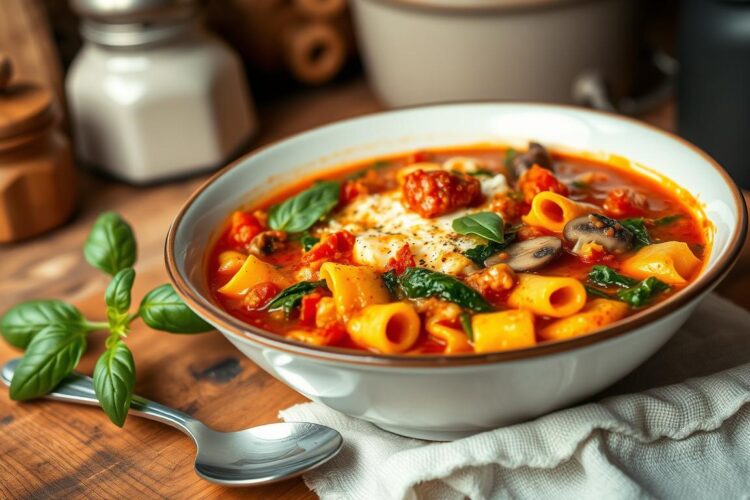
I’m sharing my vegan lasagna soup as a cozy, one-pot spin on classic lasagna that eats like a slurpable comfort bowl. I built this recipe to deliver layered pasta texture and bold, Italian-inspired flavor without dairy or meat.
The pot starts with sautéed onion, carrot, celery, and garlic, plus tomato paste and good canned tomatoes for a rich, orange-red broth. I use spiral pasta so each bite feels lasagna-like, and I stir in tender spinach at the end for a fresh, silky contrast.
This version stays weeknight-easy: simple steps, pantry-friendly ingredients, and optional plant proteins like lentils or cannellini beans to make it heartier. Leftovers keep up to three days in the fridge, and you can freeze the base without pasta for months.
I’ll walk you through exact ingredients and timing so you get al dente pasta and bright flavor every time. Small tweaks let you change veggies or heat without losing that classic vibe.
Cozy, one-pot comfort with bold Italian flavors and a vibrant orange-red tomato broth
This one-pot bowl captures the bold, sun-ripened tomato notes and warm herb layers of a classic Italian bake.
I start by sautéing onion, carrot, and celery with garlic to build a savory base that tastes slow-simmered but comes together fast. Then I bloom dried basil and oregano with a spoonful of tomato paste until the pot turns a glossy orange-red.
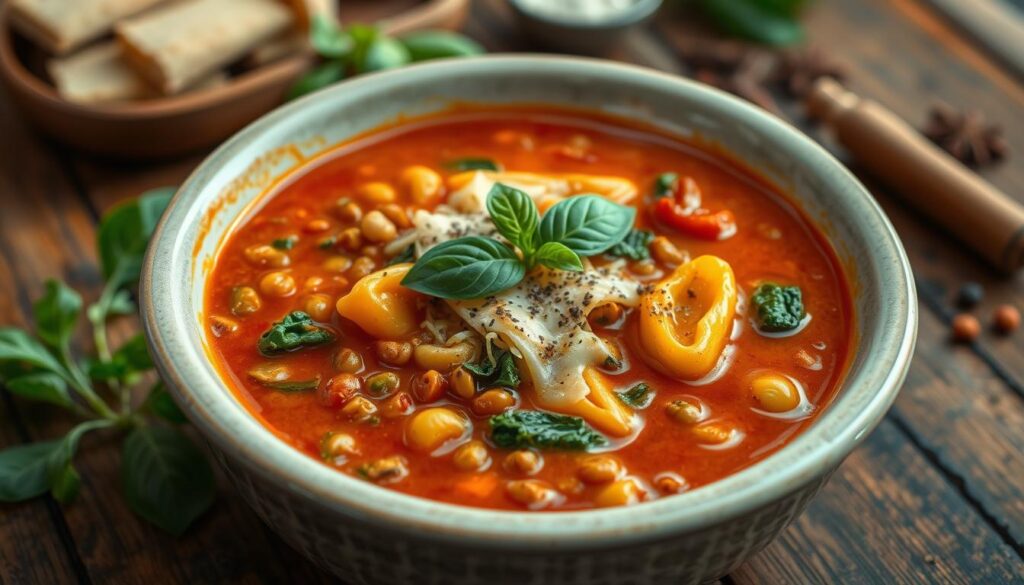
Next I add quality chopped tomatoes and vegetable broth, then drop in spiral pasta so each curve catches that rich broth and spice. Simmer until the pasta is al dente, and stir in fresh spinach at the end so it wilts bright and tender.
- A quick drizzle of olive oil adds shine and tames acidity.
- Chopped parsley brings fresh green contrast to the deep tomato base.
- This one-pot method keeps cleanup easy while delivering big flavor.
Why you’ll love this vegan lasagna soup
I set out to make a hearty, no-fuss pot that still tastes like layered lasagna. This recipe is 100% plant-based and built to satisfy, with bright tomato, garlicky herbs, and tender pasta in every spoonful.
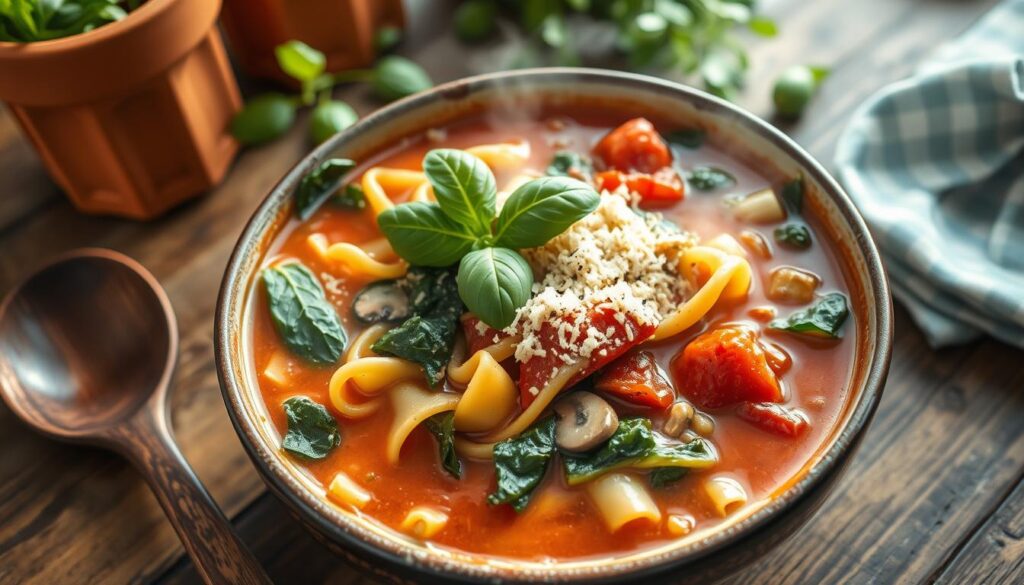
Hearty and satisfying, minus the dairy and meat
Plant proteins like lentils or cannellini beans give real body and protein so the bowl feels filling. The tomato base and spiral pasta create that layered bite you expect from a classic lasagna flavor profile.
Weeknight-easy in one pot, perfect for meal prep
The stovetop method takes about 30 minutes, so it’s ideal when time is tight. Make the base and freeze it without noodles, or store portions in the fridge for up to three days.
- Genuine lasagna taste with fewer dishes and less effort.
- Cook noodles separately for storage to avoid soggy leftovers.
- Reheat with a splash of broth and finish with parsley for freshness.
Ingredients for Vegan Lasagna Soup
Here’s the exact grocery list I keep on hand to build a rich, orange-red tomato broth fast. These ingredients create layered pasta texture, aromatic depth, and a bright parsley finish—perfect for a weeknight meal.
Pantry and liquids
- 2 tablespoons olive oil (or a splash of vegetable broth to sauté)
- 1 tablespoon tomato paste
- 1 (28-ounce) can crushed or chopped tomatoes
- 6 cups vegetable broth and water as needed to thin the sauce into soup
Fresh produce and aromatics
- 1 medium onion, diced
- 1 medium carrot and 2 celery stalks, diced
- 4 garlic cloves, minced
- 1 medium zucchini in ½-inch pieces; 4 cups baby spinach; ¼ cup chopped parsley
- Optional: 2 cups sliced mushrooms for extra savoriness
Pasta and plant protein
- 10 ounces spiral pasta (rotini/fusilli) or 7 ounces broken lasagna sheets (1–2 inch pieces)
- 1 cup canned green lentils (drained) or ¼ cup uncooked red lentils
- Alternatives: 1 cup chickpeas or cannellini beans
Seasonings and garnish
- 1 teaspoon dried basil and 1 teaspoon dried oregano
- ¼–½ teaspoon red pepper flakes, 1 teaspoon kosher salt, ½ teaspoon pepper
- 2 teaspoons extra-virgin olive oil to finish; adjust spices by the teaspoon to taste
How I cook it on the stovetop, step by step
I walk you through a reliable stovetop routine that builds layered lasagna flavor in a single pot. The method gives a bright orange-red broth, toothsome noodles, and minimal cleanup.
Step-by-step method for rich, layered flavors
- Warm 2 tablespoons olive oil in a large Dutch oven over medium heat and add onion, carrot, and celery. Cook 5 minutes, stirring occasionally, until softened.
- Add garlic cloves, dried basil, and oregano and cook 1 minute more to bloom the herbs and tame the raw edge.
- Stir in tomato paste and cook about 1 minute so it caramelizes a bit and deepens the sauce color.
- Pour in crushed tomatoes, zucchini pieces, lentils (canned or ¼ cup red), and 6 cups vegetable broth. Bring to a gentle boil, then reduce and simmer 5 minutes.
- Add the spiral pasta or broken noodles and simmer, stirring occasionally, until al dente — about 8 to 10 minutes. Thin with water or more broth if it thickens too quickly.
- Fold in spinach and cook 1–2 minutes until wilted. Season with 1 teaspoon salt, ½ teaspoon pepper, and a pinch of black pepper to taste.
Pro tips: pasta texture, seasoning, and that orange-red sheen
Finish with 2 teaspoons olive oil for a glossy sheen and a sprinkle of dried basil or mixed Italian herbs.
Taste and adjust: add a pinch of sugar if the tomato edge is sharp or a splash of broth to loosen the body.
| Step | Heat | Time (minutes) |
|---|---|---|
| Sauté aromatics | Medium heat | 5 |
| Simmer base | Medium-low | 5 |
| Cook pasta | Medium-low | 8–10 |
Total stovetop time is about 30 minutes, and I serve immediately so the lasagna textures stay distinct and the noodles remain perfectly toothsome.
Vegan Lasagna Soup: Instant Pot option
If you want a faster, hands-off method, pressure cooking delivers tender noodles and a rich broth in minutes. I use the pot to cut active time while keeping that orange-red sauce bright.
Pressure-cook timing and pasta guidance
I set the pot to Sauté and soften onion and garlic for 2 minutes, stirring occasionally. Then I add zucchini, tomatoes, lentils, dried herbs, red pepper flakes, pasta (spirals or small lasagna sheets), and 2–3 cups water or broth.
- Lock the lid and cook on High Pressure for 3 minutes (or about half your pasta package time) so noodles stay al dente.
- Let pressure release naturally for 10 minutes, then quick-release remaining steam.
- Open, stir in spinach to wilt from residual heat, then taste and adjust seasoning.
Prevent burn warnings and keep noodles al dente
Scrape the pot bottom clean after sautéing and make sure pasta is submerged. Add extra water if the mixture seems thick to avoid a burn error.
| Type | Pressure Cook Time | Notes |
|---|---|---|
| Spiral pasta | 3 minutes | Half package time, al dente |
| Small lasagna sheets | 3 minutes | Break into pieces to prevent clumping |
| Gluten-free pasta | Adjust time | May need extra minutes; test a piece |
Variations, swaps, and add-ins
If you like to tinker, these easy variations let you pile on protein and extra veggies without fuss. I keep the base intact and change a few items to suit taste, time, or diet.
Here are my favorite, practical swaps that keep the pot hearty and balanced.
- Protein boosts: Stir in 1–2 cups cooked beans (chickpeas or cannellini) or add red or green lentils for extra protein and body.
- Veggie upgrades: Mushrooms add meaty depth. Zucchini, bell pepper, eggplant, kale, or peas bulk up the pot and add fresh texture.
- Heat and herbs: Use red pepper flakes for spice and layer basil and oregano to brighten the tomato sauce. A pinch of crushed fennel seeds gives a sausage-like note.
- Gluten-free and oil-free options: Choose a sturdy GF pasta or break GF lasagna sheets into pieces; cut cook time slightly. For oil-free cooking, sauté aromatics in broth and skip the olive drizzle to cut fat.
- Pasta shape tips: Rotini, fusilli, or Mafalda Corta trap sauce and feel like lasagna in each bite. Add broken sheets near the end to keep them pleasantly al dente.
| Swap | Why | Timing |
|---|---|---|
| Chickpeas / Cannellini beans | Protein and creaminess | Stir in with tomatoes or at the end if canned |
| Mushrooms | Meaty depth | Sauté with aromatics for best flavor |
| Broken lasagna sheets | Traditional texture | Add near end to avoid overcooking |
Storage, reheating, and meal prep tips
Keeping the base fresh and the pasta al dente takes just a few smart storage moves. I store leftovers promptly and label them so nothing lingers past safe time limits.
Fridge storage in an airtight container
Place cooled portions in an airtight container and refrigerate for 3 to 4 days. This prevents fridge odors and keeps the tomato broth tasting bright.
Freezer-friendly approach without the noodles
For longer storage, freeze the tomato-vegetable base without noodles or sheets. Freeze up to 3 months, then thaw overnight and cook fresh pasta before serving.
Reheat, thin, and refresh with broth and parsley
To reheat, warm over medium-low for a few minutes. Add splashes of vegetable broth or water to restore a silky, sippable consistency.
- Undercook pasta slightly before storing, or keep noodles separate to protect texture.
- If noodles are already in the container, expect them to soften; stir in a handful of fresh cooked pasta if you want more bite.
- Brighten each serving with chopped parsley and a pinch of pepper just before serving.
| Method | Storage Time | Notes |
|---|---|---|
| Refrigerator (airtight container) | 3–4 days | Keep covered and labeled |
| Freezer (base only) | Up to 3 months | Thaw overnight; cook pasta fresh |
| Reheat | Few minutes | Add broth or water to thin as needed |
Let’s ladle up: serve hot with parsley and a swirl of olive oil
I bring the pot to the table and spoon steaming portions into warm bowls so the orange-red broth glows and the pasta stays bouncy. I scatter chopped parsley over each bowl for a bright green contrast that lifts the deep tomato base.
I finish with a restrained swirl of olive oil and, if wanted, a pinch of black pepper. For a lighter bowl, skip the oil and add extra parsley. Keep a small pitcher of warm broth or water at the table to thin a serving to saucier taste.
Serve right away so the spinach stays tender and the layered lasagna feel remains. Set the pot in the center for family-style service and offer crusty bread for dipping—simple, comforting, and fully vegan comfort in a bowl.