
This post contains affiliate links. I may earn a commission if you purchase through them at no extra cost to you.
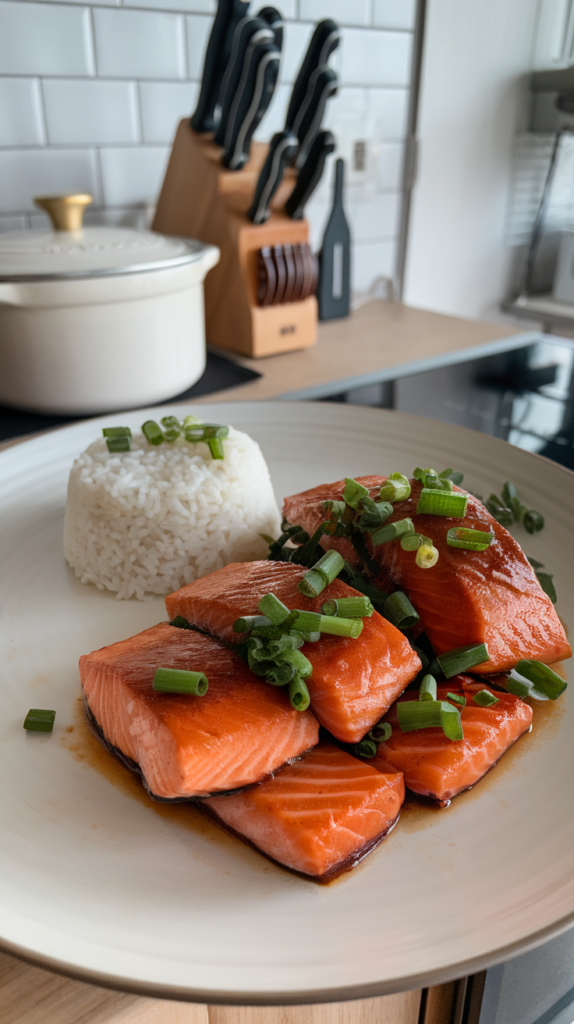
I want to share my go-to weeknight meal that feels like a restaurant plate but cooks in one pan. This recipe uses two 6 oz fillets, a splash of olive oil, and a sweet-savory sauce that caramelizes fast on the stovetop.
I’ll list the exact ingredients and the timing I use: 3 minutes on the first side, 2–3 minutes after the flip, then reduce the sauce 1–2 minutes. The sauce mixes 4 tbsp honey, 2 tbsp soy sauce, 1 tbsp vinegar, and 2 minced garlic cloves.
You can add a pinch of red pepper flakes or a drizzle of sriracha for heat, or swap coconut aminos to skip soy. I plate mine over steamed rice with scallions and sesame seeds for a bright finish.
Read on and you’ll have a clear, doable stovetop method and pantry ratios so this fast, juicy fish becomes your new weeknight favorite.
Why I Make Honey Garlic Salmon on Busy Weeknights
I rely on a short, no-fuss skillet method that gets supper on the table in about ten minutes. The approach uses a tiny ingredient list and clear steps, so I skip extra prep when time is tight.
Quick, restaurant-quality results at home
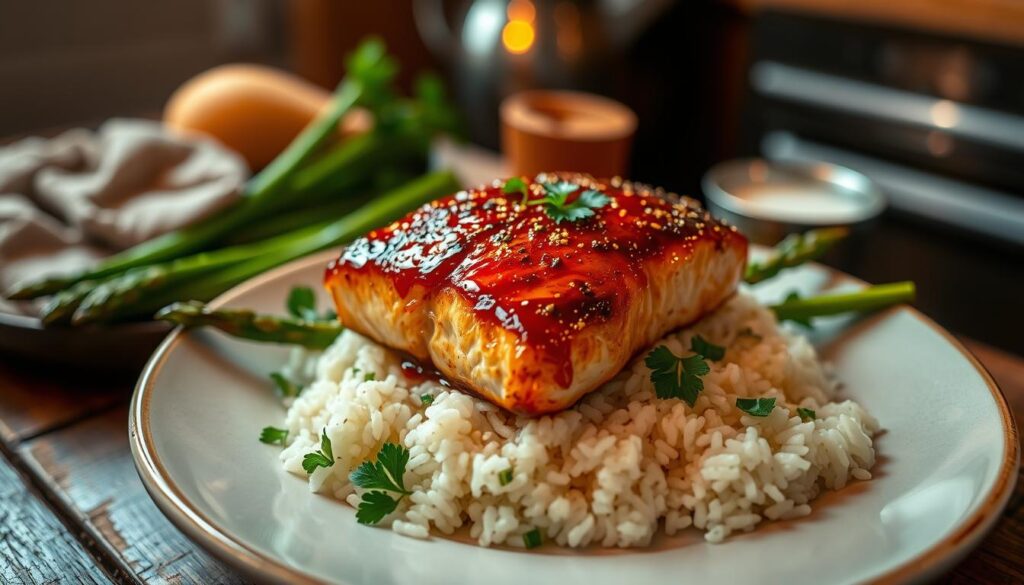
The fish cooks in about 10 minutes on the stovetop, with a fast sear in a bit of oil and steady heat. A quick sauce reduction is spooned over the fillets for that caramelized flavor I love.
Minimal ingredients, maximum flavor and protein
I keep the pantry list short: sweet, savory, a splash of vinegar, olive oil, salt, and pepper. That simplicity means I can make a full meal without a special run to the store.
- Perfect for a hectic weeknight when I need a satisfying dish fast.
- The method is forgiving—extra minutes won’t ruin the texture.
- I can tweak heat and tang on the fly to suit who’s at my table.
- Portions stay protein-forward, so everyone is full without fuss.
Honey Garlic Salmon (High Protein) – Healthy Weeknight Dinner (So Easy!)
When I need a fast, flavorful skillet meal, I reach for a quick fish sear and a simple sweet-savory glaze. This salmon recipe gets a crisp exterior, a tender interior, and a glossy finish in just minutes.
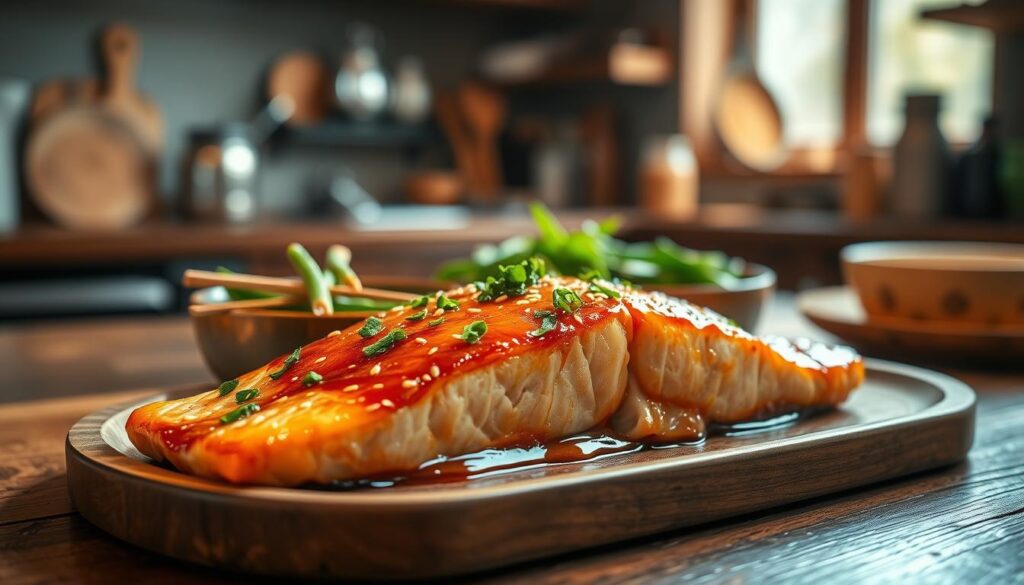
I pat the fillets dry, season lightly, and heat a pan until the oil shimmers. A three-minute sear on the first side builds color, then I flip and add the sauce.
The sauce is a whisk of honey, soy, vinegar, and minced garlic. I pour it around the fillets, let it bubble, and spoon it over the fish for 1–2 minutes while it reduces.
- Quick skillet method: sear, flip, pour, and baste.
- Exact ratio: 4 tbsp honey, 2 tbsp soy, 1 tbsp vinegar, 2 cloves minced garlic.
- Swaps: low-sodium soy or coconut aminos work well.
| Step | Time | Note |
|---|---|---|
| Preheat pan & sear first side | 3 minutes | Hot oil, do not move fillets |
| Flip & add sauce | 1–2 minutes | Spoon glaze as it thickens |
| Rest & plate | 1 minute | Serve over steamed rice and vegetables |
Exact Ingredients You’ll Need
Here’s a clear list of every ingredient I use so you can shop with confidence. I give precise amounts so there’s no guessing when you cook.
For the salmon
I use two salmon fillets (6 oz each). I pat them dry and season both sides with a pinch of salt and pepper.
For the sear, I heat 1 tablespoon of olive oil in the pan so the fillets develop a good crust without sticking. If your pieces have skin, leave it on for texture and to help flip cleanly.
For the honey garlic sauce
In a small bowl I whisk 4 tablespoons honey, 2 tablespoons soy sauce, 1 tablespoon vinegar (rice, white, or apple cider), and 2 cloves garlic, minced.
Mixing ahead means the sauce is ready to pour the moment I flip the fish. Use coconut aminos in the same amount if you avoid soy.
Optional garnishes and swaps
- Sliced scallions and sesame seeds for color and crunch.
- Maple syrup can replace honey at a 1:1 ratio.
- Add red pepper flakes or a dash of sriracha if you want heat.
| Item | Amount | Use |
|---|---|---|
| Salmon fillets | 2 x 6 oz | Season, sear, finish with glaze |
| Olive oil | 1 tbsp | Pan sear for even crust |
| Honey | 4 tbsp | Main sweetener in sauce |
| Soy sauce | 2 tbsp | Salty balance; swap: coconut aminos |
| Garlic (minced) | 2 cloves | Mixed into sauce in small bowl |
Step-by-Step: Exactly How I Cook It on the Stovetop
I walk you through each step at stove level so timing and heat are never a guess. Follow these minute markers and small cues and you’ll hit the texture I get every time.
Mix the sauce in a small bowl
I whisk 4 tbsp honey, 2 tbsp soy sauce, 1 tbsp vinegar, and 2 minced garlic cloves in a small bowl. Set it by the stove so it’s ready when you flip the fillets.
Pat dry, season, and prep the fillets
I pat the fillets dry and season both sides lightly with salt and pepper. Dry fish gets a better crust and even cooking during the short time on the pan.
Sear in a skillet over medium-high heat
I heat 1 tbsp olive oil in a skillet until it shimmers over medium-high heat. Then I place salmon skin side down if it has skin; that protects the flesh and crisps nicely.
Add sauce, reduce, and spoon to glaze
- Sear first side about 3 minutes without moving the fish so a golden crust forms.
- Flip and cook 2 to 3 more minutes, adjusting minutes by thickness for doneness.
- Pour the sauce into the pan and let it bubble for 1 to 2 minutes while you spoon it over the fillets to glaze evenly.
Plate, drizzle, and garnish
I transfer the fillets to warm plates, drizzle the remaining glaze, and finish with scallions and sesame seeds. Total active pan time is under ten minutes and the sauce clings without burning when you watch the heat.
| Step | Minutes | Note |
|---|---|---|
| Sear first side | 3 | Skin side first if present |
| Second side | 2–3 | Adjust by fillet thickness |
| Reduce sauce & baste | 1–2 | Spoon until glossy |
Cook Time, Heat, and Tools
I pick my pan and set the stove before I even season the fillets so timing never surprises me. A steady routine makes the whole process calm and predictable.
Skillet choice and oil
I reach for a large nonstick or a cast iron skillet depending on the finish I want. Nonstick helps flipping, cast iron gives a deeper sear.
Use a thin layer of oil — olive works well — to prevent sticking and transmit heat evenly.
Timing and heat tips
Heat the pan to a steady medium-high heat before adding the fillets. For skin-on pieces, sear skin side down 5–7 minutes, then flip.
Watch color change from translucent to opaque and check the thickest part with a thermometer. Aim for about 130–135°F, then rest the fish 5 minutes for carryover cooking.
| Pan | Heat | Initial sear | Final temp |
|---|---|---|---|
| Nonstick | Medium-high | 3–4 minutes (thin fillets) | 130–135°F |
| Cast iron | Medium-high | 5–7 minutes (skin-on) | 130–135°F |
| Tip | Steady heat | If it sticks, wait 1 minute | Rest 5 minutes |
Pro Tips for Juicy, Flavor-Packed Garlic Salmon
A few practical tweaks keep the fillets juicy and the glaze glossy every time. I follow simple prep and timing rules so the texture and flavor lock in on the pan.
I always pat the surface dry and avoid overcrowding. Space between pieces prevents steaming and helps the sauce cling to the crust.
I let the sear do the work—if the fillet won’t lift, wait for a natural release before flipping. For skin-on pieces I keep the skin side down longer to crisp it up.
Doneness cues guide me: look for opaque flesh that flakes easily, and confirm with a thermometer. I remove from heat around 130–135°F and rest the fish five minutes so juices redistribute.
For balance I add a splash of lemon or rice vinegar to brighten the sauce. If I avoid soy, I swap in coconut aminos or choose low-sodium soy to tame salt. A crack of pepper and a spoonful of pan sauce on top finishes it.
| Tip | What to watch | Why it matters |
|---|---|---|
| Dry & space | No crowding | Better crust; sauce clings |
| Natural release | Don’t force flip | Clean sear; less tearing |
| Temp & rest | 130–135°F; 5 min rest | Moist texture; carryover cooking |
Favorite Ways to Serve It with Sides
For serving, I build plates that balance rice, crisp vegetables, and the glossy pan glaze. I map out a few simple combos so you can finish the meal fast and with minimal fuss.
Simple rice and veggies
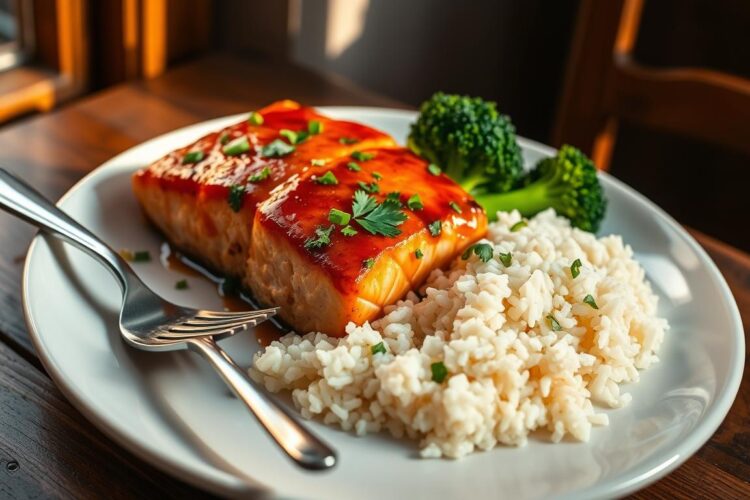
My simplest plate is a scoop of steamed rice with crisp-tender broccoli or asparagus. I spoon a generous bit of pan sauce over the fish and rice for extra flavor.
Quick weeknight pairings
On ultra-busy nights I reach for a mixed green side salad or quick quinoa while the fillets rest. Roasted potatoes or green beans work well as make-ahead sides I reheat and top with a little sauce.
Bowl ideas and finishing touches
For bowls I layer rice, flake the fish, pour on the sauce, and finish with scallions, sesame, and fresh herbs. If I want crunch, I add sliced cucumbers or lightly sautéed snap peas and a citrus wedge at the side.
- I set out components family-style when feeding a crowd so everyone builds their own bowl.
- Leftover grains and vegetables make easy meal prep with a fresh piece of salmon on top.
| Side | When to pick | How I finish |
|---|---|---|
| Steamed rice & broccoli | Everyday | Drizzle pan sauce, scallions, sesame |
| Quinoa or salad | Busy nights | Serve cold or warm, add herbs |
| Roasted potatoes/green beans | Make-ahead | Reheat, spoon sauce on top |
Nutrition, Protein, and Leftovers
Good storage and low-temperature reheating are the tricks I use to keep the fillets moist. I note the nutrition briefly: this fish is rich in protein and omega-3s, so it makes a filling, nutrient-dense recipe for any meal.
When I have extras, I cool the pieces to room temperature and place them in an airtight container in the fridge. I keep leftovers no more than three days in the container to stay safe and tasty.
To reheat, I prefer a low oven at about 300°F for roughly 15 minutes. A covered pan over gentle heat works well too; add a splash of water or a little oil and spoon reserved sauce over the fillets so they do not dry.
- Avoid high heat or microwave blasts that toughen the flesh.
- Keep salmon fillets whole; flake only when serving for best texture.
- If you used soy or coconut aminos, taste the sauce after chilling and add a touch of honey if it needs brightness.
| Method | Temp/Time | Finish |
|---|---|---|
| Oven | 300°F / ~15 minutes | Cover, spoon sauce |
| Skillet | Low heat / few minutes | Covered, splash of water or oil |
| Storage | Refrigerate / up to 3 days | Airtight container |
Let’s Eat: Tell Me Your Favorite Way to Cook Salmon
Share your favorite twist on this sauce-topped fillet and what side you pair with it. I’ll recap the core ingredients so you can comment with confidence: two salmon fillets (2 × 6 oz), 1 tbsp olive oil, salt and pepper; sauce: 4 tbsp honey, 2 tbsp soy sauce, 1 tbsp vinegar, and 2 minced garlic cloves.
My method in a nutshell: place salmon in a hot pan, sear 3 minutes, flip 2–3 minutes, then add the sauce and glaze for 1–2 minutes. I usually serve with rice and one simple side, then garnish with scallions and sesame for color and crunch.
I’d love to know—are you team grilled, baked, or pan-seared? Tell me any ingredient swaps, how many minutes you cook your fillets, or your go-to garnish. If you try this honey garlic salmon recipe, drop a note and share your pictures or tips.