
This post contains affiliate links. I may earn a commission if you purchase through them at no extra cost to you.
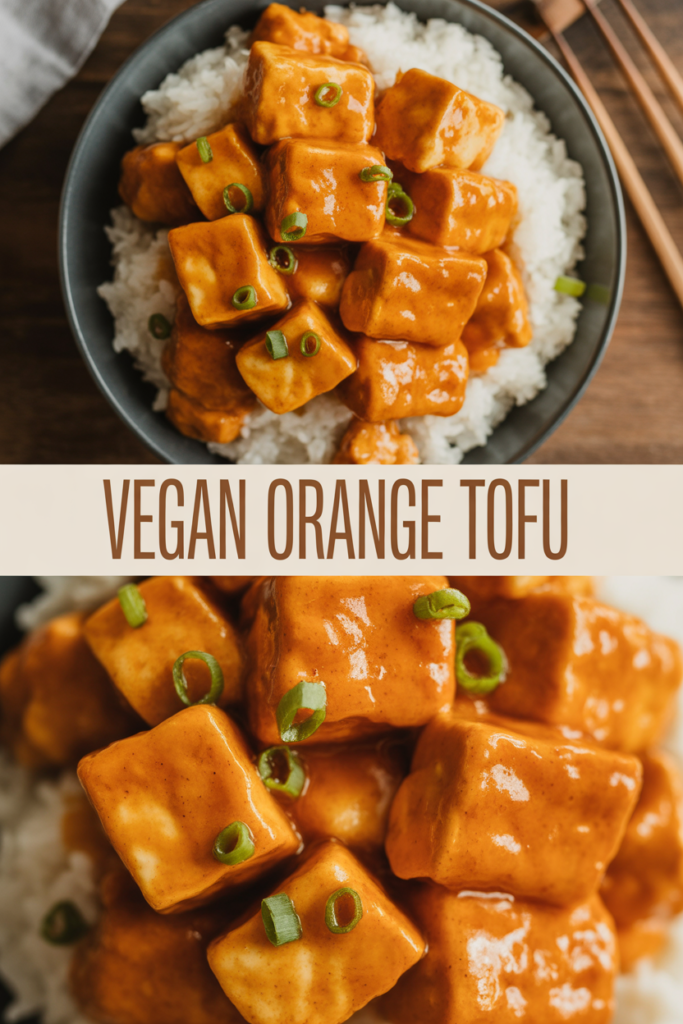
I make this dish as my go-to takeout swap: the same sticky-sweet, tangy comfort of restaurant orange chicken, but lighter and made with familiar pantry staples. It delivers crispy edges and a tender center on every cube.
The glossy orange sauce clings to each piece instead of sliding off. Fresh orange juice and zest give real brightness, and a quick pan-fry keeps things crisp without deep-frying.
This orange tofu recipe is an easy weeknight win. Press, coat, pan-fry, simmer the sauce, and toss—simple steps that still nail a restaurant-style finish.
I also like that it reads as a healthy takeout alternative: balanced sweetness, lower sodium when you choose tamari, and fast timing so dinner lands on the table in no time.
Why I Make This Vegan Orange Chicken at Home
Making this at home lets me control sweetness and texture so the orange really sings. I want the takeout hit, but not the candy-like sauce many restaurants serve. Fresh citrus and thoughtful cooking keep the dish bright and balanced.
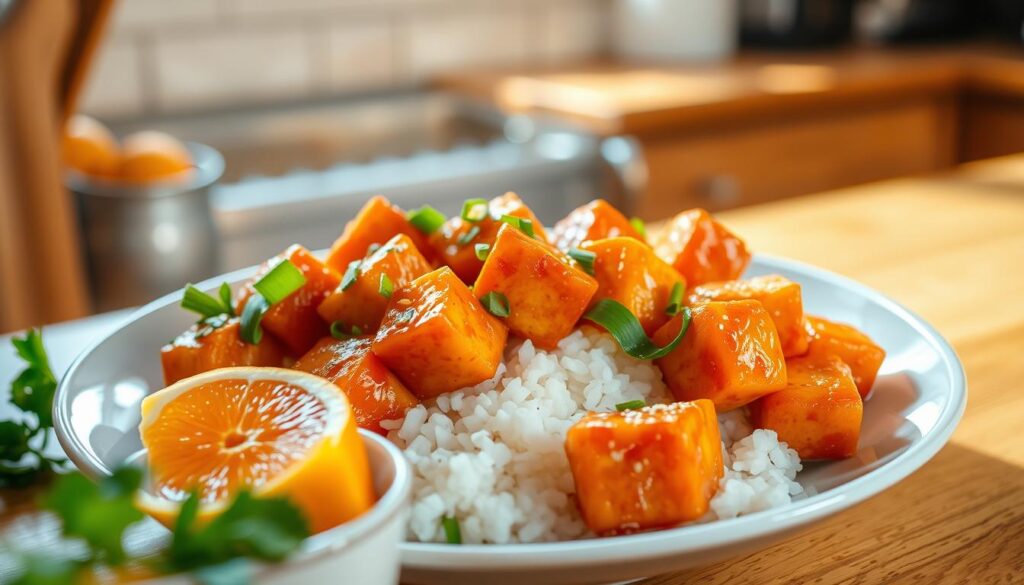
A healthy takeout alternative that still tastes like the real deal
I treat this as a healthy takeout alternative: pan-fry for crunch instead of deep frying, and sweeten with maple so I can reduce excess sugar. The result feels indulgent but cleaner on the plate.
Texture goals
My ideal bite pairs a crispy outside with a tender inside. The coating stays snappy while the center remains soft. Then I toss pieces in a sticky sweet-tangy glaze that reduces to a glossy finish.
Fresh citrus is the difference
Restaurants often hide the orange behind sugar or artificial flavor. I use fresh orange juice and orange zest for real citrus oils and bright flavor. This keeps the sauce lively and prevents a flat, overly sweet finish.
- Prep the sauce in one bowl so it’s ready in minutes.
- Press and cube the tofu for firm texture and more surface area.
- Pan-fry for golden, chewy-crisp edges that hold glaze.
| Choice | Why I Do It | Result |
|---|---|---|
| Fresh orange juice + zest | Replaces sugary, artificial flavors | Bright, citrus-forward flavor and aroma |
| Pan-frying | Less oil than deep fry; crisp edges | Takeout-style crunch with fewer calories |
| Maple syrup (controlled) | Natural sweetener to manage sugar | Balanced sweet-tangy glaze that isn’t cloying |
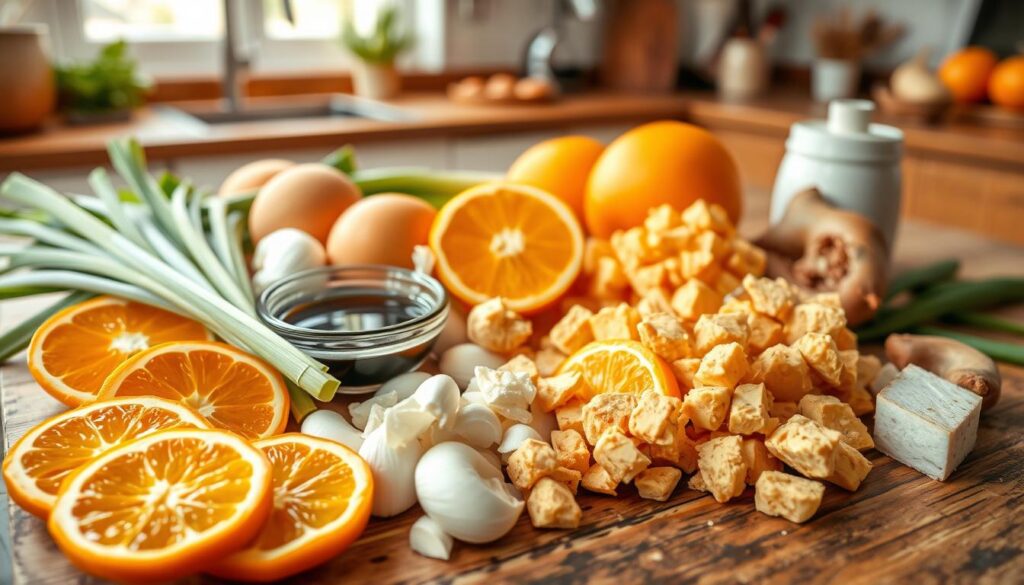
Ingredients for My Orange Tofu Recipe
Below are the exact ingredients I keep on hand to get crisp pieces and a balanced, glossy sauce every time.
Crispy tofu
- 14–16 oz extra-firm tofu (1 block), pressed and cut into 1-inch cubes
- 1/2 cup cornstarch for coating
- 2 tbsp olive oil (or 2 tbsp neutral oil) for pan-frying
Sticky orange sauce
- 3/4 cup fresh orange juice (about 3 oranges) and 2 tsp orange zest
- 2 tbsp soy sauce or 2 tbsp tamari (tamari = gluten-free swap)
- 1 tbsp rice vinegar
- 2 tbsp maple syrup
- 2 cloves garlic, minced and 1 tbsp fresh ginger, grated
- For thickening: 1 tbsp cornstarch mixed with 2 tbsp cold water (cornstarch slurry) — this turns the sauce into a shiny glaze instead of a thin broth
Garnishes and serving
- Cooked rice for serving
- Sliced green onions and toasted sesame seeds
- Optional: tiny drizzle of sesame oil or a splash of coconut aminos if avoiding soy (flavor will differ)
How I Get Crispy Tofu Without Deep Frying
I rely on a few clear steps to turn an extra-firm block into golden, chewy-edged bites. These moves save oil and time while delivering a takeout-style finish.
Pressing for a firm bite
I press tofu for about 20–30 minutes. I wrap the block in a clean towel or paper towels, place a plate on top, then add a heavy pan or cans.
Pressing removes water so the cornstarch sticks and the tofu browns instead of steams.
Cutting for more edges
I cube into 1-inch bites. Smaller cubes create more surface area and more crunchy edges per serving.
Dusting with cornstarch
I toss the cubes in cornstarch until lightly coated, shaking off excess. If pieces still look damp, I add a touch more cornstarch.
Skillet pan-fry tips
- Heat oil in a skillet until shimmering.
- Don’t crowd the pan; work in batches.
- Let pieces sit untouched until golden, then flip once with a thin spatula.
- When crisp, I set aside on a rack or plate so they keep the crispy outside while I make the sauce.
| Step | Why | Result |
|---|---|---|
| Press tofu 20–30 minutes | Removes water | Firm, better browning |
| Cornstarch dust | Creates crust | Chewy, crispy outside |
| Skillet sear | High heat contact | Golden edges, less oil |
Vegan Orange Tofu Sauce That’s Glossy, Sticky, and Balanced
The goal for the sauce is simple: glossy, sticky, and able to cling to each bite like a proper glaze.
Building the flavor base with garlic and fresh ginger
I start by gently sweating minced garlic and grated ginger. This is where the takeout aroma comes from and it keeps the sweetness from tasting flat.
Sweet-tang balance with orange juice, rice vinegar, and maple syrup
I combine fresh orange juice and a touch of orange zest for bright citrus oils. Rice vinegar adds the tang, soy sauce or tamari brings savory depth, and maple smooths the sweetness without excess sugar.
How I thicken it properly with a cornstarch slurry
Whisk cornstarch with cold water until smooth and set aside. Bring the sauce to a gentle simmer, then whisk in the slurry. Stir constantly until the sauce turns shiny and coats the back of a spoon—about 1–2 minutes after it hits a simmer.
Properly thickened sauce leaves a clean line when you swipe a spatula. If it gets too thick, add a splash of water. If it needs brightness, add a little more vinegar.
- Texture goal: a glossy orange sauce that clings like a glaze.
- Flavor builders: garlic, ginger, orange juice, zest, soy/tamari, maple.
- Thickening: equal parts cornstarch and cold water, added at a simmer.
| Step | Why | Result |
|---|---|---|
| Sauté garlic + ginger | Builds aromatic base | Takeout-like flavor |
| Mix juice, vinegar, soy, maple | Balance sweet and tang | Bright, rounded sauce |
| Add cornstarch slurry | Thickens evenly | Glossy, sticky glaze that coats pieces |
Step-by-Step: Vegan Orange Tofu in Minutes
Follow these quick, ordered steps so dinner lands on the table in under 30 minutes.
Press, cube, and coat the tofu
I press a block for 20–30 minutes, then cut uniform 1-inch cubes. Toss cubes in cornstarch until they look matte, not wet.
Pan-fry until crispy, then set aside
Heat oil in a skillet until shimmering. Work in batches so pieces don’t touch, flip once, and cook until each side is deep golden. I transfer the pieces to a plate to set aside so they keep crisp.
Simmer the orange sauce and thicken until sticky
Use the same pan to sweat garlic and ginger, then add orange sauce ingredients. Bring to a simmer, whisk in the cornstarch slurry, and stir until glossy and thick.
Toss tofu in the glossy orange glaze without losing the crunch
Remove the pan from high heat. Gently fold the crispy pieces into the sauce off heat or on very low heat until coated. This prevents the crunchy exterior from softening.
Serve and optional add-ins
Serve over rice in a shallow bowl and finish with sesame seeds and sliced green onions. For a fuller meal, steam broccoli and toss it in the glaze or serve on the side. Garnish with orange slices for extra brightness.
| Step | Time (minutes) | Why it matters |
|---|---|---|
| Press tofu | 20–30 | Removes water for better browning |
| Pan-fry in skillet | 8–10 | Crispy, chewy exterior with less oil |
| Simmer sauce + slurry | 3–5 | Turns sauce glossy so it clings like an orange glaze |
| Toss & serve | 1–2 | Coats pieces without losing crunch; quick finish over rice |
Make It Again Soon: Storage, Reheating, and Leftover Ideas
Once cooled, I store the crispy pieces and extra sauce separately in airtight containers in the fridge. Stored this way, leftovers keep well for 2–3 days and the crunch holds up better.
To reheat, I prefer a skillet with a tiny splash of oil to revive edges. Add a little sauce or water if it looks dry. The microwave works for speed, but expect softer texture—still full of flavor.
Leftover ideas: pile them into a rice bowl, toss with steamed broccoli for a quick stir-fry, or wrap in lettuce with extra orange sauce spooned on top. Brighten servings with a squeeze of fresh orange or a splash of vinegar and finish with sesame and sliced green onions.
If I’m out of soy sauce, tamari or coconut aminos work fine—just tweak salt and tang to preserve the recipe’s balanced flavor.