
This post contains affiliate links. I may earn a commission if you purchase through them at no extra cost to you.
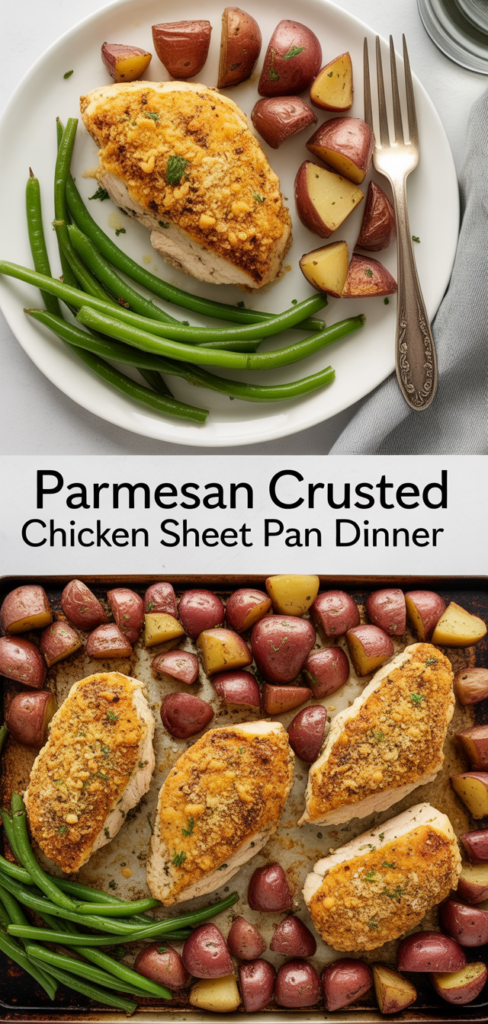
I love a meal I can pull together on a busy weeknight, and this one delivers. I make a complete one-pan supper with crispy, golden crusted chicken, tender roasted red potatoes, and bright green beans.
Bake at 425°F for a crunchy parmesan-panko coating and juicy meat that reaches 165°F. I stage the roasting so potatoes start first, then add the beans so they stay vibrant and the potatoes cook through evenly.
The recipe uses pantry staples I keep on hand—parmesan, panko, garlic powder, Italian seasoning, and olive oil—so prep is quick. I’ll show how to check doneness and get a golden crust without drying the meat.
At the end you get a balanced sheet meal with minimal cleanup, bold texture, and simple flavors that please the whole family. Stick with me and I’ll walk you through each step.
Why I Make This One-Pan Dinner on Busy Weeknights
I rely on a single baking tray for nights when I want real food and no fuss. It gives me a full, family-friendly meal with almost no cleanup.
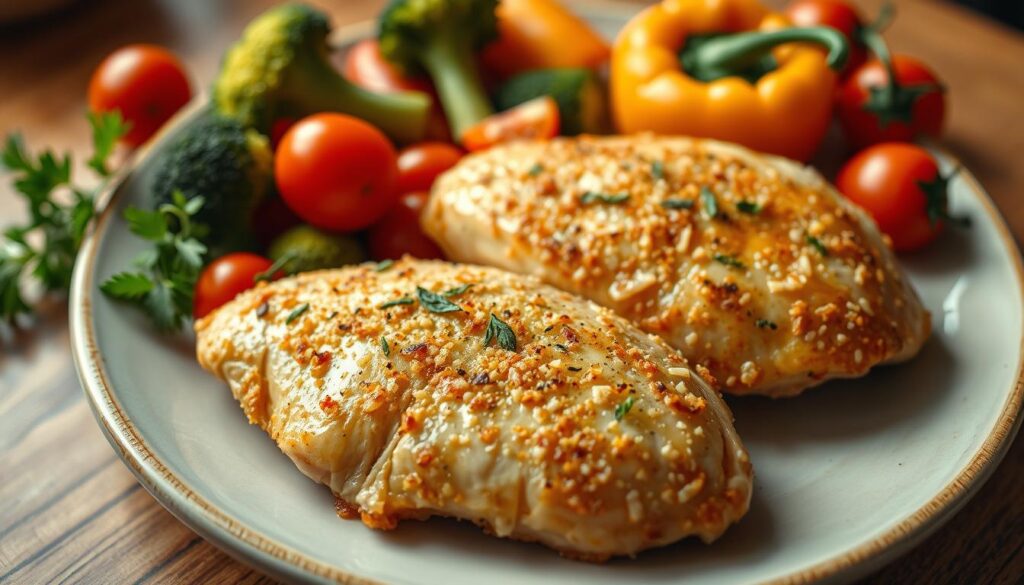
Crispy, golden crust with juicy breasts
The coating turns crisp and golden in a hot oven, so the outside has that savory, cheesy crunch. I pull the chicken at 165°F so the breasts stay juicy every time.
A balanced meal on one sheet
This cooks protein, roasted red potatoes, and green beans together. You get carbs, veg, and protein without making extra recipes or sides.
Less prep, less cleanup, more sanity
- I do quick seasoning and a simple coating station—minimal prep time.
- Everything fits on one sheet pan, so serving is fast and the sink stays clear.
- The garlic-forward, Italian-seasoned flavor with parmesan cheese gives comfort without deep frying.
Next I’ll show the tools, exact ingredients, and my step-by-step workflow so everything finishes evenly on one pan.
What You’ll Need for This Sheet Pan Recipe
With the right gear, you can turn a few pantry staples into a full, roasted meal in under an hour. My goal is an easy, organized prep that keeps the dish flavorful and the cleanup minimal.
Kitchen tools that make prep easy
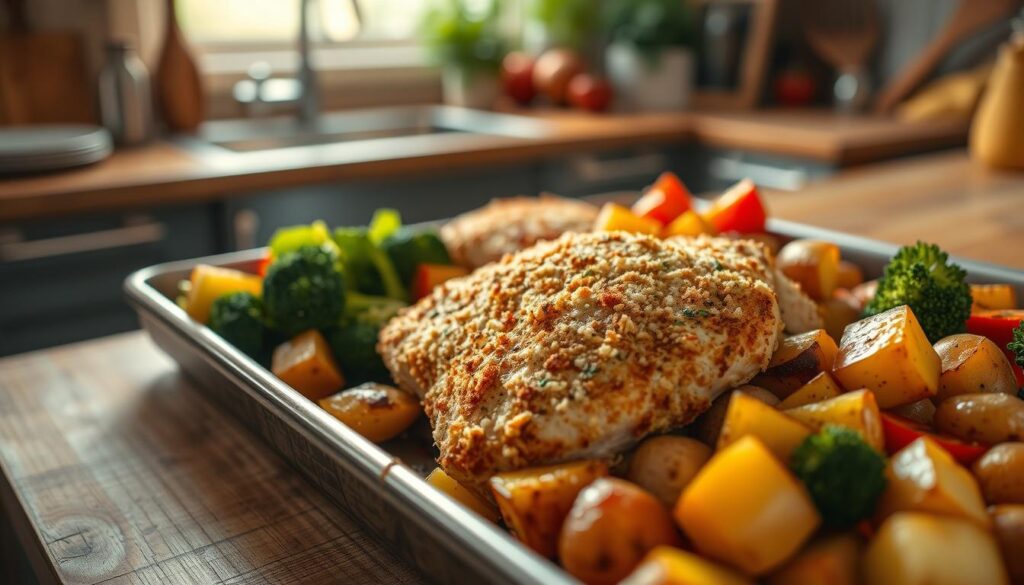
I rely on a large rimmed baking sheet, parchment paper, and two mixing bowls to stay organized. The rimmed pan catches drips so olive oil and vegetable juices stay on the tray.
Best baking sheet size for even roasting
Use a standard half-sheet so chicken, potatoes, and green beans can spread out. Good airflow prevents steaming and helps everything brown.
- Line the large baking sheet with parchment paper to cut sticking and speed cleanup.
- One bowl holds the breadcrumb mixture; the other is for tossing vegetables and oil.
- If you only have a smaller sheet, use two pans or roast in batches to protect crispiness.
- Even baking depends on pan size, spacing, and oven temperature—don’t crowd the tray.
This setup saves time and keeps the cooking flow smooth, so the whole family gets a hot, crisp meal with almost no fuss.
Ingredients and Exact Measurements
I write out precise quantities so the coating and veggies roast evenly every time.
Chicken and the parmesan coating
- 4 boneless, skinless chicken breasts (about 6–8 oz each)
- 1 cup grated parmesan cheese (use finely grated for best adhesion)
- 1/2 cup panko breadcrumbs
- 1 teaspoon garlic powder
- 1 1/2 teaspoons Italian seasoning
- Salt and black pepper, to taste (about 1/2 teaspoon each for the coating)
Roasted red potatoes
- 2 pounds red potatoes, cut into 3/4-inch cubes (bite-size for even roasting)
- 1 tablespoon olive oil for potatoes (part of the 3 tablespoons total)
- Salt and pepper to taste
Fresh green beans
- 1 pound fresh green beans, trimmed and dried
- 1 tablespoon olive oil for beans (part of the 3 tablespoons total)
- Salt and pepper to taste
Seasonings and pantry staples
- Remaining 1 tablespoon olive oil for an optional finishing drizzle
- Extra salt and black pepper to adjust before roasting
| Ingredient Group | Item | Exact Measure | Note |
|---|---|---|---|
| Protein | Boneless skinless chicken breasts | 4 breasts (6–8 oz each) | Flatten thicker breasts later for even cook time |
| Coating | Grated parmesan cheese + panko | 1 cup parmesan cheese, 1/2 cup panko | Use finely grated cheese to help crust bind |
| Veggies | Red potatoes | 2 lb, 3/4-inch cubes | Small cubes roast through with chicken |
| Veggies | Fresh green beans | 1 lb, trimmed | Trim and dry for better browning |
How I Prep Everything So It Cooks Evenly
A little planning before the oven goes on saves time and keeps every element crisp. I walk through the simple steps I use to make sure potatoes, green beans, and the coating finish together.
How I cube red potatoes for faster roasting
I cut red potatoes into even, 3/4-inch cubes so they roast through in the same minutes it takes the chicken to cook. Uniform pieces brown without burning on the outside.
I avoid oversized chunks because they need a head start in the oven. Smaller cubes reduce mid-bake juggling and keep the pan workflow smooth.
How I trim and dry green beans for better browning
I trim the ends, rinse, and pat the beans very dry. Wet beans steam on the tray and fail to brown, so drying is key for good texture.
How I set up the coating station to keep crumbs on the meat
I use one bowl for the parmesan-panko mixture and a clean area for the chicken. That keeps my hands from getting clumpy and the crust even.
- Dip, press, and then rest each chicken piece for a minute so the mixture adheres.
- Plan spacing on the sheet pan before roasting so air circulates and nothing steams.
| Task | What I do | Why it helps |
|---|---|---|
| Potato cuts | 3/4-inch cubes | Even roasting; finishes with chicken |
| Bean prep | Trim, rinse, dry | Promotes browning, better texture |
| Coating station | One bowl for mixture; press and rest | Crust sticks; less mess during cooking |
Parmesan Crusted Chicken Sheet Pan Dinner Step-by-Step
Follow a few timed steps and you’ll get a golden crust, juicy meat, and bright green beans every time. I’ll walk you through my exact setup so nothing overcooks or steams on the tray.
Preheat and prep
I preheat the oven to 425°F and line a large sheet pan with parchment for easy cleanup and a clean release. This also helps the crust brown evenly during baking.
Season and make the coating
I season the chicken breasts with salt and black pepper on both sides. In a bowl I mix grated Parmesan, panko, garlic powder, and Italian seasoning to make the coating mixture.
Coat, toss, and arrange
I brush the breasts lightly with olive oil, press them into the mixture, and coat all sides. I toss cubed potatoes with olive oil, salt, and pepper and spread them in a single layer on one side of the pan.
Bake in stages and check doneness
I roast potatoes 15–20 minutes first, then add the coated chicken and return the pan to the oven. I add green beans for the final ~15 minutes so they remain vibrant.
Halfway through I rotate the pan or flip potatoes if one side browns faster. I pull the breasts when an instant-read thermometer reads 165°F. For extra crunch, I broil 4–5 minutes at the end.
| Step | Temperature / Time | What to watch for |
|---|---|---|
| Preheat & line | 425°F | Parchment prevents sticking and speeds cleanup |
| Potatoes first | 15–20 minutes | Browning edges; tender when pierced |
| Add chicken & beans | 15–20 minutes more | Chicken 165°F; beans bright and blistered |
Timing and Doneness Cues I Rely On
Timing is the secret that keeps the meat juicy, the coating crisp, and the potatoes perfectly browned.
Start the potatoes alone so they get a 10–20 minute head start. Smaller cubes need closer to 10 minutes; larger pieces need nearer 20 minutes. I check a few cubes with a fork before adding the protein.
How long before adding the protein and green beans
I usually roast potatoes first for about 15 minutes, then add the coated breasts and return the pan to the oven. Green beans join for the last ~15 minutes so they stay bright and crisp.
What “golden and crispy” looks like
I look for a deep golden-brown color and dry-looking crumbs at the edges. Where cheese browns against heat, you should see crisp edges and no wet spots on the coating.
Potato doneness without turning mushy
Potatoes should be fork-tender in the center but still hold shape. Browning at the corners means roasting, not steaming. If they wobble and fall apart, they’ve gone too long.
| Stage | Typical minutes | Doneness cue |
|---|---|---|
| Potatoes alone | 10–20 minutes | Fork-tender center; browned edges |
| Add protein | 15–20 minutes | Thermometer 165°F at thickest part |
| Green beans last | ~15 minutes | Bright color; slight blistering |
Use cues over exact minutes: oven variance and pan crowding change the time. I check the thickest part with a thermometer, avoid touching the pan, and let the protein rest briefly so juices redistribute. These simple checks keep the meal juicy and crisp every time.
Tips for Extra Crunch and Big Flavor
A handful of simple tricks gives you deeper browning and bigger flavor from the same bake time. These small steps focus on adhesion, moisture control, and a final flash of heat so the crust crisps without drying the meat.
My trick for getting the parmesan crust to stick
I pat each chicken breast dry, brush a little olive oil on the surface, then press the parmesan mixture firmly and hold it for a few seconds. That pressure helps the crumbs and cheese bind before the oven does its work.
When I use a quick broil to crisp everything up
I only broil at the very end—about 2–5 minutes—on high to deepen browning. I move the rack to the middle, watch the pan constantly, and pull the tray the moment the edges turn golden rather than dark brown.
How I avoid dry, tough chicken breast in the oven
Moisture kills crunch and overbaking kills tenderness. I check temperature early and remove the meat at 165°F, then rest it for a few minutes so juices redistribute.
- Keep paper towels handy to remove excess moisture before coating.
- Season the parmesan mix with salt, pepper, and Italian seasoning for better flavor in every bite.
- Rotate the pan halfway through baking to counter hot spots and ensure even crisping.
| Tip | Why it helps | Quick action |
|---|---|---|
| Press coating firmly | Helps crumbs and cheese adhere | Hold each breast 3–5 seconds after pressing |
| Broil briefly at end | Sharpens crunch without long heat exposure | Broil 2–5 minutes; watch closely |
| Check temp & rest | Keeps breasts juicy while crust stays crisp | Remove at 165°F; rest 5 minutes |
Serving Ideas for Family Dinners
When I serve this, I arrange the components so the plate looks full and balanced. I slice the golden, crispy protein and place it beside a heap of roasted potatoes with a portion of bright green beans.
How I plate it for a complete meal
I slice the coated chicken and fan it over the potatoes so juices mingle with the starch. The green beans sit to one side for color and crunch.
For families, I bring the whole tray to the table or use one large serving dish. It cuts serving time and keeps cleanup to a minimum.
Optional finishing touches that match the Italian seasoning profile
Right out of the oven I like a light sprinkle of grated cheese and a pinch of extra italian seasoning. A quick squeeze of lemon or a drizzle of olive oil brightens the plate without fuss.
Portion for kids by adding a few extra potato pieces; adults often get an extra slice of protein. These small swaps keep the core recipe intact.
| Component | Serve Style | Quick Finish |
|---|---|---|
| Sliced protein | Fan over potatoes | Grated cheese, spray olive oil |
| Roasted potatoes | Pile near center | Sprinkle sea salt, parsley |
| Green beans | On the side | Lemon squeeze or chili flakes |
Storing and Reheating Leftovers Without Losing the Crunch
Leftovers can taste almost fresh if you store and reheat them with the right steps. I focus on keeping the coating dry and the vegetables from sweating in the container.
How I store leftovers in the fridge (up to 3 days)
I let the food cool to near room temperature before sealing. Hot food traps steam and softens the crust, so cooling first keeps the coating crisp.
Then I pack chicken, potatoes, and beans in airtight containers and refrigerate. I eat these leftovers within 3 days for best texture and flavor.
Best way to reheat: oven at 350°F vs microwave
For crunch, I reheat in the oven at 350°F. I spread pieces out on a baking pan so hot air can circulate and re-crisp the coating. Fifteen to twenty minutes usually does the trick.
The microwave is fastest, but it softens the parmesan crust and makes green beans limp. I use it only when speed matters more than crunch.
Quick hybrid method and freezing guidance
If I need speed and texture, I warm for 45–60 seconds in the microwave, then finish on a pan in the oven for 8–10 minutes to restore crispness.
I don’t recommend freezing fully cooked coated chicken or blanched green beans. The coating can go soggy and beans become mushy when thawed. Instead, I prep ahead: cube potatoes and trim beans a day early, then store raw in separate containers for quick assembly.
| Action | Method | Why it helps |
|---|---|---|
| Fridge storage | Airtight containers; cool before sealing | Prevents condensation that ruins the crust |
| Reheat for crunch | Oven at 350°F; spread on pan | Circulating heat re-crisps coating evenly |
| Fast finish | Microwave then oven (hybrid) | Speeds warming and restores texture |
My Go-To Sheet Pan Dinner to Put on Repeat
I pick this sheet pan recipe when I want a dependable, tasty meal with minimal cleanup. It bakes at 425°F and finishes fast, so I save time and still serve something special.
The formula is simple: a seasoned parmesan coating pressed on the chicken, high-heat roasting, and staged timing for potatoes and green beans. The seasoning uses pantry staples—parmesan cheese, panko, garlic powder, Italian seasoning, salt, and pepper—so the ingredients are easy to keep on hand.
The payoff is clear: a golden crust, juicy chicken, tender potatoes, and bright vegetables. Make it once, learn your oven and pan, and this dinner will slide right into your regular rotation.