This post contains affiliate links. I may earn a commission if you purchase through them at no extra cost to you.
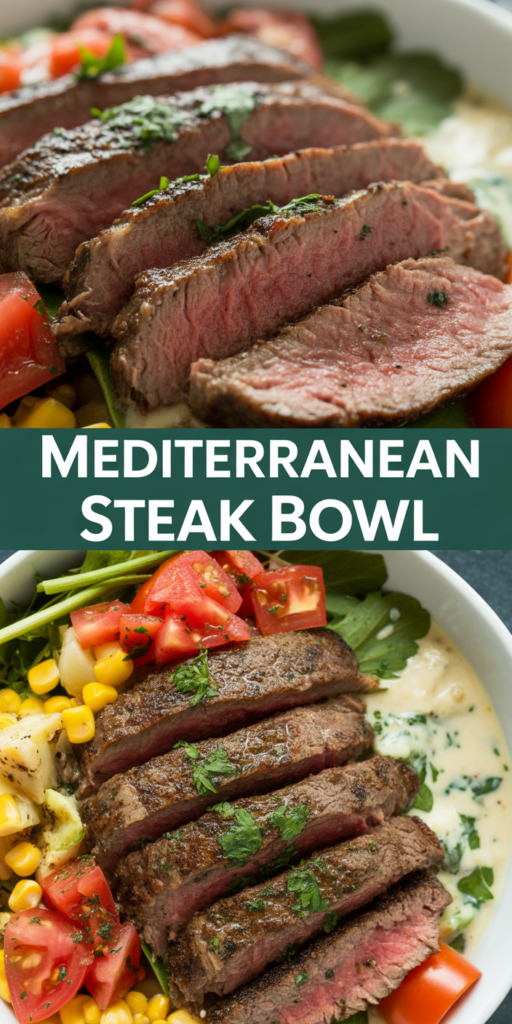
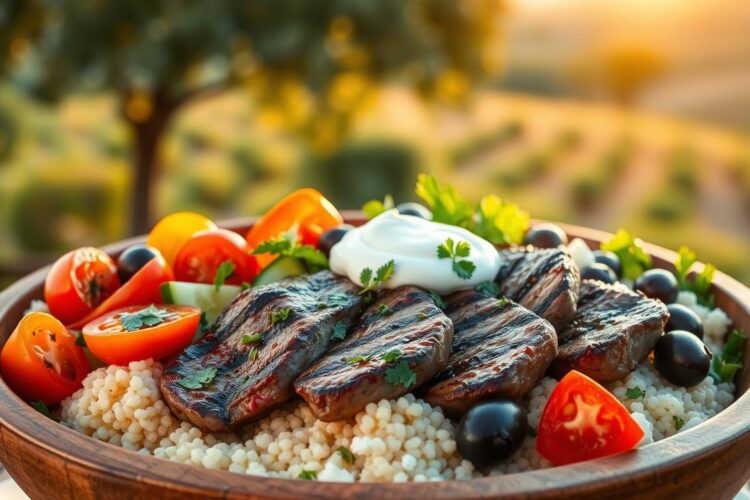
I reach for this bowl when I want food that tastes bright and hearty without feeling heavy. It’s my go-to for healthy dinners and for meal prep that stays exciting all week.
The core of the dish is juicy, well-seasoned steak, crisp vegetables, and a creamy Greek-style herb sauce that ties everything together. I call it a build-a-bowl approach: you can swap grains, greens, or sauces and keep the same vibrant profile.
The method is simple. I do a quick marinade, sear or grill fast, let the meat rest, then slice thin against the grain. I’ll share exact measurements, marinating times, doneness temperatures, and step-by-step cooking so the steak stays tender and juicy every time.
For meal prep, components hold up well if I store the sauce and greens separately. This recipe keeps weekday lunches tasting fresh while still feeling satisfying and protein-rich.
Why I Love This Fresh, Vibrant Steak Bowl for Healthy Dinners
When I want a weeknight meal that’s bright, quick, and truly satisfying, I make this vibrant bowl. It gives me bold flavors without heavy cooking or long cleanup. Each component pulls its weight so the whole dish feels balanced and real.
Fresh, satisfying textures in every bite
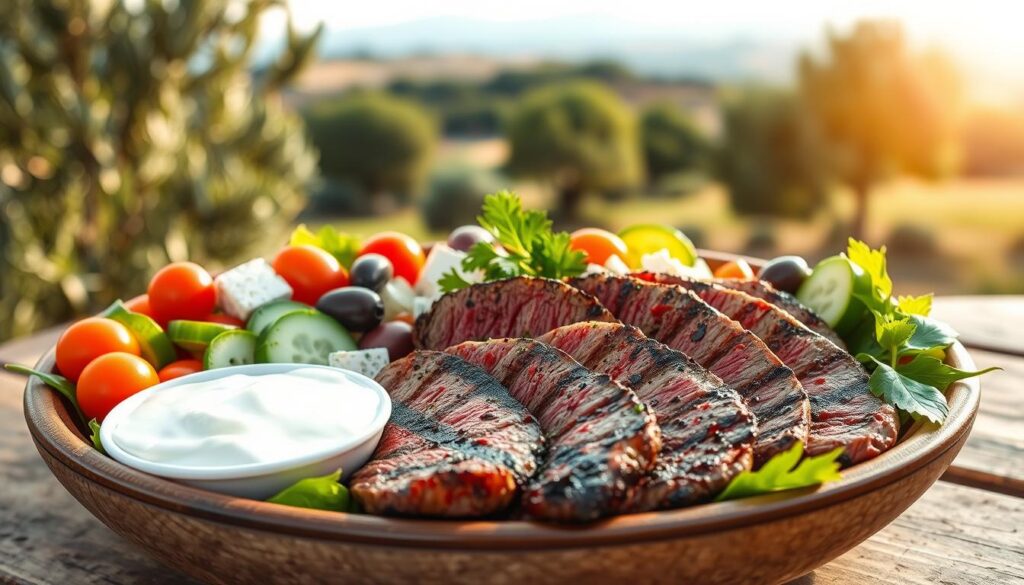
What I love most is the contrast: warm, juicy steak next to cold, crunchy veggies and a cool, creamy herb sauce. Every forkful mixes crisp greens, juicy tomatoes, snappy cucumber, and tender, sliced meat. That texture play keeps each bite interesting.
A balanced bowl with protein, fiber, and healthy fats
These bowls are a true one-meal solution. I combine protein-rich meat with whole grains like quinoa or couscous, lots of fiber from veg, and healthy fats from olive oil, hummus, or olives. That mix keeps me full for hours without feeling heavy.
Perfect for lunch, dinner, or meal prep
It’s quick to assemble and adapts to real life. I eat it as a weeknight dinner, pack it for lunch, or portion components for meal prep. Up next I’ll share smart swaps, exact measurements, and cooking tips so the steak stays flavorful and never overcooked.
Mediterranean Steak Bowl Ingredients and Smart Swaps
I build this bowl when I want bold, simple flavors that come together in minutes.
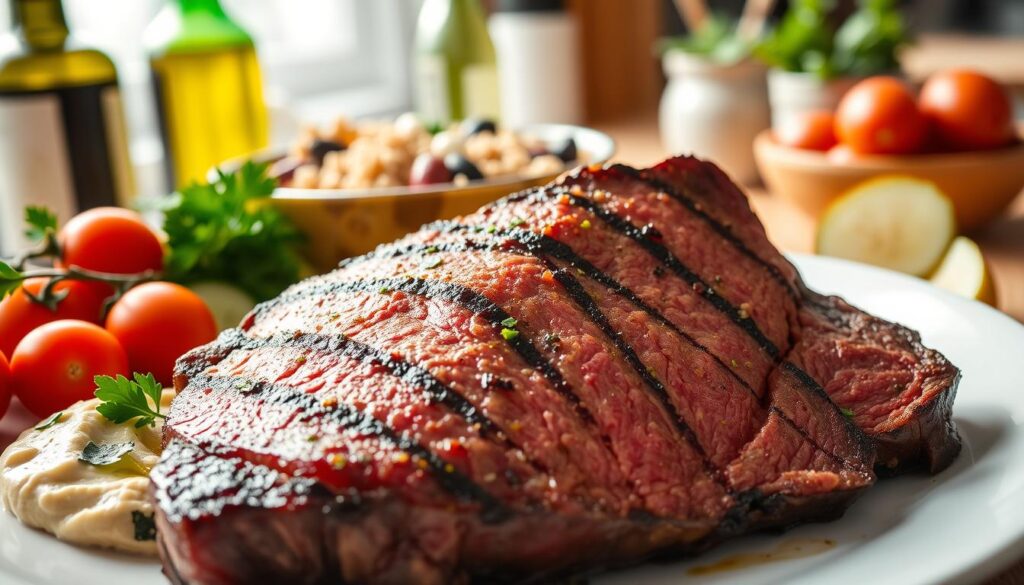
Choosing the right cut
For everyday cooking I compare sirloin and flank. Sirloin is naturally tender and easy to cook. Flank steak is leaner with a big beefy flavor and needs slicing against the grain.
You can also use flat iron, tenderloin, or skirt as swaps. The rule is the same: cook hot and fast, then let the meat rest before slicing.
Greens and vegetables that work
My base options are romaine lettuce for extra crunch or mixed greens for a softer, salad-style bowl.
I add diced tomatoes for sweetness, cucumber for crispness, and thin red onion for bite. Keep at least one crunchy and one juicy element for balance.
Optional add-ins and sauce
Extras I reach for: corn for a sweet pop, hummus or a tzatziki-style sauce, feta cheese, and kalamata olive if I want briny depth.
The creamy Greek yogurt lemon-garlic-herb sauce will be mixed later to tie everything together.
| Cut | Texture | Flavor | Best use |
|---|---|---|---|
| Sirloin | Tender | Mild, beefy | Easy weeknight sear; slice thin |
| Flank steak | Lean, fibrous | Rich, intense | Marinate briefly; slice against grain |
| Flat iron | Tender, well-marbled | Full-bodied | Grill or pan-sear hot |
| Tenderloin | Very tender | Delicate | Special-occasion, quick sear |
Exact Ingredients With Measurements
Here’s a precise ingredient list so you can shop and measure once, then cook with confidence.
For the steak marinade
- 1 pound sirloin or flank steak
- 3 tablespoons olive oil
- 3 cloves garlic, minced
- 1 teaspoon dried oregano
- 1 teaspoon salt
- 1/2 teaspoon black pepper
- 2 tablespoons lemon juice or 1 tablespoon balsamic + 1 teaspoon Dijon (acid choice)
- Marinate 15–30 minutes for quick flavor, or up to 8 hours for deeper taste.
For the bowl base and vegetables
- 4 cups mixed greens
- 1 cup diced tomatoes (about 2 medium)
- 1 cup diced cucumber
- 1/2 cup thinly sliced red onion
- 1/2 cup cooked corn, optional
- Optional but delicious: 1/2 cup cooked quinoa or couscous, 1/4 cup hummus, 1/4 cup crumbled feta
For the creamy Greek yogurt herb sauce
- 1 cup Greek yogurt
- 2 tablespoons lemon juice
- 1 clove garlic, finely grated
- 2 tablespoons chopped fresh herbs (parsley and dill)
- 1/2 teaspoon salt and a pinch of pepper
- Stir and chill 10 minutes so flavors meld before serving.
| Component | Measure | Note |
|---|---|---|
| Steak | 1 pound | Slice thin against the grain after resting |
| Olive oil (marinade) | 3 tablespoons | Also used for searing if needed |
| Greek yogurt sauce | 1 cup yogurt | Thick and tangy; adjust lemon to taste |
| Prep time | 15–30 minutes (plus marinate) | Marinate longer for more tender meat |
How I Make Mediterranean Steak
I follow a short, reliable playbook so the meat is always juicy and ready for the bowl. The method is simple: marinate, choose grill or cast-iron, hit target temps with a thermometer, then rest and slice thin.
Marinate: quick flavor or overnight prep
I marinate for at least 20 minutes when I’m short on time, or up to 12 hours for deeper flavor. Twenty to thirty minutes gives noticeable lift; overnight adds more depth without extra work.
Grill vs pan-sear on cast iron
For a smoky char I grill. For a strong crust year-round I use a hot cast-iron skillet. Cook about 4–5 minutes per side for medium-rare on a one-inch cut. If browning too fast, lower the heat. If it won’t brown, pat the meat dry and preheat longer.
Doneness and rest
I use a thermometer to check doneness. Pull at about 125°F for medium-rare; carryover brings it into the 130–135°F range. For medium aim for 140–145°F. Rest the steak 5–10 rest minutes so juices redistribute.
Final step: slice and serve
Slice thin against the grain and keep pieces short so every bite feels tender. These simple steps make it easy to make mediterranean steak that stays juicy and flavorful every time.
My Creamy Yogurt Sauce (Greek Yogurt, Lemon, Garlic, Herbs)
My simple yogurt-herb sauce pulls the whole meal together with bright, cooling flavor. It works as a spoonable sauce or a quick dressing for greens and vegetables.
How I keep it thick, tangy, and spoonable
I start with one cup of Greek yogurt to guarantee a thick base. I grate a small clove of garlic and add a squeeze of lemon so the sauce is tangy without thinning out.
Stir gently and chill ten minutes so the texture firms. Taste, then finish with a pinch of salt and a crack of black pepper.
Fresh herb ideas that taste most like the region
I keep herb combos simple. Parsley + dill is classic; parsley + mint brightens the sauce; dill + cucumber makes a quick tzatziki-style twist.
| Herb Combo | Flavor | Best use |
|---|---|---|
| Parsley + Dill | Fresh, balanced | All-purpose dressing or drizzle |
| Parsley + Mint | Bright, slightly sweet | Great with greens |
| Dill + Cucumber | Cool, tangy | Tzatziki-style dip for meat and veg |
This simple recipe makes the sauce the glue that ties warm meat and crisp vegetables into one satisfying meal.
Prepping the Veggies for Maximum Crunch
I pay attention to small cuts and smart storage so the veggies stay crisp from first bite to last.
How I dice and slice for the best bite
I cut everything into even, bite-size pieces so each forkful feels balanced. I dice tomatoes into small cubes and remove the seeds when I can to limit watery runoff.
For cucumber, I slice on the bias into half-moons or small coins. Thicker slices hold their crunch and won’t flood the container.
I slice red onion paper-thin for a mild bite. If I want a punch that keeps, I quick-pickle the slices in vinegar, sugar, and salt for 15 minutes.
How to avoid soggy greens when meal prepping
Romaine is my go-to for meal prep because it holds up better than delicate mixed greens. I still use mixed greens when I eat right away.
Key steps: spin-dry leaves well, store wet items separate, and pack sauce in small airtight containers. Drain canned corn thoroughly before adding as a crunchy sweet note.
- Keep dressing and sauce apart until serving.
- Store components in airtight containers in the fridge.
- Prep veggies ahead, but combine only when you eat.
| Item | Cut | Storage tip |
|---|---|---|
| Tomatoes | Small dice, seeds removed | Store in container with paper towel to absorb moisture |
| Cucumber | Thick half-moons | Keep in single layer; drain excess liquid |
| Romaine / Lettuce | Torn or chopped | Spin dry and store airtight, separate from wet items |
Assemble Bowls for the Best Mediterranean Steak Bowls Every Time
How you layer ingredients matters. I keep things simple so each forkful is balanced, fresh, and satisfying.
My layering order for flavor in every forkful
- Start with a base of greens or a grain like quinoa. This gives structure and soaks up dressings.
- Add chopped vegetables next so they sit between base and protein and stay crisp.
- Fan sliced steak over the veggies so the meat stays the star and warms slightly from below.
- Swoosh hummus at the edge or dollop it under the steak for creamy pockets in each bite.
- Finish with crumbled feta, a drizzle of yogurt-herb sauce, and a squeeze of lemon.
Easy add-ons that save time
- Store-bought hummus for a quick creamy boost.
- Extra veggies, olives, or a larger sprinkle of feta cheese.
- Pickled onions or a handful of herbs for bright top notes.
| Component | Placement | Why it matters |
|---|---|---|
| Greens / Grain | Bottom | Prevents soggy leaves |
| Veggies | Middle | Keeps crunch and texture |
| Hummus / Feta | Edge / Top | Cream and tang in each forkful |
When I pack meals, I keep the sauce separate and add it just before eating. This helps my mediterranean steak bowls stay bright and ready all week.
Meal Prep Tips for Steak Bowls That Still Taste Fresh
To keep weekday lunches stress-free, I portion components ahead so grabbing a meal takes seconds. Small prep steps save time and keep flavors bright.
How I portion for weekday lunch prep
I divide the cooked meat into thin slices and portion one serving per container. I add a base of greens or a half-cup of grain in the same container so assembly is fast.
What I always store separately
I keep dressing and the yogurt sauce in small airtight jars. Wet items like extra-juicy tomatoes go in their own container to avoid soggy greens.
Fridge timing and best containers
I use airtight containers and refrigerate components up to 3–4 days. This keeps flavors intact and prevents the fridge from transferring odors.
Reheat tips so the steak stays juicy
Warm sliced steak briefly in 20–30 second increments or in a hot skillet for 1–2 minutes. Avoid overheating; pull when slightly shy of your target temp so carryover finishes it.
If it’s a hot day, I often eat the sliced steak cold with hummus and the yogurt sauce. Assemble just before eating when possible: greens first, veggies, then meat and dressing.
| Item | Storage | Fridge life |
|---|---|---|
| Sliced steak | Airtight container | 3–4 days |
| Greens | Separate, dry container | 3 days |
| Dressing / Yogurt sauce | Small jar | 4 days |
Nutrition Notes: A Protein-Rich Bowl That’s Still Balanced
I plan this bowl to be a satisfying, balanced meal that leans on protein and plenty of veggies. A typical serving delivers about 37g protein and roughly 9g fiber, depending on portions and add-ins.
How I boost protein and fiber
Steak does the heavy lifting for protein, and I add hummus or a small scoop of feta cheese to increase grams without extra effort. For more fiber, I pile on chopped veggies, add beans or lentils, or choose a higher-fiber grain.
Simple grain swaps for carb or gluten needs
To make this meal gluten-free, I use quinoa or brown rice instead of couscous. For lower carbs, I skip grain and use cauliflower rice or halve the portion of grain.
Lower-fat and dairy-free tweaks
For lower fat, I pick a lean cut, trim visible fat, and use less olive oil when searing. To go dairy-free, I omit feta cheese and make a lemon-herb tahini or hummus-forward sauce so flavor stays bright.
| Goal | Swap | Effect |
|---|---|---|
| Gluten-free | Quinoa or brown rice | Same texture, higher protein and fiber |
| Low-carb | Cauliflower rice or extra veg | Reduce grains and net carbs |
| Dairy-free / Lower fat | Skip feta; use tahini or hummus | Less saturated fat, still creamy |
Flavor Variations to Make This Steak Bowl Your Way
Small changes to grains, sauces, and toppings keep this recipe feeling fresh week after week.
Grain options
I rotate three easy bases so my bowls never get boring.
- Quinoa — nutty, protein-friendly, great if I want extra texture.
- Couscous — quick and fluffy for busy nights.
- Brown rice — hearty chew when I want a filling dinner.
Swap the sauce
I stick with my yogurt-herb sauce or switch to tzatziki with cucumber and dill.
For creaminess without dairy, I go hummus-forward and sometimes stir in roasted red pepper or extra garlic.
More flair in minutes
Simple boosters punch up flavor: pickled onions, kalamata olive, a generous squeeze of lemon, or crumbled feta cheese.
| Variation | Effect | When I use it |
|---|---|---|
| Quinoa base | Higher protein, nutty | Meal prep or lighter protein boost |
| Couscous base | Light, quick to make | Weeknights with little time |
| Brown rice base | Hearty, chewy | Cooler weather or big appetites |
Make It Tonight, Then Enjoy the Leftovers All Week
.
One quick cook session delivers dinner now and easy meals later. Follow the measured ingredients and steps so the steak stays juicy, the veg stays crisp, and the yogurt-herb sauce stays bright.
The secret is process, not fuss: marinate, cook hot and fast, rest, slice against the grain, and keep greens and sauce separate for smart prep. In about minutes of active time you’ll set yourself up for several ready-to-eat meals.
Make a double batch of the sauce — I use it on salads, wraps, and roasted vegetables. Store components in the fridge in airtight containers and reheat steak gently.
Do this tonight, then portion into bowls so weekday meals feel as good as a freshly made dinner. Try it and enjoy.